


Manufacturing is undergoing one of the biggest transformations since the Industrial Revolution. Today’s factories are no longer defined solely by machines, conveyor belts, and assembly lines. Instead, they are becoming intelligent ecosystems powered by artificial intelligence (AI), Industrial Internet of Things (IIoT), cloud computing, edge computing, robotics, and advanced analytics.
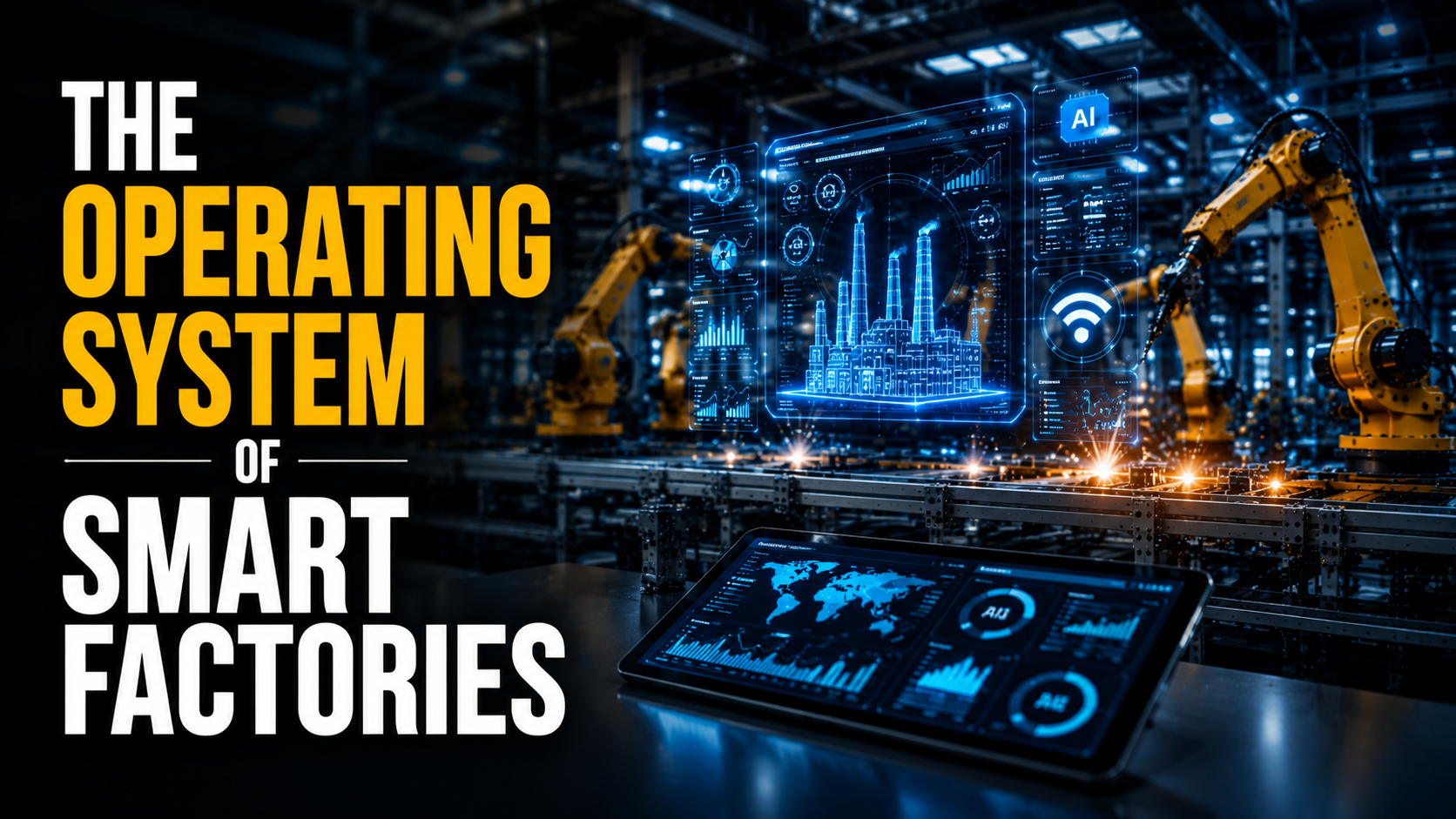
At the center of this revolution lies one technology that is quietly becoming the digital brain of modern manufacturing: Digital Twins. The Operating System of Smart Factories.
A digital twin is far more than a virtual 3D model of a machine. It is a living digital replica that continuously receives real-world data, analyzes operational performance, predicts failures, simulates future scenarios, and helps organizations make smarter decisions in real time.
As manufacturers pursue Industry 4.0 initiatives, digital twins are increasingly becoming the operating system of smart factories. They connect physical assets with digital intelligence, enabling companies to optimize production, reduce downtime, improve product quality, lower costs, and achieve sustainability goals.
In this comprehensive guide, we’ll explore how digital twins work, why they are transforming manufacturing, their real-world applications, benefits, implementation strategies, challenges, and what the future holds.
Table of Contents
What Is a Digital Twin?
A digital twin is a dynamic virtual representation of a physical object, machine, production line, factory, or even an entire supply chain.
Unlike traditional CAD models or static simulations, digital twins continuously receive real-time information through sensors, Industrial IoT devices, enterprise systems, and cloud platforms.
This constant synchronization enables manufacturers to monitor equipment performance, predict failures, simulate changes before implementation, and optimize operations without interrupting production.
In simple words:
Physical Asset + Real-Time Data + AI + Analytics = Digital Twin
Instead of reacting after something breaks, manufacturers can anticipate problems before they happen.
Why Are Digital Twins Called the Operating System of Smart Factories?
Just as an operating system coordinates every component inside a computer, digital twins connect and coordinate every element inside a smart factory.
They integrate data from:
- Industrial IoT sensors
- PLCs
- SCADA systems
- ERP software
- Manufacturing Execution Systems (MES)
- Supply chain software
- Warehouse management systems
- Robotics
- AI platforms
- Cloud infrastructure
The result is a unified, real-time view of factory operations.
Rather than relying on isolated software applications, manufacturers gain one intelligent ecosystem capable of learning, predicting, and optimizing continuously.
How Digital Twins Work
Digital twins combine several advanced technologies into one intelligent platform.
| Component | Purpose |
|---|---|
| IoT Sensors | Collect real-time machine data |
| Cloud Computing | Stores and processes massive datasets |
| Edge Computing | Enables low-latency decision-making |
| Artificial Intelligence | Predicts failures and optimizes operations |
| Machine Learning | Learns from historical production data |
| Big Data Analytics | Identifies trends and operational insights |
| 3D Modeling | Creates accurate virtual replicas |
| Industrial Automation | Executes optimized production strategies |
The workflow generally follows these steps:
- Sensors collect operational data.
- Data flows to cloud or edge systems.
- AI analyzes machine behavior.
- The digital twin updates instantly.
- Simulations predict future outcomes.
- Engineers make informed decisions.
- Production processes improve continuously.
Types of Digital Twins
Digital twins exist at multiple levels inside manufacturing.
1. Component Twin
Represents individual machine parts.
Examples include:
- Bearings
- Motors
- Pumps
- Hydraulic systems
- Turbines
Ideal for predictive maintenance.
2. Asset Twin
Represents an entire machine.
Examples include:
- CNC machines
- Industrial robots
- Packaging equipment
- Injection molding machines
Helps monitor machine health and efficiency.
3. Process Twin
Represents manufacturing workflows.
It analyzes:
- Material flow
- Production bottlenecks
- Quality issues
- Throughput optimization
4. Factory Twin
Represents the entire manufacturing facility.
It combines:
- Production lines
- Warehouses
- Logistics
- Energy consumption
- Workforce
- Equipment
This provides executives with a complete operational dashboard.
Key Technologies Behind Digital Twins
Digital twins are powered by multiple technologies working together.
Industrial IoT
Thousands of sensors capture:
- Temperature
- Pressure
- Vibration
- Speed
- Humidity
- Power consumption
- Equipment health
Without IoT, digital twins cannot function.
Artificial Intelligence
AI transforms raw operational data into meaningful insights.
It helps:
- Predict machine failures
- Detect anomalies
- Recommend maintenance
- Improve scheduling
- Optimize production
Machine Learning
Machine learning models improve over time by learning from historical factory data.
The more data collected, the more accurate predictions become.
Cloud Computing
Factories generate terabytes of operational data every day.
Cloud platforms provide:
- Massive storage
- High computing power
- Remote monitoring
- Centralized analytics
Edge Computing
Not every decision can wait for cloud processing.
Edge devices perform immediate calculations near production equipment, enabling real-time automation.
Benefits of Digital Twins in Smart Factories
Digital twins deliver measurable business value.
1. Predictive Maintenance
Unexpected machine failures cost manufacturers millions every year.
Digital twins predict failures weeks before they occur.
Benefits include:
- Reduced downtime
- Lower maintenance costs
- Increased equipment lifespan
- Better spare parts planning
2. Improved Product Quality
Manufacturers can monitor every production parameter in real time.
If quality begins to decline, the digital twin identifies the root cause immediately.
Result:
- Fewer defects
- Higher customer satisfaction
- Lower waste
3. Increased Production Efficiency
Digital twins identify hidden inefficiencies such as:
- Idle machines
- Production bottlenecks
- Energy waste
- Material shortages
Optimizing these factors significantly increases productivity.
4. Better Decision-Making
Managers no longer rely solely on historical reports.
Instead, they gain:
- Real-time dashboards
- AI-generated insights
- Performance forecasting
- Scenario simulation
Decisions become faster and more accurate.
5. Reduced Manufacturing Costs
Digital twins lower operational expenses through:
- Less downtime
- Better energy management
- Fewer quality issues
- Reduced maintenance
- Improved inventory planning
6. Faster Product Development
Manufacturers can test products virtually before physical production begins.
Benefits include:
- Faster prototyping
- Lower R&D costs
- Reduced testing time
- Accelerated innovation
7. Enhanced Sustainability
Sustainability is becoming a strategic priority.
Digital twins help reduce:
- Carbon emissions
- Energy usage
- Water consumption
- Material waste
This supports ESG initiatives while lowering operational costs.
Real-World Applications of Digital Twins
Automotive Manufacturing
Automotive companies use digital twins to optimize:
- Vehicle assembly
- Robotic welding
- Paint shops
- Supply chains
- Engine manufacturing
This improves production quality while reducing downtime.
Aerospace Industry
Aircraft manufacturers simulate entire production processes before manufacturing begins.
Digital twins monitor:
- Aircraft engines
- Structural components
- Maintenance schedules
- Flight performance
Pharmaceutical Manufacturing
Pharmaceutical companies use digital twins to ensure:
- Regulatory compliance
- Batch quality
- Equipment reliability
- Environmental monitoring
Food & Beverage
Manufacturers optimize:
- Packaging
- Processing
- Refrigeration
- Quality inspection
- Cold chain logistics
Electronics Manufacturing
Digital twins improve:
- PCB production
- Semiconductor manufacturing
- Robotic assembly
- Automated testing
Digital Twins and Predictive Maintenance
Predictive maintenance is arguably the biggest return-on-investment use case.
Traditional maintenance methods include:
| Maintenance Type | Characteristics |
|---|---|
| Reactive | Repair after failure |
| Preventive | Scheduled servicing |
| Predictive | AI predicts failures beforehand |
| Prescriptive | AI recommends optimal actions |
Digital twins enable predictive and prescriptive maintenance by analyzing thousands of operational variables simultaneously.
This minimizes costly production interruptions.
Digital Twins vs Traditional Simulation
| Traditional Simulation | Digital Twin |
|---|---|
| Static | Dynamic |
| Historical data | Real-time data |
| Manual updates | Automatic synchronization |
| One-time analysis | Continuous optimization |
| Limited intelligence | AI-powered insights |
| No live monitoring | Continuous monitoring |
Digital twins are significantly more advanced than traditional engineering simulations.
Digital Twins and Industry 4.0
Industry 4.0 depends on interconnected technologies.
Digital twins connect:
- AI
- Robotics
- IoT
- Cloud
- Automation
- Data analytics
- Cyber-physical systems
This creates autonomous manufacturing environments capable of self-monitoring and self-optimizing.
Challenges of Implementing Digital Twins
Despite their advantages, implementation is not without obstacles.
High Initial Investment
Deploying sensors, cloud infrastructure, software, and analytics platforms requires significant capital.
However, long-term savings often outweigh the initial investment.
Data Quality
Poor-quality sensor data produces inaccurate predictions.
Organizations must ensure:
- Clean data
- Reliable sensors
- Proper calibration
Cybersecurity Risks
Connected factories face increasing cyber threats.
Manufacturers need:
- Network segmentation
- Encryption
- Multi-factor authentication
- Continuous monitoring
- Zero Trust security strategies
Integration Complexity
Many factories operate legacy equipment that wasn’t designed for digital connectivity.
Integrating old systems with modern platforms can require phased modernization.
Best Practices for Successful Digital Twin Adoption
Organizations should follow a structured roadmap.
Start Small
Begin with one production line or critical asset before scaling across the factory.
Invest in Reliable Data
Data quality determines digital twin accuracy.
Build Cross-Functional Teams
Successful implementation requires collaboration among:
- Operations
- IT
- Engineering
- Data Science
- Maintenance
Prioritize Cybersecurity
Protect operational technology networks using modern security frameworks.
Continuously Improve
Digital twins become smarter over time.
Regular updates improve predictive accuracy.
Future Trends in Digital Twins
The next generation of digital twins will become even more intelligent.
Emerging trends include:
AI-Powered Autonomous Factories
Factories will increasingly self-optimize with minimal human intervention.
Generative AI Integration
Generative AI will analyze production data, generate optimization recommendations, automate reporting, and support engineers with natural-language insights.
Hyper-Automation
Digital twins will coordinate robots, autonomous vehicles, warehouse systems, and production schedules simultaneously.
Digital Twin Networks
Entire supply chains will operate as interconnected digital twins, providing end-to-end visibility from suppliers to customers.
Sustainability Optimization
Future digital twins will continuously monitor environmental performance, helping manufacturers achieve carbon neutrality and circular economy goals.
Business Impact of Digital Twins
Manufacturers implementing digital twins often report improvements across multiple operational metrics.
| Business Area | Potential Impact |
|---|---|
| Equipment Downtime | Significant reduction |
| Product Quality | Higher consistency |
| Maintenance Costs | Lower expenses |
| Production Efficiency | Improved throughput |
| Energy Consumption | Reduced usage |
| Asset Lifespan | Extended service life |
| Decision-Making | Faster and data-driven |
| Customer Satisfaction | Improved delivery and quality |
While outcomes vary by industry and implementation maturity, digital twins consistently support operational excellence and long-term competitiveness.
Conclusion
Digital twins are rapidly becoming the digital foundation of smart factories. They bridge the physical and digital worlds by transforming real-time operational data into actionable intelligence that drives better decisions across manufacturing.
Rather than responding to problems after they occur, manufacturers can anticipate equipment failures, optimize production, improve quality, reduce energy consumption, and streamline operations with confidence. As technologies such as artificial intelligence, Industrial IoT, cloud computing, edge computing, and advanced analytics continue to mature, digital twins will evolve from a competitive advantage into a standard capability for modern industrial enterprises.
Organizations that invest in digital twin technology today are positioning themselves for greater resilience, efficiency, innovation, and sustainability in an increasingly data-driven manufacturing landscape. In the era of Industry 4.0 and beyond, digital twins are not simply another digital tool, they are becoming the intelligent operating system that powers the factory of the future.
Also Read: “The Next Frontier of Autonomous Production“
Author
Frequently Asked Questions (FAQs)
1. What is a digital twin in manufacturing?
A digital twin is a real-time virtual representation of a physical asset, machine, production line, or factory. It continuously receives live operational data through sensors and uses analytics and AI to monitor performance, predict failures, and optimize manufacturing processes.
2. How do digital twins improve smart factories?
Digital twins enhance smart factories by enabling predictive maintenance, reducing downtime, improving product quality, optimizing production workflows, lowering operational costs, and providing real-time visibility into factory operations for faster, data-driven decisions.
3. What technologies are required to build a digital twin?
A modern digital twin typically combines Industrial IoT sensors, cloud computing, edge computing, artificial intelligence, machine learning, big data analytics, 3D modeling, and manufacturing software such as MES, ERP, and SCADA systems to create an accurate and continuously updated digital representation.
4. Are digital twins suitable for small and medium-sized manufacturers?
Yes. While large enterprises were early adopters, cloud-based platforms and scalable Industrial IoT solutions have made digital twins increasingly accessible to small and medium-sized manufacturers. Starting with a pilot project on a single machine or production line allows businesses to demonstrate value before expanding across the organization.