

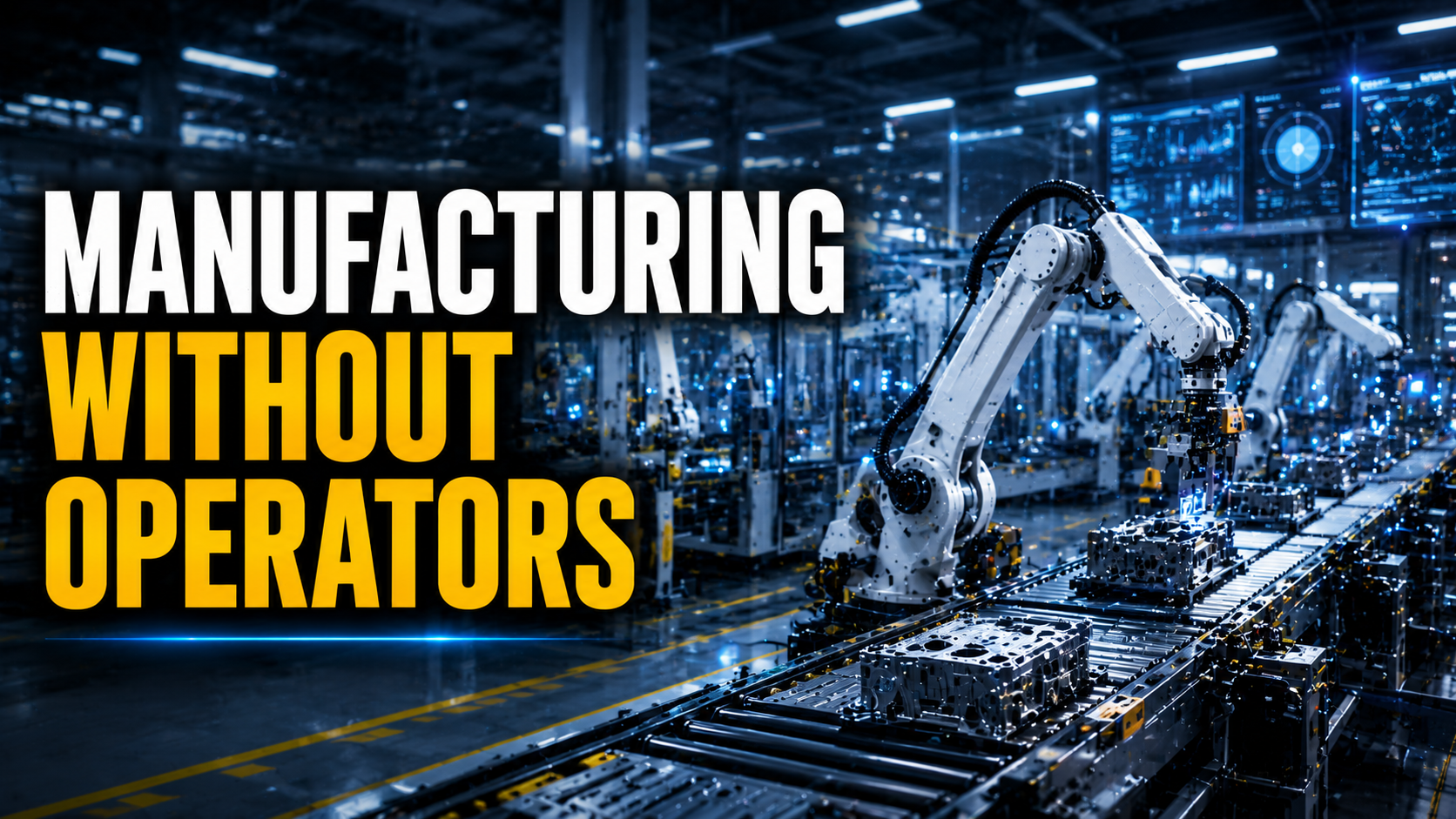
For more than a century, manufacturing has depended on human operators to control machines, monitor production lines, solve problems, and maintain quality standards. Even with advanced automation, people have remained at the center of industrial operations. Manufacturing Without Operators: Myth or Reality? Exploring the Future of Autonomous Factories.
However, a new question is emerging as artificial intelligence, robotics, and autonomous technologies continue to advance.
Can factories operate without human operators?
The idea of manufacturing without operators sounds like a concept from science fiction. A completely autonomous factory where machines manage production, identify problems, perform maintenance, and optimize processes without direct human involvement appears futuristic.
But the reality is more complex.
Modern manufacturing is already moving toward higher levels of autonomy. Automated production lines, intelligent robots, artificial intelligence systems, digital twins, and advanced analytics are allowing factories to perform tasks that once required constant human attention.
The concept of operator less manufacturing is not simply about removing humans from factories. It represents a shift toward autonomous manufacturing systems where machines can handle routine operations while humans focus on strategy, innovation, supervision, and complex decision making.
So, is manufacturing without operators a myth or a reality?
The answer lies somewhere between both.
Fully operator free factories are still limited and challenging, but highly autonomous manufacturing environments are becoming a realistic possibility.
Table of Contents
Understanding Operator Less Manufacturing
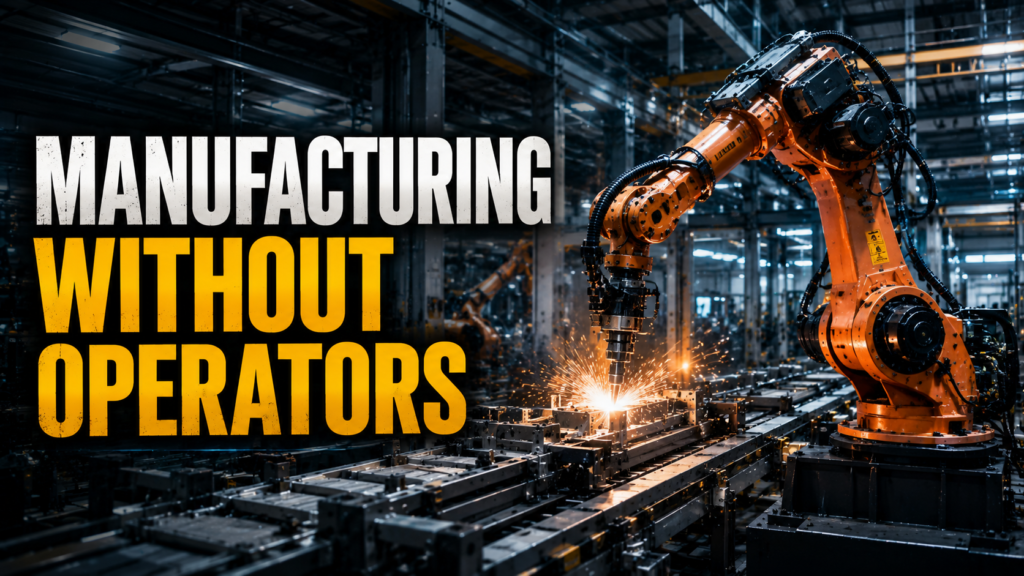
Manufacturing without operators refers to industrial systems where production activities are performed with minimal direct human involvement.
These systems rely on a combination of advanced technologies such as:
Artificial intelligence
Industrial robotics
Machine learning
Industrial Internet of Things
Autonomous control systems
Computer vision
Digital twins
Predictive analytics
The objective is not simply to replace workers.
The objective is to create manufacturing environments that can operate independently, respond to changing conditions, and improve performance automatically.
A traditional factory requires operators to:
Adjust machines
Monitor production
Identify defects
Schedule maintenance
Manage workflow problems
An autonomous manufacturing system can perform many of these tasks through intelligent software and automated equipment.
However, some areas still require human expertise, especially strategic planning, innovation, safety management, and handling unexpected situations.
The Evolution of Manufacturing Automation
The idea of reducing human involvement in manufacturing has developed gradually.
Manual Manufacturing Era
Early factories depended almost entirely on human labor.
Workers controlled tools, operated machines, inspected products, and managed production activities.
Human skill and experience were the primary drivers of manufacturing performance.
Mechanized Manufacturing
Machines began replacing physically demanding tasks.
Workers still controlled operations but benefited from improved equipment.
Automated Manufacturing
Automation introduced programmable machines capable of performing repetitive tasks.
Examples include:
Industrial robots
Automated assembly systems
Computer controlled machines
This reduced manual intervention but still required human supervision.
Smart Manufacturing
Smart factories introduced connected systems, sensors, and data platforms.
Machines could communicate, collect information, and provide operational insights.
Autonomous Manufacturing
The next stage involves systems that can analyze information, make decisions, and improve processes with minimal human involvement.
This is where manufacturing without operators becomes possible.
Why Companies Are Exploring Operator Less Manufacturing
Manufacturers are investing in autonomous technologies because modern industrial challenges require new approaches.
Companies face:
Increasing labor shortages
Higher production demands
Need for faster innovation
Growing operational complexity
Pressure to reduce costs
Demand for continuous production
Autonomous manufacturing can help address these challenges by creating more efficient and reliable operations.
A factory that can operate continuously with limited intervention may provide advantages in industries where precision, speed, and consistency are critical.
Technologies Making Operator Less Manufacturing Possible
Artificial Intelligence
Artificial intelligence is one of the most important technologies behind autonomous manufacturing.
AI systems can analyze large amounts of operational data and make intelligent decisions.
They support:
Process optimization
Quality improvement
Equipment monitoring
Production planning
Problem detection
AI enables machines to understand situations rather than simply follow instructions.
Industrial Robotics
Robotics has been a major part of manufacturing automation for decades.
Modern robots are becoming more advanced through AI integration.
They can:
Perform complex tasks
Adapt to changing conditions
Work with different products
Improve performance through learning
Advanced robotics is essential for reducing manual involvement.
Computer Vision
Computer vision allows machines to understand visual information.
Manufacturing systems use cameras and AI models to perform:
Quality inspection
Object recognition
Defect detection
Assembly verification
This reduces dependence on manual inspection.
Industrial Internet of Things
Industrial Internet of Things connects machines, sensors, and software systems.
It provides real time information about:
Machine conditions
Production performance
Energy usage
Environmental factors
This information helps autonomous systems make better decisions.
Digital Twins
Digital twins create virtual models of factories and production systems.
They allow companies to simulate changes before applying them in real environments.
Digital twins help autonomous factories:
Predict outcomes
Test improvements
Optimize operations
Reduce risks
Machine Learning
Machine learning allows manufacturing systems to improve through experience.
Instead of following fixed rules, machines learn from historical and real time information.
This enables continuous improvement.
What Would a Factory Without Operators Look Like?
A fully autonomous factory would operate through several intelligent systems working together.
Machines would automatically:
Receive production instructions
Manage workflows
Adjust operating parameters
Inspect products
Detect failures
Schedule maintenance
Optimize resources
Communicate with other systems
Human involvement would shift from daily operation toward supervision and strategic management.
Workers would monitor systems, improve processes, handle unusual situations, and guide innovation.
The factory would become more like an intelligent ecosystem than a traditional production facility.
Current Examples of Autonomous Manufacturing
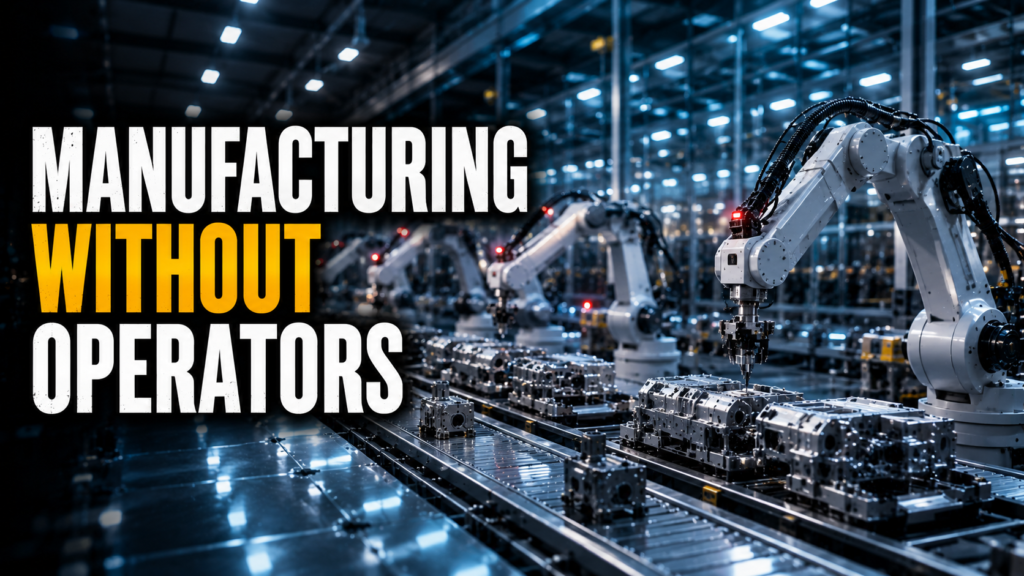
While completely operator free factories are rare, many industries already use highly automated environments.
Automotive Manufacturing
Automotive factories use extensive robotics for:
Welding
Painting
Assembly
Material handling
Robots perform many repetitive tasks with high precision.
However, engineers and technicians remain essential for system management and improvement.
Electronics Manufacturing
Electronics production requires extreme precision.
Automated systems perform:
Component placement
Inspection
Testing
Quality control
AI improves accuracy and reduces production errors.
Semiconductor Manufacturing
Semiconductor facilities operate with advanced automation due to strict requirements for cleanliness and precision.
Many processes involve minimal human contact.
Warehousing and Logistics
Automated warehouses use:
Robotic systems
AI planning
Autonomous vehicles
Automated sorting
These environments demonstrate how machines can manage complex operations.
Benefits of Manufacturing Without Operators
Autonomous manufacturing provides several potential benefits.
Higher Productivity
Machines can operate continuously without fatigue.
This can increase production capacity and reduce delays.
Improved Consistency
Automated systems can perform tasks with consistent accuracy.
This improves product quality.
Reduced Human Risk
Automation can handle dangerous environments and repetitive tasks.
This improves workplace safety.
Lower Operational Costs
Over time, automation can reduce costs related to inefficiencies, waste, and downtime.
Better Decision Making
AI systems analyze information quickly and identify improvement opportunities.
Increased Flexibility
Advanced systems can adapt faster to changing production requirements.
Challenges of Operator Less Manufacturing
Although the technology is advancing, completely removing operators creates significant challenges.
Complex Decision Making
Manufacturing environments are unpredictable.
Unexpected situations often require human judgment.
Examples include:
New production problems
Unexpected material issues
Complex quality decisions
Human expertise remains valuable.
High Implementation Costs
Building autonomous factories requires significant investment.
Companies need:
Advanced equipment
AI systems
Infrastructure upgrades
Cybersecurity solutions
Employee training
Cybersecurity Risks
Highly connected factories create new security concerns.
A cyberattack could disrupt critical manufacturing operations.
Strong security measures are essential.
Maintenance Complexity
Autonomous systems still require maintenance.
Robots, sensors, and AI platforms need monitoring and improvement.
Workforce Transformation
Automation changes the role of workers.
Employees need new skills related to:
AI management
Robotics
Data analysis
System supervision
The future workforce will become more technology focused.
Myth Versus Reality: Can Humans Completely Disappear From Factories?
The idea of completely human free factories is often exaggerated.
Reality suggests that humans will continue playing an important role.
The future is more likely to involve human AI collaboration rather than complete replacement.
Machines are excellent at:
Repetitive tasks
Data processing
Precision operations
Continuous monitoring
Humans are better at:
Creative thinking
Strategic decisions
Complex problem solving
Innovation
The strongest manufacturing environments will combine both strengths.
The Role of Humans in Future Autonomous Factories
Future manufacturing workers may have different responsibilities.
Instead of operating individual machines, they may focus on:
Managing intelligent systems
Improving AI models
Analyzing production data
Designing new processes
Ensuring ethical technology use
Human roles will evolve rather than disappear.
Manufacturing Without Operators and Industry 5.0
Industry 5.0 emphasizes collaboration between humans and advanced technologies.
While Industry 4.0 focused on automation and connectivity, Industry 5.0 focuses on creating human centered intelligent manufacturing.
This means future factories will likely combine:
Autonomous machines
Human creativity
AI assistance
Sustainable production methods
The goal is not a factory without humans.
The goal is a smarter factory where humans work with intelligent systems.
Future Trends in Autonomous Manufacturing
Several developments will shape the future of operator less manufacturing.
Self Improving Production Systems
Factories will increasingly use AI systems that learn and optimize processes automatically.
Autonomous Maintenance
AI will predict failures and coordinate maintenance activities.
Advanced Industrial AI Assistants
Workers will use AI tools to make faster decisions.
More Flexible Robotics
Robots will become capable of handling more complex tasks.
Fully Connected Industrial Ecosystems
Factories, suppliers, and customers will become more integrated.
How Businesses Can Prepare for Autonomous Manufacturing
Companies interested in autonomous manufacturing should focus on gradual transformation.
Important steps include:
Improving digital infrastructure
Collecting high quality industrial data
Investing in automation technologies
Training employees
Strengthening cybersecurity
Starting with targeted automation projects
A practical approach allows organizations to gain benefits while managing risks.
Is Manufacturing Without Operators the Future?
Manufacturing without operators is not simply a yes or no question.
Completely human free factories remain difficult because manufacturing involves creativity, judgment, and unexpected challenges.
However, manufacturing with minimal operator involvement is already becoming a reality.
The future will likely involve autonomous systems handling routine operations while humans provide supervision, innovation, and strategic guidance.
The factory of tomorrow will not be empty.
It will be intelligent.
Conclusion
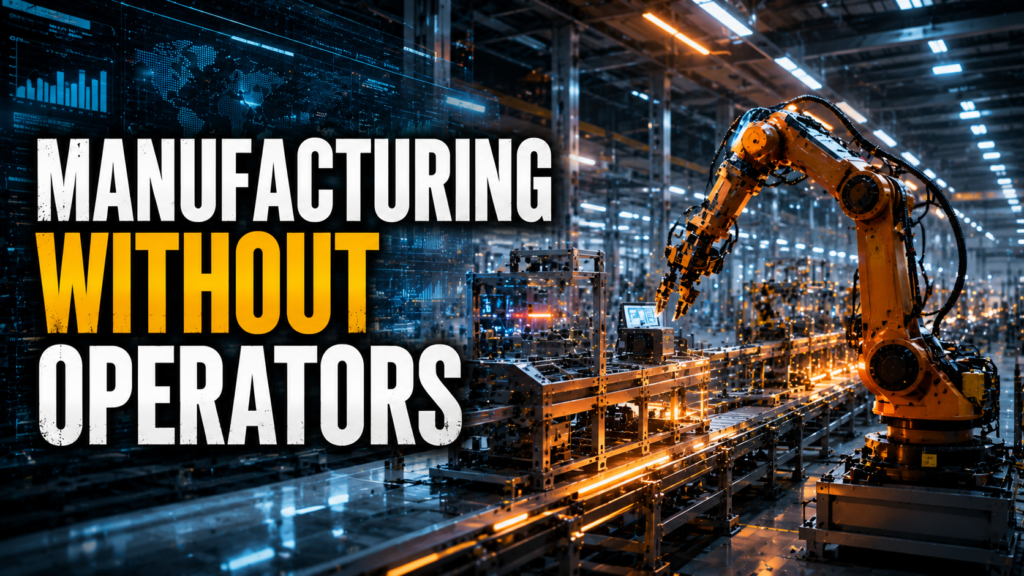
Manufacturing without operators is both a technological possibility and a complex challenge.
Automation, artificial intelligence, robotics, and intelligent systems are transforming factories into highly autonomous environments.
However, the future of manufacturing will not be defined by removing humans completely.
Instead, it will be defined by collaboration between human intelligence and machine intelligence.
Autonomous factories will handle repetitive work, optimize operations, and improve efficiency.
Humans will continue to provide creativity, experience, and strategic direction.
The rise of intelligent manufacturing is not about replacing people.
It is about creating a new generation of factories where technology helps humans achieve more.
Also Read: “Explainable AI in Manufacturing“
Author
Frequently Asked Questions
Is manufacturing without operators possible today?
Fully operator free manufacturing is still limited, but many factories already use highly automated systems that require minimal human involvement.
Will robots replace manufacturing workers?
Will robots replace manufacturing workers?
What technologies enable autonomous manufacturing?
What technologies enable autonomous manufacturing?