

Introduction
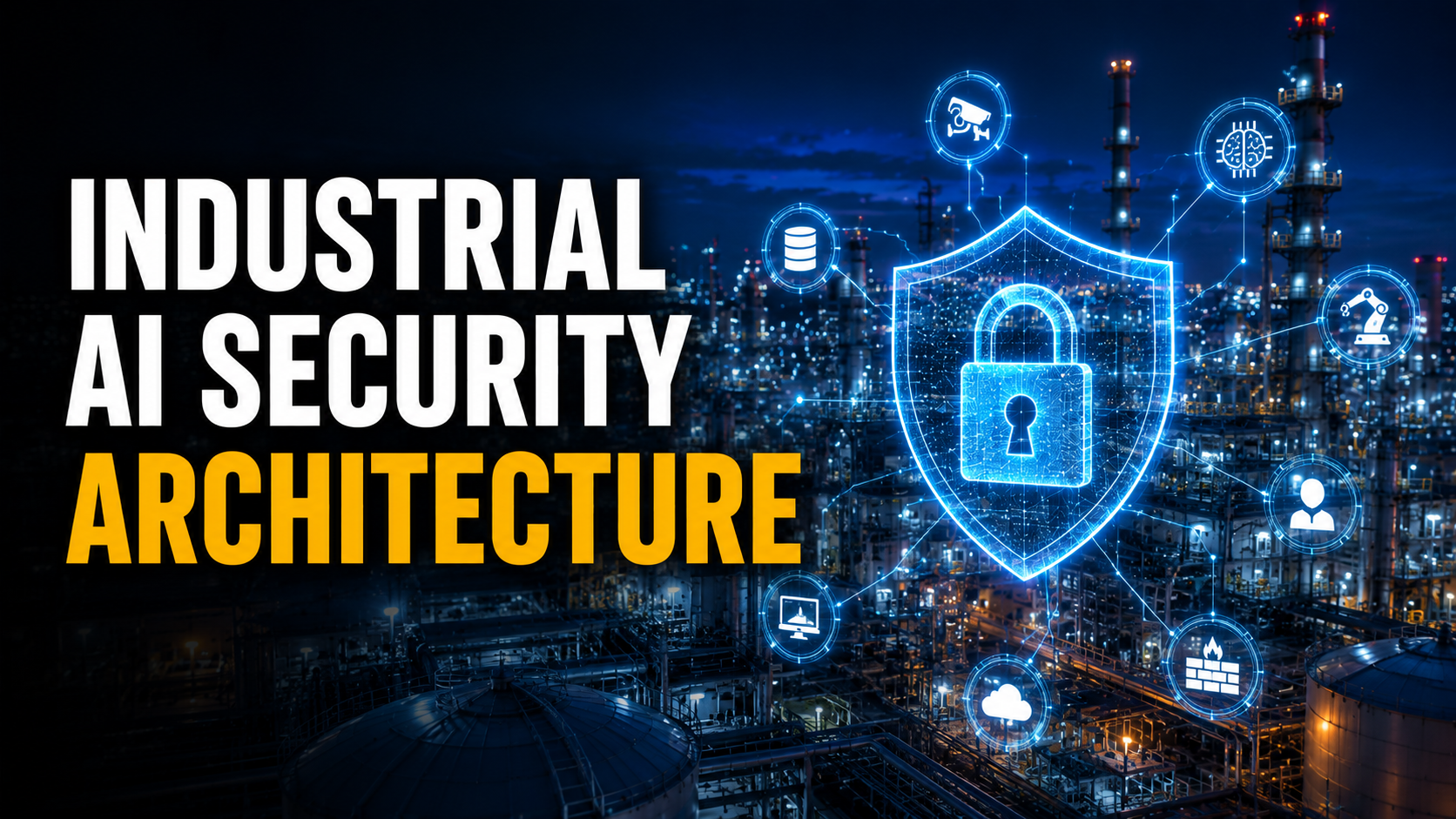
Manufacturing is experiencing a massive digital transformation as artificial intelligence becomes deeply integrated into industrial operations. Modern factories are no longer limited to automated machines and traditional control systems. They are evolving into intelligent environments where artificial intelligence, Industrial Internet of Things devices, robotics, cloud platforms, edge computing systems, and connected networks work together to improve productivity and decision-making. Industrial AI Security Architecture: Protecting the Future of Intelligent Manufacturing Systems.
This transformation creates enormous opportunities for manufacturers, but it also introduces new security challenges.
As factories become more connected and AI systems become responsible for critical industrial decisions, protecting these technologies has become a strategic priority. This is where Industrial AI Security Architecture becomes essential.
Industrial AI Security Architecture refers to the comprehensive security framework designed to protect artificial intelligence systems, industrial networks, connected devices, operational data, and automated decision-making processes used in manufacturing environments.
Unlike traditional cybersecurity approaches that mainly focus on protecting computers and networks, Industrial AI Security Architecture must protect a much larger ecosystem that includes physical equipment, intelligent algorithms, industrial data flows, and real-time operational systems.
A security failure in an industrial AI environment can have consequences beyond data loss. It can affect production continuity, product quality, worker safety, supply chain operations, and business reputation.
The future of manufacturing depends not only on creating intelligent factories but also on ensuring that these factories remain secure, reliable, and trustworthy.
Table of Contents
Understanding Industrial AI Security Architecture
Industrial AI Security Architecture is a structured approach that combines cybersecurity principles, artificial intelligence protection methods, industrial control system security, and data protection strategies.
The goal is to create a secure foundation for AI-powered manufacturing operations.
In traditional industrial environments, security focused mainly on protecting machines, networks, and software systems from unauthorized access.
However, AI-driven factories introduce new security concerns.
Artificial intelligence systems depend on large amounts of data. They learn from historical information, analyze operational conditions, and make recommendations or automated decisions.
If attackers manipulate data, compromise AI models, or gain unauthorized access to connected systems, the reliability of manufacturing operations can be affected.
Industrial AI Security Architecture addresses these risks by protecting every layer of the intelligent manufacturing ecosystem.
This includes:
AI models
Industrial networks
Machine data
Connected devices
Cloud platforms
Edge computing systems
Manufacturing applications
Human access points
A strong architecture ensures that AI systems remain accurate, secure, and dependable throughout their operational lifecycle.
Why Industrial AI Security Has Become Critical
The rapid adoption of artificial intelligence in manufacturing has changed the security landscape.
Modern factories are becoming more connected through digital technologies. Machines communicate with software platforms, production systems exchange information with business applications, and suppliers increasingly connect with manufacturing networks.
This connectivity improves efficiency, but it also creates additional security challenges.
Manufacturers must protect against:
Unauthorized access to industrial systems
Manipulation of operational data
AI model attacks
Malware affecting production environments
Insider security risks
Supply chain vulnerabilities
The importance of industrial AI security has increased because manufacturing systems are directly connected to physical processes.
In a normal digital environment, a cybersecurity incident may affect information systems.
In a manufacturing environment, the same incident could interrupt production, damage equipment, or create safety concerns.
For this reason, security must become a fundamental part of industrial AI design rather than an additional feature added later.
The Relationship Between Artificial Intelligence and Industrial Cybersecurity
Artificial intelligence and cybersecurity have a unique relationship in modern manufacturing.
AI can improve security by detecting unusual patterns, identifying threats, and predicting potential attacks.
At the same time, AI systems themselves can become targets for cyber threats.
This creates a situation where artificial intelligence must both support cybersecurity and be protected through cybersecurity.
For example, an AI monitoring system may analyze factory network activity and identify abnormal behavior.
However, if attackers manipulate the AI model or feed incorrect information into the system, security decisions may become unreliable.
Industrial AI Security Architecture creates balance by protecting AI systems while also using AI to strengthen overall industrial security.
Key Components of Industrial AI Security Architecture
A strong Industrial AI Security Architecture consists of multiple security layers working together.
Secure Data Protection
Data is the foundation of artificial intelligence.
Manufacturing AI systems depend on operational information collected from machines, sensors, production lines, and business systems.
Protecting this data is essential because inaccurate or manipulated information can affect AI decisions.
Secure data strategies include:
Data encryption
Access control
Data validation
Secure storage
Continuous monitoring
Manufacturers must ensure that AI systems learn from trustworthy information.
AI Model Security
AI models require protection throughout their lifecycle.
Attackers may attempt to manipulate models through techniques such as data poisoning, where incorrect information is introduced during training.
They may also attempt to extract information about how AI systems operate.
AI model security involves:
Secure training processes
Model validation
Continuous testing
Performance monitoring
Protection against unauthorized changes
A secure AI model ensures reliable decision-making.
Industrial Network Security
Industrial networks connect machines, systems, and applications.
Protecting these networks is essential for maintaining safe operations.
Security measures include:
Network segmentation
Identity management
Access monitoring
Threat detection systems
Secure communication protocols
A well-designed network architecture limits the impact of potential attacks.
Device and Equipment Security
Modern factories contain thousands of connected devices.
Sensors, robots, controllers, and industrial equipment must be protected from unauthorized access.
Device security involves:
Secure device authentication
Firmware protection
Regular updates
Monitoring device behavior
Connected equipment represents an important part of the industrial security environment.
Cloud and Edge Security
Many manufacturing organizations use cloud and edge computing to support AI applications.
Cloud platforms provide powerful data processing capabilities, while edge systems enable real-time decisions close to production equipment.
Both environments require strong security protection.
Important security considerations include:
Secure communication
Identity management
Data protection
Application security
Continuous monitoring
Identity and Access Management
Controlling who can access industrial AI systems is a fundamental security requirement.
Employees, contractors, machines, and software applications should only receive the level of access required for their responsibilities.
Strong identity management reduces the risk of unauthorized activity.
Threat Detection and Response
Industrial AI security systems must continuously monitor operations.
Artificial intelligence can analyze network activity, user behavior, and system performance to detect unusual patterns.
Early detection allows organizations to respond before security issues become major incidents.
Common Security Threats in Industrial AI Environments
Industrial AI systems face several emerging security risks.
AI Data Manipulation
AI systems depend heavily on data quality.
If attackers modify operational data, AI systems may produce incorrect recommendations.
This can affect production planning, maintenance decisions, and quality management.
AI Model Attacks
Attackers may attempt to manipulate AI models or exploit weaknesses in their design.
Model protection is necessary to maintain reliable industrial intelligence.
Connected Device Vulnerabilities
Large numbers of connected industrial devices increase the potential attack surface.
Weak device security can create entry points for attackers.
Ransomware Attacks
Ransomware remains a serious threat for industrial organizations.
An attack can interrupt production operations and create significant financial losses.
Supply Chain Cyber Risks
Manufacturing depends on many external partners.
A vulnerability in supplier systems can create risks for connected manufacturing networks.
Organizations must consider security throughout the entire industrial ecosystem.
Designing a Strong Industrial AI Security Strategy
Building effective security requires a comprehensive approach.
Security should be integrated into every stage of AI implementation.
Organizations should begin by understanding their industrial environment and identifying critical systems.
They should evaluate:
Which systems use AI
Where important data is stored
How machines communicate
Who has access
What potential risks exist
A security strategy should combine technology, processes, and employee awareness.
The Role of Zero Trust Security in Industrial AI
Zero Trust security is becoming increasingly important for intelligent manufacturing environments.
The Zero Trust approach assumes that no user, device, or application should automatically receive trust.
Every access request must be verified.
This approach is valuable in industrial AI environments because modern factories contain many connected systems.
Zero Trust principles help organizations:
Control access
Reduce unauthorized activity
Improve visibility
Protect critical systems
Artificial Intelligence as a Security Tool
Although AI creates new security challenges, it is also a powerful cybersecurity tool.
Manufacturers use AI to improve security through:
Automated threat detection
Behavior analysis
Anomaly identification
Predictive security monitoring
Faster incident response
AI can analyze large volumes of information faster than traditional security methods.
This allows organizations to identify threats earlier.
Industrial AI Security and Compliance Requirements
Manufacturers must also consider regulatory and industry requirements.
Security frameworks help organizations create structured approaches to protecting industrial systems.
Compliance efforts typically focus on:
Data protection
Operational safety
Risk management
Access control
Security monitoring
Following established security practices improves trust and operational reliability.
Challenges in Implementing Industrial AI Security Architecture
Implementing industrial AI security is not without challenges.
One challenge is the complexity of existing manufacturing environments. Many factories contain older equipment that was not designed for modern cybersecurity requirements.
Another challenge is the shortage of professionals who understand both industrial operations and advanced cybersecurity.
Organizations may also face difficulties managing the large amount of data generated by connected AI systems.
Investment requirements can also be significant because strong security requires advanced technologies, skilled employees, and continuous improvement.
However, these challenges are becoming increasingly important as manufacturing becomes more dependent on intelligent technologies.
Human Role in Industrial AI Security
Technology alone cannot create a secure manufacturing environment.
Employees play an important role in maintaining industrial security.
Workers need awareness about:
Secure system usage
Access responsibilities
Potential cyber risks
Proper response procedures
Security training helps create a culture where everyone contributes to protecting industrial operations.
Future Trends in Industrial AI Security Architecture
The future of industrial security will continue to evolve alongside AI technology.
Manufacturers will increasingly adopt autonomous security systems capable of detecting and responding to threats automatically.
AI-powered cybersecurity platforms will become more advanced, providing deeper insights into industrial risks.
Security will also become more integrated into the design of AI systems from the beginning.
Future factories will require security architectures that are intelligent, adaptive, and continuously improving.
How Manufacturers Can Prepare for Secure AI Adoption
Organizations preparing for AI-driven manufacturing should focus on building security foundations early.
Important steps include improving data protection practices, strengthening network security, training employees, and regularly evaluating risks.
Security should not be considered a separate activity.
It should become part of the overall digital transformation strategy.
Manufacturers that prioritize security from the beginning will be better prepared for future industrial challenges.
Conclusion
Industrial AI Security Architecture is becoming a critical foundation for the future of intelligent manufacturing.
As factories become more connected and dependent on artificial intelligence, protecting these systems becomes essential for maintaining productivity, safety, and trust.
A successful industrial AI security strategy combines strong cybersecurity practices, reliable AI protection, secure data management, and human expertise.
The factories of the future will be intelligent, automated, and connected.
But their success will depend on one important factor.
They must also be secure.
Industrial AI Security Architecture provides the protection needed to ensure that artificial intelligence can safely support the next generation of manufacturing innovation.
Also Read: “Cloud vs Edge AI in Manufacturing“
Author
Frequently Asked Questions
What is Industrial AI Security Architecture?
Industrial AI Security Architecture is a security framework designed to protect artificial intelligence systems, industrial networks, connected devices, and operational data used in modern manufacturing environments.
Why is AI security important in manufacturing?
AI security is important because intelligent manufacturing systems control critical operations. Security failures can affect production, equipment performance, product quality, and business continuity.
Can artificial intelligence improve industrial cybersecurity?
Yes, artificial intelligence can strengthen cybersecurity by detecting unusual patterns, identifying threats, analyzing system behavior, and supporting faster security responses.