


How Data-Driven Manufacturing is Redefining Industrial Success
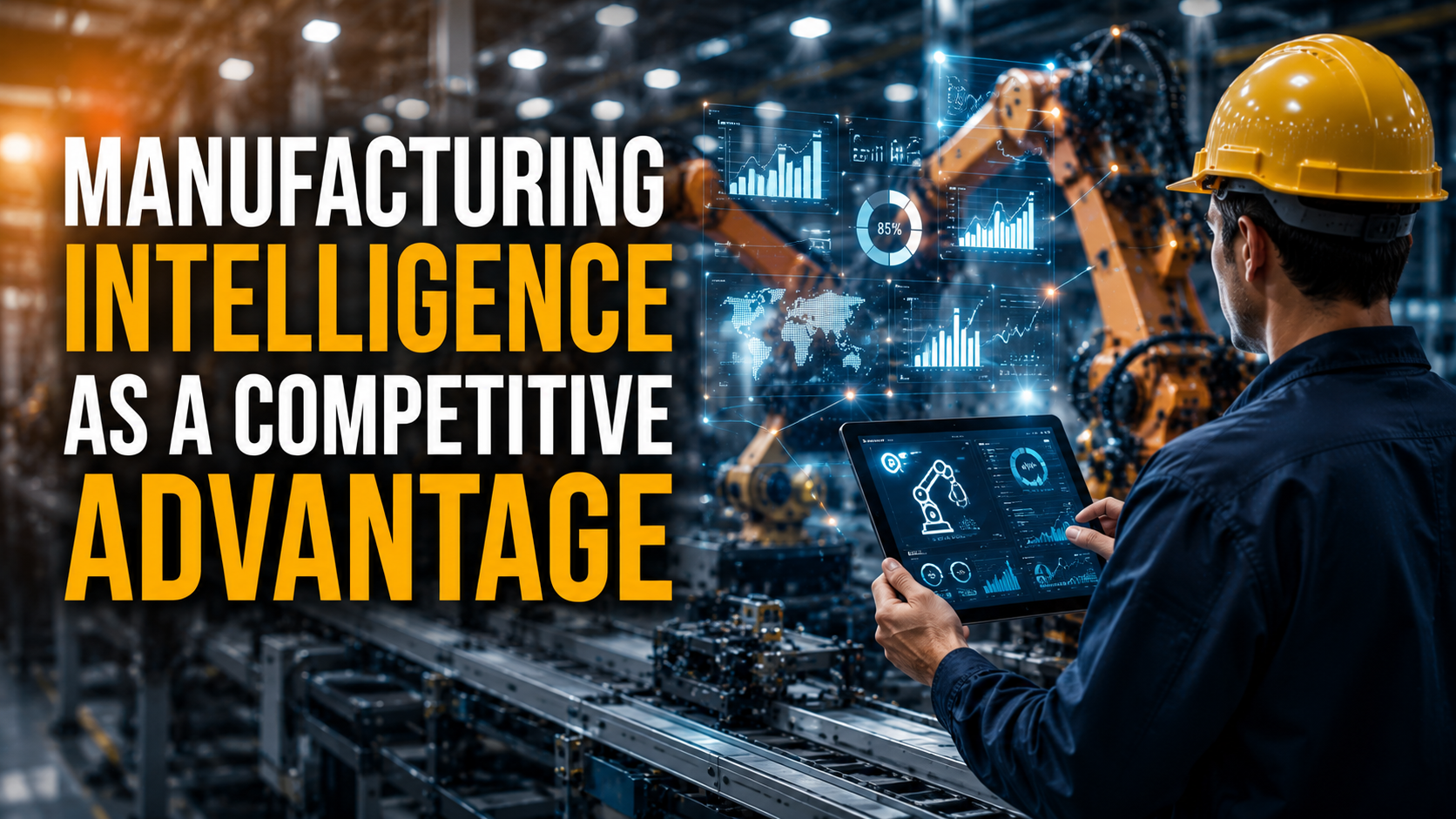
Manufacturing has entered a new era where efficiency alone is no longer enough to remain competitive. Companies that once relied on low production costs, skilled labor, and high-quality machinery now compete in a world driven by data, artificial intelligence, automation, and real-time decision-making. The modern manufacturing landscape rewards organizations that transform operational data into actionable business intelligence. Manufacturing Intelligence as Competitive Advantage.
This transformation has given rise to Manufacturing Intelligence, one of the most significant technological advancements in Industry 4.0. Manufacturers are increasingly investing in intelligent systems capable of collecting, analyzing, and interpreting production data to optimize operations, improve product quality, reduce downtime, and strengthen profitability.
Organizations that successfully implement Manufacturing Intelligence gain a sustainable competitive advantage by making faster decisions, improving operational visibility, minimizing waste, and continuously enhancing productivity.
This article explores Manufacturing Intelligence, its core technologies, business benefits, implementation strategies, challenges, and why it has become an essential competitive differentiator for manufacturers worldwide.
Table of Contents
What is Manufacturing Intelligence?
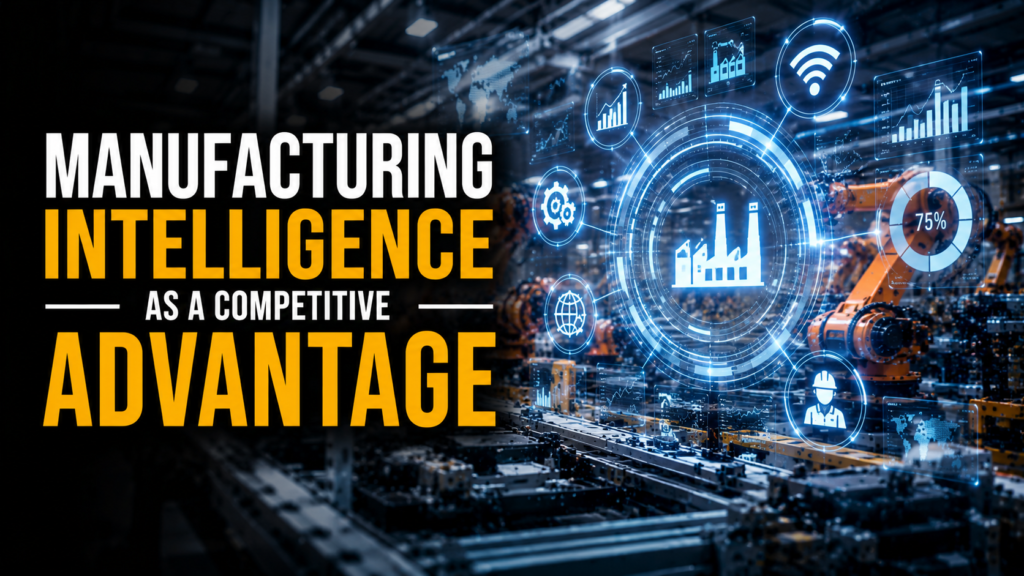
Manufacturing Intelligence refers to the collection, integration, analysis, and visualization of manufacturing data from multiple production systems to support better operational and strategic decision-making.
Rather than relying on historical reports or manual inspections, Manufacturing Intelligence delivers real-time insights into factory operations. It combines production data, machine information, inventory records, quality metrics, maintenance schedules, supply chain information, and workforce performance into a unified platform.
The objective is simple.
Transform raw manufacturing data into meaningful insights that improve business performance.
Manufacturing Intelligence enables organizations to answer critical questions such as:
- Why is production slowing down?
- Which machines are underperforming?
- Where is waste occurring?
- How can quality defects be reduced?
- Which production lines generate the highest profitability?
- When should equipment be serviced before failure occurs?
Instead of reacting to problems after they occur, manufacturers become proactive.
Why Manufacturing Intelligence Matters Today
Global manufacturing faces increasing pressure from multiple directions.
Customer expectations continue to rise.
Supply chains remain unpredictable.
Labor shortages affect production.
Energy costs continue increasing.
Competition has become more aggressive.
Traditional manufacturing methods simply cannot keep pace with these challenges.
Manufacturing Intelligence helps organizations respond faster by providing accurate, real-time operational visibility.
Companies that leverage intelligent manufacturing systems can optimize every stage of production while continuously improving business performance.
The Evolution of Manufacturing Intelligence
Manufacturing has evolved through several technological phases.
| Manufacturing Era | Primary Focus | Technology |
|---|---|---|
| Traditional Manufacturing | Manual production | Paper records |
| Lean Manufacturing | Waste reduction | Continuous improvement |
| Digital Manufacturing | Process automation | ERP and MES |
| Smart Manufacturing | Connected operations | IoT and Cloud Computing |
| Intelligent Manufacturing | Predictive optimization | AI, Machine Learning, Analytics |
Today’s manufacturers no longer compete based solely on production capacity.
They compete based on how effectively they use information.
Core Components of Manufacturing Intelligence
Manufacturing Intelligence integrates multiple technologies into a single ecosystem.
Data Collection
Every manufacturing process generates enormous amounts of data.
Sources include:
- Production machines
- Sensors
- PLC systems
- Industrial robots
- MES software
- ERP platforms
- Inventory systems
- Supply chain software
- Quality control systems
Modern factories collect millions of data points every day.
Real-Time Monitoring
Real-time monitoring provides instant visibility into manufacturing operations.
Managers can immediately identify:
- Machine downtime
- Production bottlenecks
- Equipment failures
- Inventory shortages
- Quality deviations
- Energy consumption
Instead of waiting for end-of-day reports, decisions happen immediately.
Data Analytics
Raw data has little value until analyzed.
Manufacturing Intelligence platforms use advanced analytics to discover:
- Production trends
- Equipment performance
- Process inefficiencies
- Cost drivers
- Demand forecasts
- Resource utilization
Analytics transforms information into actionable recommendations.
Artificial Intelligence
Artificial Intelligence enhances Manufacturing Intelligence by identifying complex patterns beyond human capability.
AI applications include:
- Predictive maintenance
- Demand forecasting
- Defect detection
- Production scheduling
- Inventory optimization
- Quality inspection
AI continuously improves as more production data becomes available.
Machine Learning
Machine Learning allows manufacturing systems to improve automatically through experience.
Instead of fixed programming, algorithms continuously learn from production outcomes.
Examples include:
- Predicting machine failures
- Detecting quality anomalies
- Optimizing production parameters
- Improving supply chain forecasts
Dashboards and Visualization
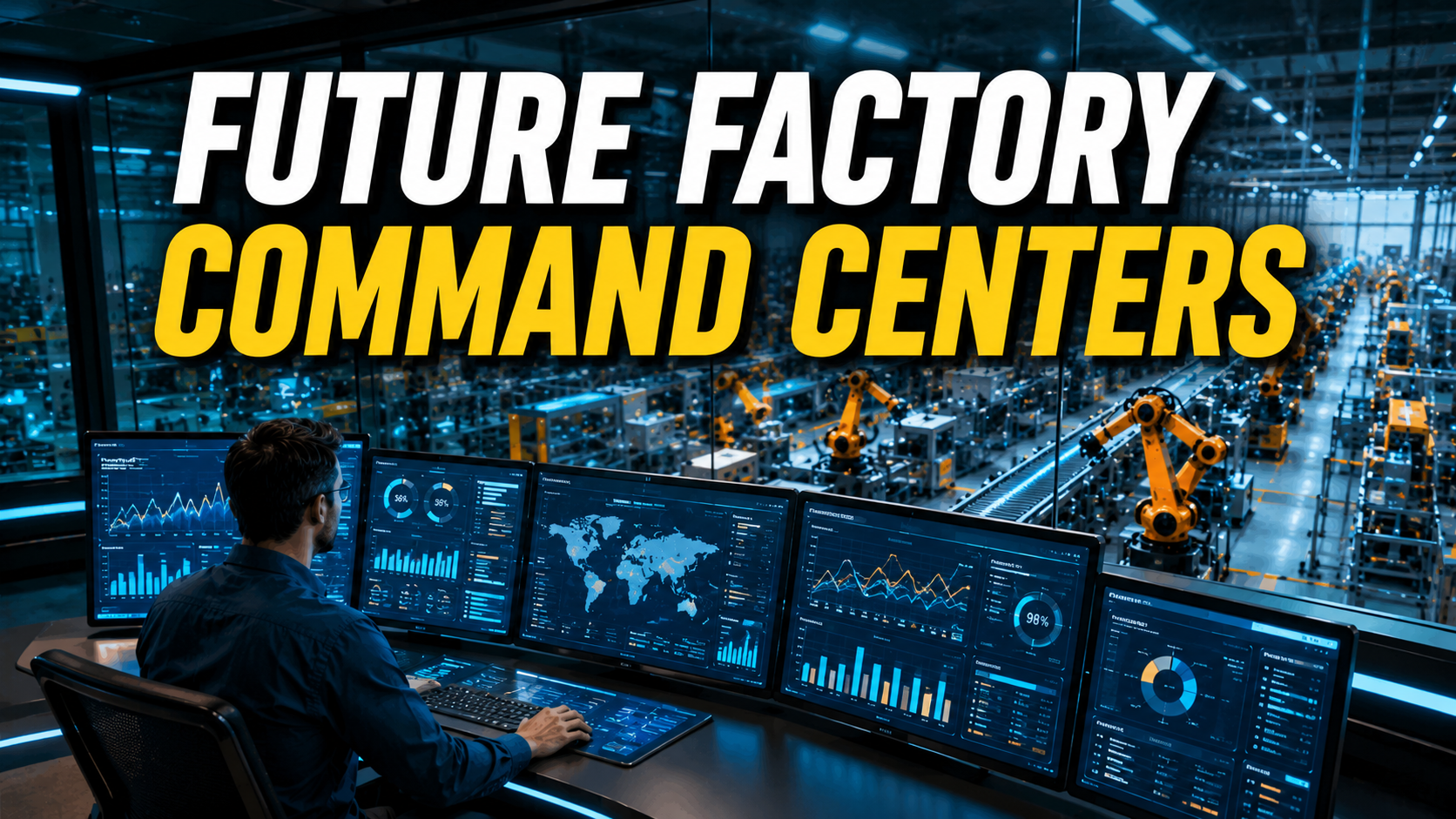
Complex manufacturing data becomes understandable through interactive dashboards.
Decision-makers can instantly monitor:
- Production output
- Overall Equipment Effectiveness
- Scrap rates
- Downtime
- Energy usage
- Machine utilization
- Labor productivity
Visual insights accelerate decision-making across departments.
Competitive Advantages of Manufacturing Intelligence
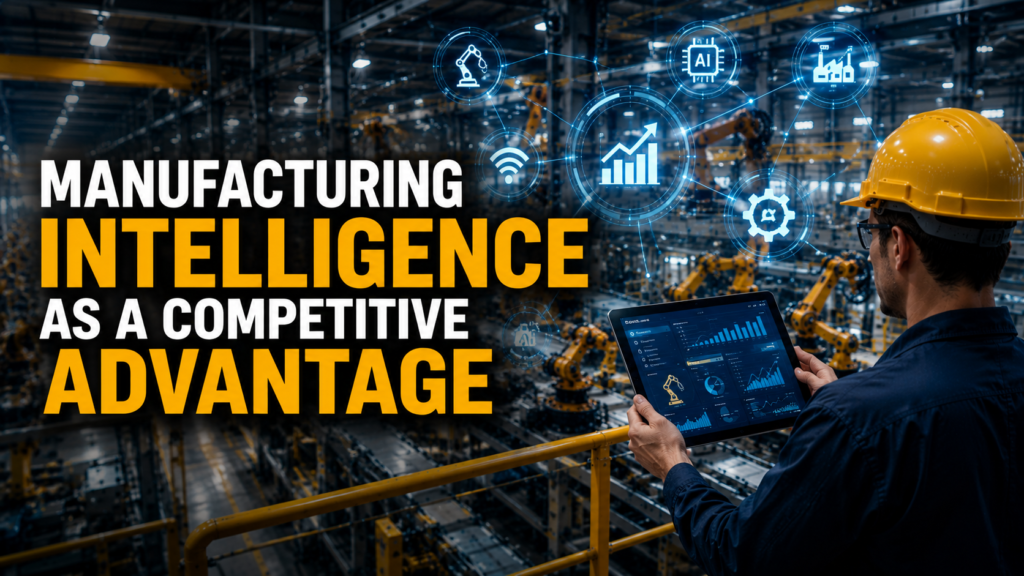
Organizations implementing Manufacturing Intelligence experience measurable business improvements.
Improved Operational Efficiency
Real-time visibility eliminates production blind spots.
Managers identify bottlenecks faster.
Resources are allocated more efficiently.
Production throughput increases without significant capital investment.
Reduced Downtime
Unexpected machine failures represent one of manufacturing’s largest costs.
Predictive analytics identifies equipment issues before breakdowns occur.
Maintenance teams repair machines during planned maintenance windows.
This significantly reduces costly production interruptions.
Better Product Quality
Quality issues become easier to detect through intelligent monitoring.
Manufacturers identify:
- Process deviations
- Equipment inconsistencies
- Material quality problems
- Operator errors
Continuous monitoring improves consistency while reducing product recalls.
Faster Decision-Making
Traditional reporting often delays decision-making.
Manufacturing Intelligence provides instant operational insights.
Executives no longer rely on outdated reports.
Instead, they make informed decisions using live production data.
Lower Manufacturing Costs
Manufacturing Intelligence reduces unnecessary expenses by minimizing:
- Scrap
- Rework
- Downtime
- Excess inventory
- Energy consumption
- Maintenance costs
The result is improved profitability across the entire organization.
Improved Supply Chain Visibility
Manufacturing Intelligence extends beyond factory operations.
Organizations gain visibility into:
- Supplier performance
- Inventory movement
- Transportation delays
- Customer demand
- Production planning
This enables more resilient supply chains.
Enhanced Sustainability
Environmental responsibility has become a competitive necessity.
Manufacturing Intelligence supports sustainability through:
- Reduced energy consumption
- Lower emissions
- Waste reduction
- Material optimization
- Water conservation
Efficient operations naturally improve environmental performance.
Manufacturing Intelligence and Industry 4.0
Industry 4.0 represents the digital transformation of manufacturing.
Manufacturing Intelligence serves as the intelligence layer connecting Industry 4.0 technologies.
These technologies include:
- Internet of Things
- Artificial Intelligence
- Robotics
- Cloud Computing
- Digital Twins
- Big Data Analytics
- Edge Computing
- Autonomous Systems
Together, these technologies create smart factories capable of continuous optimization.
Real-World Applications
Manufacturing Intelligence benefits virtually every manufacturing sector.
Automotive Manufacturing
Automotive manufacturers monitor thousands of production variables simultaneously.
Benefits include:
- Faster assembly
- Improved quality control
- Predictive maintenance
- Supply chain optimization
Electronics Manufacturing
Electronics production requires exceptional precision.
Manufacturing Intelligence helps reduce defects while improving production yield.
Food and Beverage
Manufacturers monitor:
- Temperature
- Hygiene compliance
- Ingredient tracking
- Batch quality
- Shelf life
Real-time monitoring improves both safety and regulatory compliance.
Pharmaceutical Manufacturing
Manufacturing Intelligence ensures strict adherence to quality standards while maintaining complete production traceability
Aerospace Manufacturing
Precision manufacturing demands continuous quality verification.
Manufacturing Intelligence improves component reliability while reducing production risks.
Key Technologies Powering Manufacturing Intelligence
Several technologies work together to create intelligent manufacturing systems.
| Technology | Business Benefit |
|---|---|
| Artificial Intelligence | Predictive analytics |
| IoT Sensors | Real-time monitoring |
| Machine Learning | Process optimization |
| Cloud Computing | Centralized data access |
| Edge Computing | Faster processing |
| Big Data Analytics | Production insights |
| Robotics | Automation |
| Digital Twins | Process simulation |
Steps to Implement Manufacturing Intelligence
Successful implementation requires careful planning.
Assess Current Manufacturing Processes
Identify operational pain points.
Determine where data already exists.
Evaluate current software systems.
Define Business Objectives
Common objectives include:
- Reducing downtime
- Improving quality
- Lowering production costs
- Increasing productivity
- Enhancing customer satisfaction
Clear goals simplify implementation.
Integrate Manufacturing Data
Connect information from:
- ERP systems
- MES platforms
- PLC controllers
- Sensors
- Maintenance software
- Supply chain systems
Unified data improves analytical accuracy.
Invest in Analytics Platforms
Choose scalable Manufacturing Intelligence platforms capable of supporting long-term growth.
The platform should provide:
- Real-time dashboards
- Predictive analytics
- AI integration
- Reporting tools
- Cloud connectivity
Train Employees
Technology succeeds only when employees understand how to use it.
Training should cover:
- Dashboard interpretation
- Data analysis
- Decision-making
- Continuous improvement
A data-driven culture becomes essential.
Continuously Optimize
Manufacturing Intelligence is not a one-time project.
Organizations should regularly:
- Review KPIs
- Improve models
- Upgrade technology
- Expand analytics capabilities
Continuous improvement drives sustained competitive advantage.
Common Challenges
Despite its benefits, implementation presents challenges.
Data Silos
Manufacturing data often resides in disconnected systems.
Integration becomes a critical priority.
Legacy Equipment
Older machines may lack digital connectivity.
Additional sensors or gateway devices may be required.
Cybersecurity
Connected factories increase cybersecurity risks.
Organizations must secure production networks through:
- Encryption
- Access controls
- Network monitoring
- Employee awareness
Change Management
Employees may initially resist new technologies.
Strong leadership, communication, and training reduce adoption barriers.
Measuring Success
Manufacturers should monitor measurable performance indicators.
Common KPIs include:
- Overall Equipment Effectiveness
- First Pass Yield
- Downtime Percentage
- Production Throughput
- Defect Rate
- Inventory Turnover
- Energy Consumption
- Maintenance Costs
- Customer Satisfaction
- On-Time Delivery Rate
These metrics demonstrate the return on Manufacturing Intelligence investments.
Future Trends
Manufacturing Intelligence continues evolving rapidly.
Emerging developments include:
- Autonomous manufacturing systems
- AI-driven production planning
- Hyperautomation
- Digital twins for every production asset
- Generative AI for process optimization
- Collaborative robots
- Advanced predictive maintenance
- Sustainable manufacturing analytics
- Edge AI for instant decision-making
These innovations will further enhance operational agility and competitiveness.
Best Practices for Long-Term Success
Organizations should focus on several best practices.
Develop a clear digital transformation roadmap aligned with business goals.
Invest in scalable technologies that can evolve with operational needs.
Ensure strong collaboration between IT teams and manufacturing operations.
Build a culture where decisions are supported by accurate, real-time data.
Regularly review KPIs and refine processes based on measurable outcomes.
Prioritize cybersecurity from the beginning rather than treating it as an afterthought.
Encourage continuous employee training so teams can confidently use new tools and analytics platforms.
Conclusion
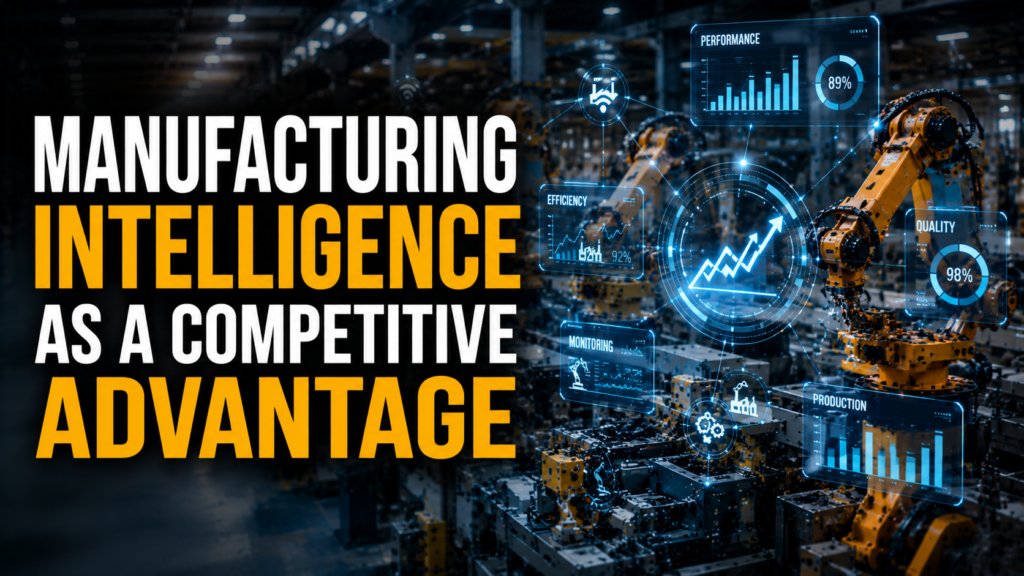
Manufacturing Intelligence has become one of the defining capabilities of successful modern manufacturers. In an increasingly competitive global market, relying on intuition or static reports is no longer sufficient. Organizations need real-time visibility, predictive insights, and intelligent decision-making to remain agile, efficient, and profitable.
By integrating operational data with advanced analytics, artificial intelligence, machine learning, and connected technologies, manufacturers can optimize production, improve quality, reduce costs, strengthen supply chains, and deliver superior customer value. Beyond operational improvements, Manufacturing Intelligence empowers leaders to anticipate challenges, respond quickly to market changes, and foster a culture of continuous innovation.
As Industry 4.0 continues to evolve, Manufacturing Intelligence will shift from being a strategic advantage to a business necessity. Companies that embrace intelligent manufacturing today will be better positioned to achieve sustainable growth, operational resilience, and long-term competitive leadership in the digital economy.
Also Read: “Decision Intelligence in Modern Manufacturing“
Author
Frequently Asked Questions
What is Manufacturing Intelligence?
Manufacturing Intelligence is the process of collecting, analyzing, and using production data to improve manufacturing efficiency, quality, decision-making, and profitability.
How does Manufacturing Intelligence improve competitiveness?
It enables organizations to reduce costs, improve productivity, minimize downtime, enhance quality, optimize supply chains, and make faster business decisions based on real-time insights.
Is Manufacturing Intelligence only for large manufacturers?
No. Small and medium-sized manufacturers can also benefit by using cloud-based analytics, IoT devices, and affordable AI-powered manufacturing software.