


The Future of Industrial Productivity
Industrial productivity has always been the foundation of economic growth, technological progress, and business competitiveness. From the invention of mechanized production systems to the rise of digital factories, every industrial revolution has focused on one central objective: achieving more output with fewer resources while improving quality and efficiency. The Future of Industrial Productivity.
Today, industrial productivity is entering its most transformative phase yet.
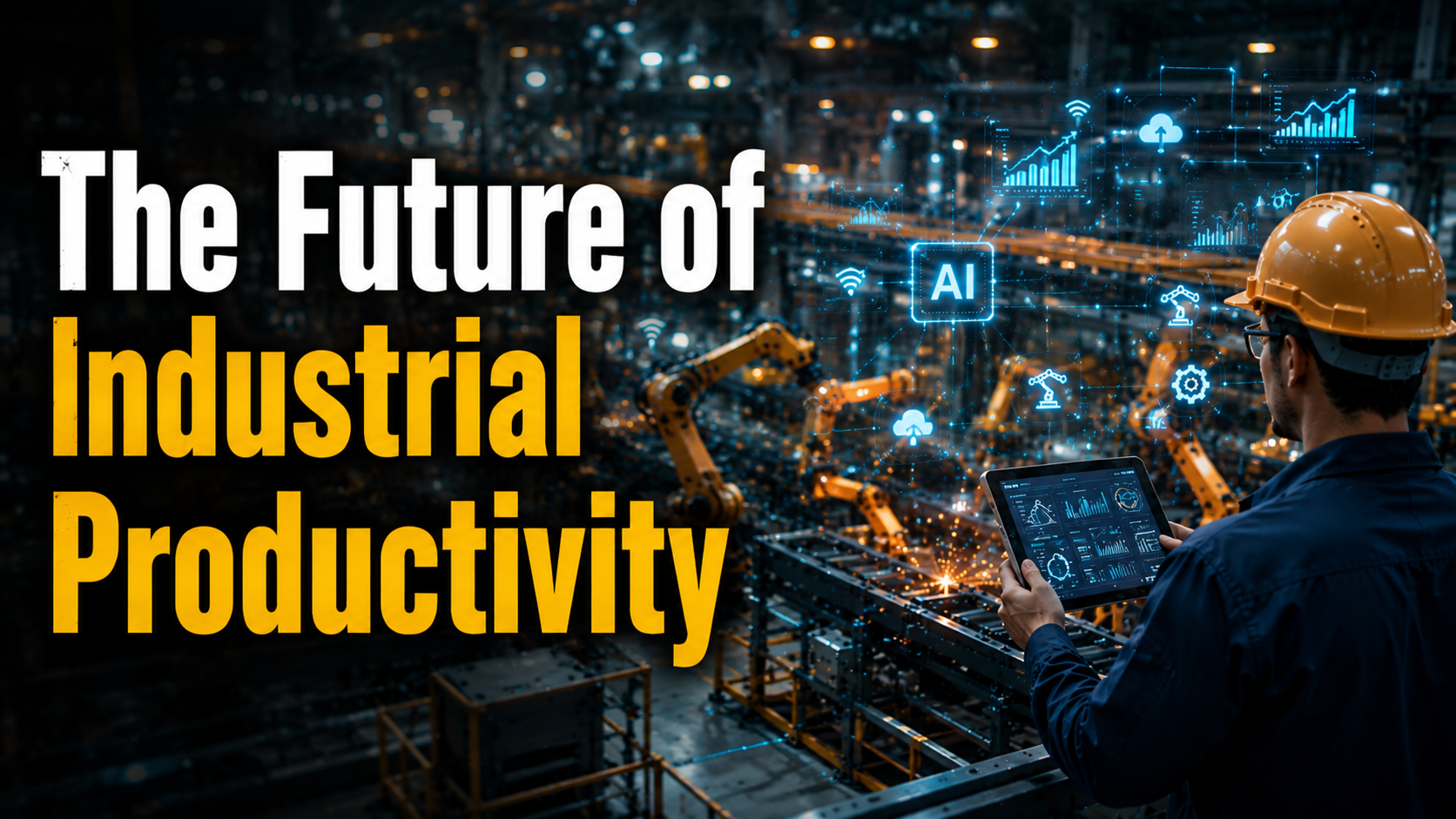
The future of industrial productivity will be shaped by intelligent technologies that allow factories, supply chains, and industrial organizations to become more connected, adaptive, predictive, and autonomous. Artificial Intelligence, Machine Learning, robotics, Industrial Internet of Things, digital twins, advanced analytics, cloud computing, and automation platforms are changing the way industries design products, manage operations, and create value.
Unlike previous productivity improvements that focused mainly on increasing production speed, the next generation of industrial productivity focuses on intelligence. Modern enterprises are moving toward systems that can understand operational conditions, predict challenges, optimize decisions, and continuously improve performance.
The factory of the future will not simply manufacture products. It will learn from every process, adapt to changing circumstances, and optimize itself through intelligent systems.
As businesses face global competition, supply chain uncertainty, sustainability pressures, and evolving customer expectations, industrial productivity has become more than an operational goal. It has become a strategic advantage.
Table of Contents
Understanding Industrial Productivity
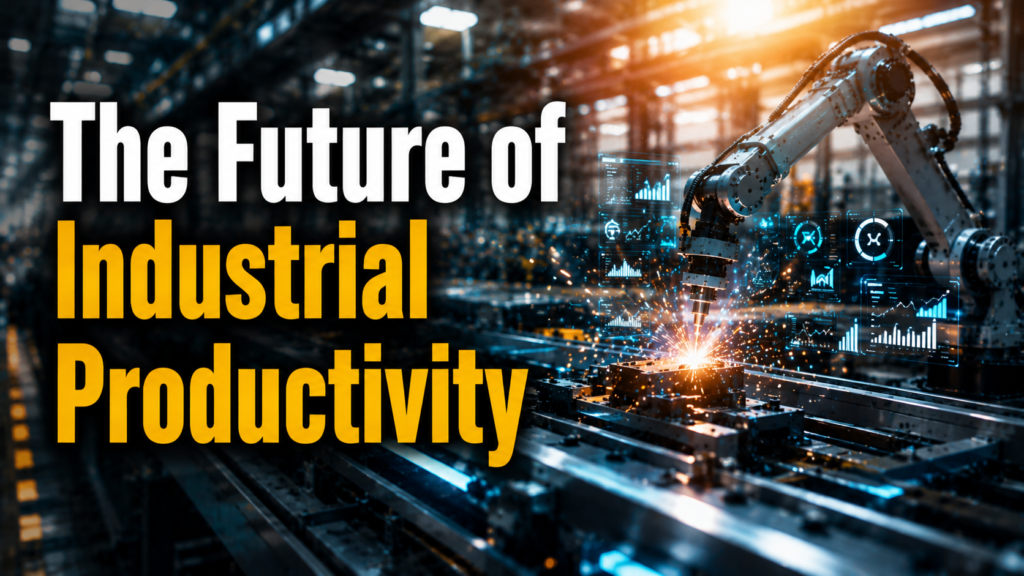
Industrial productivity refers to the efficiency with which organizations transform resources into valuable products and services.
The key resources involved include:
Labor
Raw materials
Energy
Equipment
Capital investment
Technology
Time
Traditional productivity measurement focused primarily on output compared to labor input.
Modern industrial productivity considers a much broader range of factors, including:
Machine performance
Data utilization
Process efficiency
Energy consumption
Quality improvement
Innovation speed
Supply chain resilience
Sustainability performance
The future of productivity will depend on how effectively organizations combine human expertise with intelligent technologies.
The Evolution of Industrial Productivity
Industrial productivity has continuously evolved through technological advancement.
| Industrial Era | Major Innovation | Productivity Impact |
|---|---|---|
| Industry 1.0 | Steam power and mechanization | Increased production capability |
| Industry 2.0 | Electricity and assembly lines | Enabled mass production |
| Industry 3.0 | Computers and automation | Improved process control |
| Industry 4.0 | AI, IoT, analytics | Created smart factories |
| Industry 5.0 | Human AI collaboration | Enables intelligent productivity |
Each industrial era introduced new methods for improving efficiency.
The next stage will focus on creating intelligent production ecosystems where machines, people, and digital systems work together.
Why Industrial Productivity Is Changing
Manufacturers today operate in a highly competitive environment.
Organizations must address:
Increasing customer expectations
Shorter product lifecycles
Global supply chain challenges
Rising energy costs
Skilled labor shortages
Environmental regulations
Demand for customization
Traditional productivity methods are no longer enough to manage these complexities.
Companies need intelligent systems capable of analyzing large amounts of information and making faster decisions.
This is why digital transformation has become central to the future of industrial productivity.
Key Technologies Driving Future Industrial Productivity
Artificial Intelligence
Artificial Intelligence is becoming one of the most important drivers of productivity improvement.
AI systems analyze massive amounts of industrial data to identify patterns, optimize processes, and support decision-making.
Manufacturing applications include:
Predictive maintenance
Quality improvement
Production scheduling
Demand forecasting
Supply chain optimization
Energy management
AI allows organizations to move from reactive problem-solving to proactive optimization.
Machine Learning and Predictive Intelligence
Machine Learning enables industrial systems to learn from historical and real-time data.
Instead of relying only on fixed instructions, intelligent systems continuously improve their performance.
Examples include:
Predicting equipment failures
Identifying production bottlenecks
Optimizing machine settings
Reducing defects
Improving resource allocation
Machine learning transforms factories into environments capable of continuous improvement.
Industrial Internet of Things
Industrial IoT connects machines, sensors, equipment, and software platforms.
Connected devices generate valuable operational data related to:
Machine health
Production performance
Energy usage
Material consumption
Environmental conditions
This data creates visibility across industrial operations.
With real-time information, companies can identify inefficiencies and take corrective actions immediately.
Advanced Robotics and Automation
Robotics has played an important role in industrial productivity for decades.
The future will involve more intelligent and flexible robots.
Advanced robotic systems can:
Perform complex tasks
Collaborate with human workers
Adapt to production changes
Improve precision
Reduce repetitive work
Robotics will continue improving productivity while creating safer and more efficient workplaces.
Digital Twins
Digital twin technology creates virtual models of physical assets, machines, and factories.
Organizations can simulate different scenarios before implementing changes in real environments.
Digital twins help improve productivity by enabling:
Process optimization
Equipment analysis
Production planning
Risk reduction
Performance forecasting
They allow manufacturers to experiment digitally and make better operational decisions.
Cloud and Edge Computing
Modern industrial productivity depends on fast and reliable data processing.
Cloud computing provides large-scale storage and analytics capabilities.
Edge computing enables real-time processing close to industrial equipment.
Together, they support:
Faster decisions
Improved reliability
Real-time automation
Better operational visibility
Data Analytics and Industrial Intelligence
Data has become one of the most valuable resources in modern industry.
Advanced analytics transforms raw operational data into actionable insights.
Industrial analytics helps organizations understand:
Production performance
Equipment efficiency
Quality trends
Resource utilization
Operational risks
Companies that effectively use industrial data will achieve stronger productivity advantages.
The Future Industrial Productivity Model
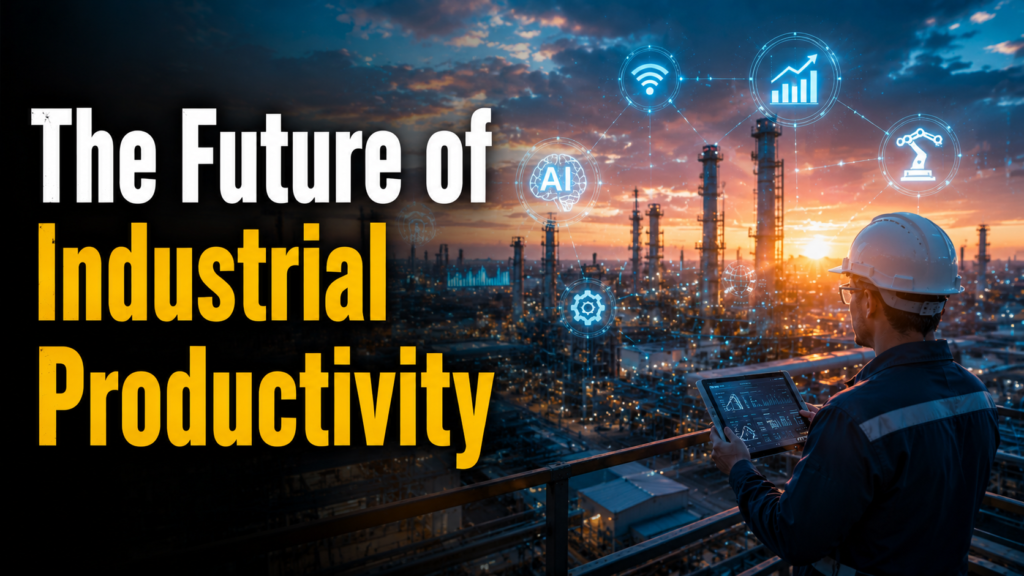
Future productivity will not rely on a single technology.
It will come from an integrated ecosystem.
| Productivity Area | Future Technology Impact |
|---|---|
| Manufacturing | Autonomous production systems |
| Maintenance | Predictive intelligence |
| Quality | AI inspection |
| Supply Chain | Intelligent planning |
| Workforce | AI collaboration tools |
| Energy | Smart optimization |
| Design | Generative engineering |
| Management | Real-time decision intelligence |
The future factory will operate as an intelligent ecosystem rather than a collection of independent processes.
Benefits of Future Industrial Productivity
Higher Operational Efficiency
Intelligent systems identify inefficiencies and optimize processes continuously.
Organizations can achieve:
Reduced downtime
Improved equipment utilization
Faster production cycles
Better resource management.
Predictive Maintenance
Equipment downtime is one of the largest productivity challenges in manufacturing.
Future industrial systems will predict failures before they happen.
AI analyzes:
Machine conditions
Historical performance
Sensor data
Operating patterns
This enables companies to schedule maintenance at optimal times.
Benefits include:
Lower maintenance costs
Improved reliability
Longer equipment lifespan
Higher production availability
Improved Product Quality
Product quality directly affects productivity.
AI-powered inspection systems improve quality through:
Real-time monitoring
Defect detection
Process analysis
Automatic correction
Manufacturers can reduce waste while improving customer satisfaction.
Flexible and Personalized Manufacturing
Modern customers increasingly demand customized products.
Future productivity models will support flexible manufacturing systems capable of quickly adapting production requirements.
Benefits include:
Faster customization
Reduced setup time
Lower inventory requirements
Improved customer responsiveness
Sustainable Industrial Productivity
The future of productivity must also focus on sustainability.
Intelligent technologies help organizations reduce:
Energy consumption
Material waste
Carbon emissions
Production losses
Resource inefficiency
Sustainable productivity creates value for both businesses and society.
Human Workforce Transformation
The future of industrial productivity is not only about machines.
People remain central to innovation and improvement.
Technology will change workforce roles by enabling employees to focus on:
Creative problem-solving
Strategic decisions
Process improvement
Innovation
Complex operations
Workers will increasingly collaborate with intelligent systems rather than perform repetitive tasks.
Applications Across Industries
Automotive Industry
Automotive manufacturers are improving productivity through:
Smart assembly lines
Robotic automation
AI quality inspection
Predictive maintenance
Connected supply chains
Electronics Manufacturing
Electronics production benefits from:
Precision automation
AI defect detection
Production optimization
Smart inventory management
Aerospace Industry
Aerospace manufacturers use advanced productivity technologies for:
Complex engineering
Digital simulation
Quality assurance
Maintenance planning
Pharmaceutical Industry
Pharmaceutical companies improve productivity through:
Process automation
Quality monitoring
AI research support
Production optimization
Food and Beverage Industry
Food manufacturers use intelligent systems for:
Production consistency
Supply chain visibility
Energy efficiency
Waste reduction
Challenges Affecting Future Industrial Productivity
Technology Investment
Advanced productivity systems require investment in:
Infrastructure
Software
Automation equipment
Employee training
Organizations must balance investment with long-term benefits.
Legacy Infrastructure
Many industrial facilities still operate older systems.
Modern productivity improvements require integration between:
Existing equipment
Digital platforms
AI systems
Industrial networks
Cybersecurity Challenges
Connected industrial environments create cybersecurity risks.
Companies must protect:
Operational systems
Production data
Intellectual property
Connected devices
Security will become a critical component of industrial productivity strategies.
Workforce Skills Gap
Future industries require new skills.
Employees need knowledge of:
Digital systems
AI tools
Data analytics
Automation technologies
Organizations must prioritize continuous learning.
Managing Organizational Change
Technology transformation requires cultural change.
Successful companies create environments where employees understand the value of new technologies and actively participate in improvement initiatives.
The Role of Generative AI in Industrial Productivity
Generative AI is creating new opportunities for industrial improvement.
Applications include:
Engineering assistance
Technical documentation
Production analysis
Knowledge management
Employee support
Design optimization
Generative AI can help industrial teams access information faster and make better decisions.
Future Trends Shaping Industrial Productivity
Autonomous Factories
Factories will increasingly operate through intelligent systems that monitor and optimize processes automatically.
AI Powered Industrial Assistants
Employees will use AI assistants for:
Troubleshooting
Planning
Analysis
Training
Decision support
Real Time Productivity Optimization
Future systems will continuously adjust operations based on changing conditions.
Human Machine Collaboration
People and intelligent systems will work together to achieve higher performance.
Intelligent Supply Networks
Supply chains will become more predictive, adaptive, and resilient.
How Organizations Can Prepare for the Future of Industrial Productivity
Companies should focus on several strategic actions.
Build a Strong Digital Foundation
Reliable data infrastructure is essential.
Adopt Scalable Technologies
Organizations should invest in flexible solutions that can grow over time.
Focus on High Impact Use Cases
Priority areas may include:
Predictive maintenance
Quality improvement
Energy optimization
Production planning
Train Employees
Digital skills development is critical for successful transformation.
Create Continuous Improvement Culture
Technology delivers maximum value when combined with organizational learning.
Measuring Industrial Productivity Success
Companies should track measurable improvements.
Important metrics include:
Overall equipment effectiveness
Production output
Defect reduction
Energy efficiency
Maintenance costs
Production cycle time
Inventory optimization
Employee productivity
Customer satisfaction
Why Intelligent Productivity Will Define Future Industry Leadership
The future of industrial competition will depend on intelligence.
Companies that can analyze information faster, optimize operations continuously, and respond quickly to market changes will gain significant advantages.
Future productivity leaders will combine:
Advanced technology
Skilled employees
Data-driven decisions
Sustainable practices
Continuous innovation
Industrial productivity is becoming a combination of human creativity and machine intelligence.
Conclusion
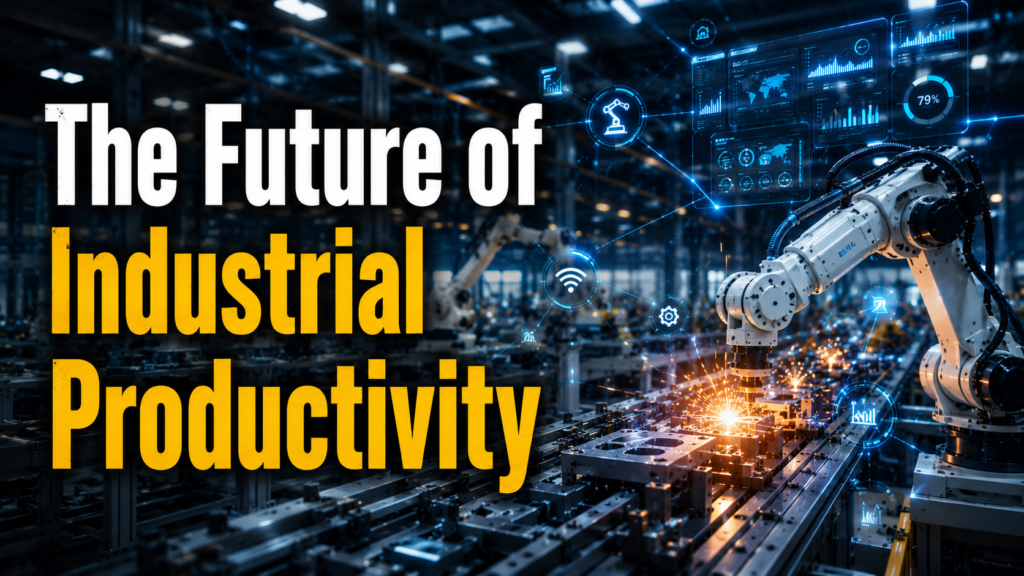
The future of industrial productivity will be defined by intelligent, connected, and adaptive manufacturing ecosystems. Technologies such as Artificial Intelligence, Industrial IoT, robotics, digital twins, automation, and advanced analytics are transforming how industries create value.
The next generation of productivity is not simply about producing more. It is about producing smarter.
Organizations that embrace intelligent technologies will improve efficiency, reduce costs, enhance quality, strengthen sustainability, and build more resilient operations.
The factories and industrial enterprises of tomorrow will be powered by data, intelligence, and collaboration between humans and machines.
The future of industrial productivity has already begun, and the organizations that prepare today will lead the next era of global manufacturing.
Also read: “Agentic AI and Autonomous Manufacturing Operations“
Author
Frequently Asked Questions
What is the future of industrial productivity?
The future of industrial productivity involves using intelligent technologies such as Artificial Intelligence, automation, robotics, Industrial IoT, and analytics to improve efficiency, quality, and operational decision-making.
How does AI improve industrial productivity?
AI improves productivity by predicting equipment failures, optimizing processes, improving quality control, forecasting demand, and supporting faster business decisions.
What technologies will shape future industrial productivity?
Key technologies include Artificial Intelligence, Machine Learning, Industrial IoT, robotics, digital twins, cloud computing, edge computing, and advanced analytics.