


How Industrial Data Fabric Is Creating the Digital Foundation for Smart Factories and Autonomous Manufacturing
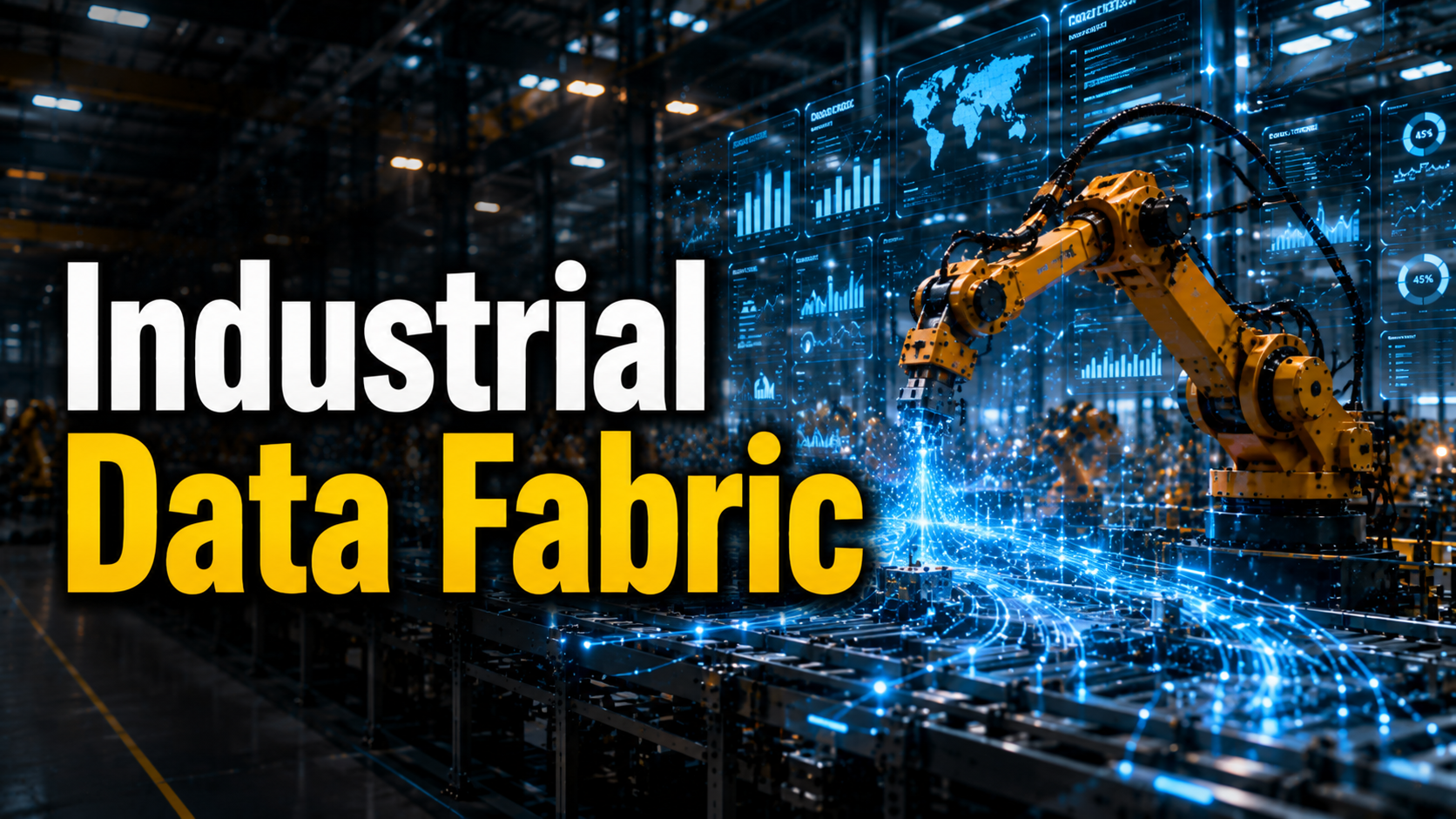
Manufacturing has entered a period of unprecedented digital transformation. Modern factories are no longer isolated production environments powered only by machines and human expertise. They are becoming highly connected ecosystems where sensors, robots, enterprise applications, engineering systems, supply chains, and Artificial Intelligence platforms continuously exchange information. Industrial Data Fabric: Connecting Manufacturing Data at Scale.
Every machine cycle, quality inspection, maintenance activity, inventory movement, and production decision generates valuable data. However, many manufacturers struggle to convert this enormous volume of information into actionable intelligence.
The challenge is not the lack of data.
The challenge is connecting, managing, understanding, and using manufacturing data effectively.
This is where the Industrial Data Fabric is becoming a critical technology foundation.
An Industrial Data Fabric provides a unified architecture that connects data across machines, production lines, factories, enterprise systems, cloud platforms, and edge environments. It creates seamless access to industrial information regardless of where that data is generated or stored.
Unlike traditional data integration approaches that rely on rigid connections between individual systems, Industrial Data Fabric creates a flexible, intelligent data ecosystem capable of adapting to changing manufacturing requirements.
As manufacturers move toward smart factories, Industry 5.0, autonomous production, and AI-driven operations, Industrial Data Fabric is becoming essential for enabling real-time intelligence, advanced analytics, digital twins, Industrial AI applications, and enterprise-wide decision-making.
This comprehensive guide explores what Industrial Data Fabric is, why it matters for manufacturing, how it works, its architecture, benefits, applications, challenges, implementation strategies, and its role in building the factories of the future.
Table of Contents
What Is Industrial Data Fabric?
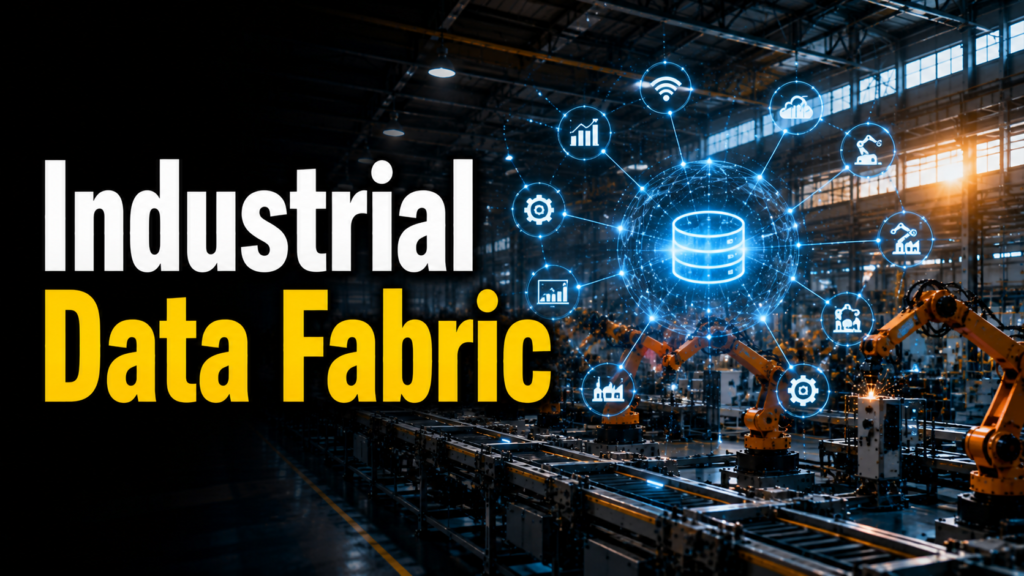
Industrial Data Fabric is a data architecture designed to connect, integrate, manage, and provide access to manufacturing information across diverse industrial environments.
It creates a unified layer that allows data from different sources to be discovered, accessed, governed, and analyzed without requiring manufacturers to physically move all information into a single location.
In a manufacturing environment, data may originate from:
Industrial sensors
Programmable Logic Controllers
Robotic systems
Manufacturing Execution Systems
Enterprise Resource Planning platforms
Quality Management Systems
Product Lifecycle Management systems
Maintenance platforms
Supply chain applications
Engineering databases
Cloud environments
Edge devices
Industrial Data Fabric connects these sources and creates a consistent data foundation.
It enables manufacturers to transform fragmented operational information into connected industrial intelligence.
Why Manufacturing Needs Industrial Data Fabric
Modern manufacturing organizations generate massive amounts of information every second.
A single factory may contain thousands of machines producing millions of data points daily.
However, many organizations still operate with fragmented data environments.
Common challenges include:
Data stored across disconnected systems
Different data formats across departments
Limited visibility across production sites
Difficulty accessing real-time information
Poor data quality
Manual reporting processes
Disconnected operational technology and information technology systems
These challenges prevent manufacturers from fully benefiting from Artificial Intelligence and advanced analytics.
Industrial Data Fabric addresses these issues by creating a connected and intelligent data ecosystem.
The Evolution of Manufacturing Data Architecture
Manufacturing data management has evolved significantly over time.
| Generation | Data Approach | Manufacturing Capability |
|---|---|---|
| Traditional Factories | Manual records and isolated systems | Limited visibility |
| Digital Manufacturing | Connected software platforms | Improved monitoring |
| Smart Factories | Integrated industrial data | Real-time analytics |
| AI Driven Factories | Intelligent data ecosystems | Autonomous optimization |
| Adaptive Factories | Industrial Data Fabric | Continuous learning and automation |
Industrial Data Fabric vs Traditional Data Integration
Traditional data integration methods often require creating direct connections between systems.
This approach becomes increasingly difficult as manufacturing environments grow more complex.
Industrial Data Fabric takes a different approach.
| Traditional Integration | Industrial Data Fabric |
|---|---|
| Point-to-point connections | Unified data ecosystem |
| Difficult to scale | Designed for enterprise scale |
| Requires manual mapping | Uses intelligent data discovery |
| Limited flexibility | Dynamic adaptation |
| Data movement focused | Data accessibility focused |
| Static architecture | Continuously evolving architecture |
How Industrial Data Fabric Works
Industrial Data Fabric combines multiple technologies to create connected manufacturing intelligence.
Data Connectivity Layer
The connectivity layer collects information from industrial and enterprise systems.
Sources include:
Sensors
Machines
Robots
Production equipment
Business applications
Engineering platforms
IoT devices
This layer ensures continuous data availability.
Data Integration Layer
This layer transforms different data formats into usable information.
It enables communication between:
Operational technology systems
Information technology platforms
Cloud environments
Edge systems
Legacy equipment
Integration creates a common data environment.
Metadata Management Layer
Metadata describes the meaning, origin, ownership, and characteristics of data.
In manufacturing, metadata helps answer questions such as:
Where did this data come from?
Which machine generated it?
What process does it represent?
Who owns it?
How reliable is it?
Metadata improves data understanding.
Semantic Data Layer
The semantic layer adds meaning and context to industrial information.
Manufacturing Knowledge Graphs and industrial ontologies help connect relationships between:
Machines
Products
Processes
Materials
Operators
Suppliers
Maintenance activities
This enables AI systems to understand manufacturing context.
Governance Layer
Data governance ensures that industrial information remains secure, accurate, compliant, and trustworthy.
Governance manages:
Data ownership
Security policies
Access permissions
Quality standards
Lifecycle management
Analytics and AI Layer
The final layer enables advanced applications including:
Artificial Intelligence
Machine Learning
Digital Twins
Predictive analytics
Generative AI
Industrial copilots
Autonomous decision systems
A strong data foundation improves AI performance.
Key Technologies Supporting Industrial Data Fabric
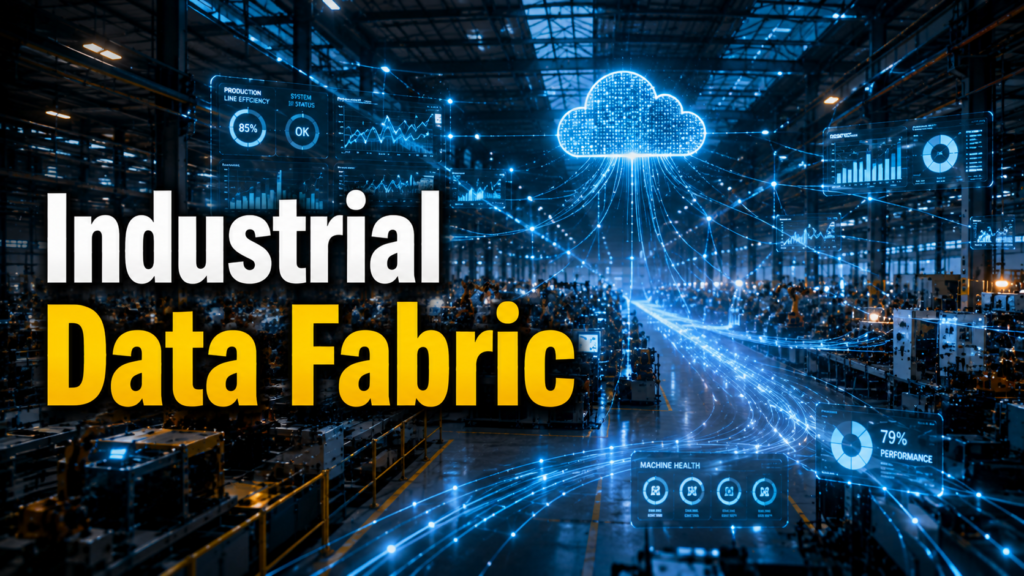
Industrial Internet of Things
Industrial IoT provides continuous data streams from connected machines and production systems.
It forms one of the primary data sources for Industrial Data Fabric.
Cloud Computing
Cloud platforms provide scalable storage, processing power, and enterprise-wide data accessibility.
Edge Computing
Edge computing enables real-time data processing close to manufacturing equipment.
This supports low-latency industrial applications.
Knowledge Graphs
Manufacturing Knowledge Graphs provide contextual relationships between industrial entities.
They help AI systems understand complex manufacturing environments.
Artificial Intelligence
AI transforms connected data into predictions, recommendations, and automated decisions.
Digital Twins
Digital twins use connected industrial data to create accurate virtual representations of physical assets and processes.
Industrial Data Fabric Architecture
A typical Industrial Data Fabric architecture includes:
| Component | Purpose |
|---|---|
| Data Sources | Machines, sensors, enterprise systems |
| Connectivity | Data communication and collection |
| Integration | Data transformation and synchronization |
| Metadata | Data discovery and understanding |
| Semantic Layer | Context and relationships |
| Governance | Security and quality management |
| AI Applications | Intelligence and automation |
Applications of Industrial Data Fabric in Manufacturing
Predictive Maintenance
Predictive maintenance requires access to diverse information sources.
Industrial Data Fabric combines:
Sensor readings
Maintenance history
Machine specifications
Operating conditions
Failure records
AI models use this connected information to predict failures more accurately.
Smart Quality Management
Quality depends on multiple factors.
Industrial Data Fabric connects:
Production parameters
Material information
Machine conditions
Inspection results
Supplier data
This enables faster root cause analysis and improved defect prevention.
Digital Twin Development
Digital twins require continuous access to operational data.
Industrial Data Fabric ensures that virtual factory models receive accurate and timely information.
Production Optimization
Manufacturers can optimize production by connecting:
Machine performance
Production schedules
Inventory information
Demand forecasts
Workforce availability
AI systems analyze these relationships and recommend improvements.
Supply Chain Intelligence
Industrial Data Fabric extends beyond factory walls.
It connects:
Suppliers
Logistics providers
Inventory systems
Production facilities
Customer demand information
This improves supply chain resilience.
Energy Management
Manufacturers can monitor and optimize energy usage by connecting equipment data with production information.
AI systems identify opportunities for reducing consumption and improving sustainability.
Industrial AI Applications
Advanced AI systems depend on reliable data.
Industrial Data Fabric provides the foundation for:
Industrial copilots
Autonomous AI agents
Industrial Foundation Models
AI Control Towers
Explainable AI systems
Benefits of Industrial Data Fabric
Unified Data Access
Manufacturers gain a connected view of operations across factories and systems.
Improved AI Performance
Better data quality and context improve Artificial Intelligence accuracy.
Faster Decision Making
Real-time information enables faster operational responses.
Reduced Data Silos
Departments can collaborate using shared industrial information.
Greater Operational Efficiency
Connected data improves maintenance, production, quality, and supply chain processes.
Increased Scalability
Organizations can expand digital transformation across multiple facilities.
Enhanced Innovation
A strong data foundation accelerates the development of new AI applications.
Industrial Data Fabric and Autonomous Factories
Autonomous factories require continuous access to accurate, contextual, and real-time information.
Machines, robots, AI agents, and human workers must collaborate through a shared understanding of operations.
Industrial Data Fabric provides this foundation.
It enables factories to:
Monitor conditions continuously
Predict future events
Optimize production automatically
Coordinate resources
Learn from operational history
Improve performance over time
Without connected data, autonomous manufacturing cannot become a reality.
Industrial Data Fabric and Industry 5.0
Industry 5.0 emphasizes collaboration between humans and intelligent machines.
Industrial Data Fabric supports this vision by creating a shared information environment where humans and AI systems can work together.
Employees gain better insights.
AI systems gain operational context.
Factories become more flexible, sustainable, and human-centered.
Challenges of Implementing Industrial Data Fabric
Legacy Manufacturing Systems
Many factories still rely on older equipment that was not designed for modern connectivity.
Integration strategies are required to connect legacy assets.
Data Quality Issues
Poor-quality information can reduce the value of analytics and AI applications.
Strong data governance is essential.
Cybersecurity Risks
Connected industrial environments require advanced security protection.
Organizations must protect sensitive operational data.
Complexity Management
Large manufacturing enterprises may operate thousands of systems across multiple locations.
Careful architecture planning is necessary.
Organizational Skills
Successful implementation requires expertise across:
Manufacturing operations
Data engineering
Cybersecurity
Artificial Intelligence
Industrial systems
Training programs are important.
Best Practices for Implementing Industrial Data Fabric
Manufacturers should begin by defining clear business objectives.
Identify high-value use cases such as predictive maintenance, quality improvement, production optimization, and AI enablement.
Create a comprehensive industrial data strategy.
Modernize connectivity across operational environments.
Implement strong governance policies.
Develop semantic models using Manufacturing Knowledge Graphs.
Combine Industrial Data Fabric with Digital Twins and Industrial AI platforms.
Start with focused projects and gradually scale across facilities.
Continuously improve data quality and architecture.
Future Trends in Industrial Data Fabric
Industrial Data Fabric technology will continue evolving as manufacturing becomes more intelligent.
Future developments include:
AI-powered data management
Self-healing data architectures
Real-time enterprise knowledge networks
Autonomous data discovery
Integration with Industrial Foundation Models
Semantic industrial data ecosystems
AI-driven governance automation
Global factory intelligence platforms
These innovations will accelerate the development of fully connected autonomous factories.
Why Industrial Data Fabric Is a Strategic Advantage
Data has become one of the most valuable assets in modern manufacturing.
However, raw data alone creates limited value.
Competitive advantage comes from connecting, understanding, and applying information intelligently.
Industrial Data Fabric enables manufacturers to transform fragmented information into operational intelligence.
Organizations that build strong industrial data foundations will be better positioned to adopt AI, improve efficiency, increase resilience, and accelerate innovation.
Conclusion
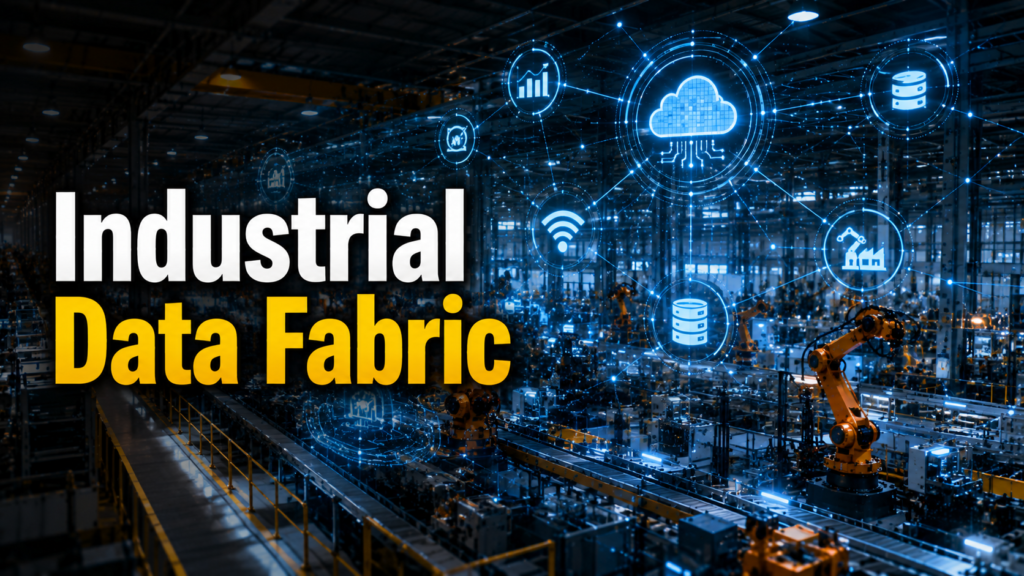
Industrial Data Fabric is becoming the digital backbone of modern manufacturing by solving one of the industry’s biggest challenges: connecting and understanding massive amounts of industrial data.
As factories become smarter, more automated, and increasingly autonomous, organizations need a flexible architecture that can unify information from machines, systems, people, and processes. Industrial Data Fabric provides this foundation by creating a connected ecosystem where data becomes accessible, meaningful, and actionable.
From predictive maintenance and intelligent quality management to digital twins, industrial AI, and autonomous production, the success of future manufacturing depends on reliable data connectivity and contextual intelligence.
Manufacturers that invest in Industrial Data Fabric today will be better prepared for the next generation of smart factories, where Artificial Intelligence, automation, and human expertise work together to create more efficient, resilient, and intelligent industrial operations.
Also Read: “AI Search and the Future of the Open Internet“
Author
Frequently Asked Questions
What is Industrial Data Fabric in manufacturing?
Industrial Data Fabric is a data architecture that connects, integrates, manages, and provides access to manufacturing information across machines, systems, factories, and enterprise platforms.
Why is Industrial Data Fabric important for smart factories?
It creates a unified data foundation required for Artificial Intelligence, digital twins, automation, analytics, and autonomous manufacturing.
How is Industrial Data Fabric different from traditional data integration?
Traditional integration connects specific systems through fixed relationships, while Industrial Data Fabric provides a flexible, scalable, and intelligent data ecosystem.