

How Agentic AI Is Transforming Manufacturing Beyond Industry 4.0
Artificial Intelligence has already transformed modern manufacturing through predictive maintenance, quality inspection, industrial robotics, and intelligent automation. Yet, the next major leap is no longer about machines that simply analyze data or execute predefined instructions. It is about AI systems that can understand goals, make informed decisions, collaborate with humans, coordinate with other machines, and autonomously execute complex industrial tasks with minimal human intervention. What Is Agentic Manufacturing? The Next Evolution of Smart Factories.
This new paradigm is known as Agentic Manufacturing.
Agentic Manufacturing represents one of the most exciting developments in industrial technology. Powered by advanced AI agents, industrial foundation models, edge computing, digital twins, and autonomous robotics, it enables factories to become more adaptive, intelligent, resilient, and self-optimizing than ever before.
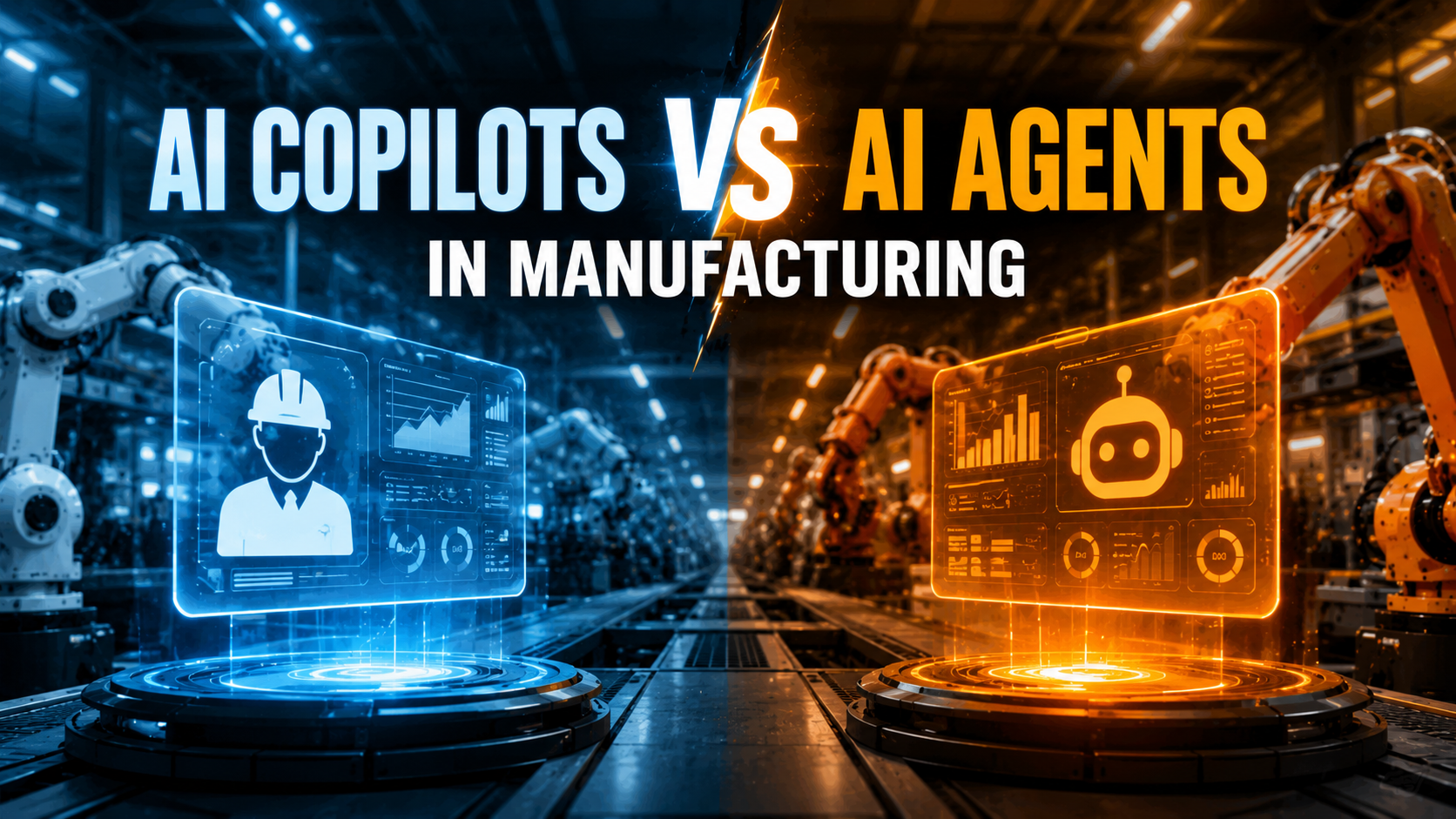
Unlike traditional automation, where machines follow fixed rules, Agentic Manufacturing introduces intelligent AI agents capable of reasoning, planning, learning from experience, and continuously improving production processes. These agents function much like highly skilled digital workers, collaborating across departments to optimize manufacturing operations in real time.
As manufacturers worldwide face increasing demand for customization, labor shortages, supply chain disruptions, rising operational costs, and sustainability goals, Agentic Manufacturing is emerging as the foundation of the next generation of smart factories.
This comprehensive guide explains what Agentic Manufacturing is, how it works, its core technologies, benefits, challenges, real-world applications, implementation strategies, and why it is expected to define the future of industrial production.
Table of Contents
What Is Agentic Manufacturing?
Agentic Manufacturing is an advanced manufacturing approach where autonomous AI agents actively participate in industrial operations by making decisions, coordinating workflows, solving problems, and optimizing production without requiring constant human supervision.
Unlike conventional automation systems that execute fixed instructions, AI agents are designed to understand objectives rather than simply follow commands.
For example, instead of being programmed to inspect every product identically, an AI agent can evaluate changing production conditions, identify emerging quality issues, adjust inspection priorities, recommend corrective actions, and collaborate with maintenance systems to prevent future defects.
These intelligent agents operate continuously across the factory ecosystem, learning from new information and adapting their behavior as production environments change.
The result is a manufacturing system that becomes increasingly efficient, flexible, and resilient over time.
Understanding AI Agents in Manufacturing
An AI agent is an intelligent software system capable of observing its environment, interpreting information, making decisions, and performing actions to achieve defined goals.
In manufacturing, AI agents can monitor equipment, optimize production schedules, inspect products, coordinate logistics, manage inventory, support engineers, and even negotiate resources with other AI agents operating across the factory.
Each agent specializes in a particular domain while collaborating with others to improve overall operational performance.
Instead of isolated automation systems, manufacturers gain an interconnected network of intelligent decision-makers working together.
Why Manufacturing Is Moving Toward Agentic AI
Traditional manufacturing automation has delivered tremendous efficiency gains over the past several decades. However, today’s factories face increasingly complex challenges that require far greater adaptability.
Manufacturers must respond to rapidly changing customer demand, shorter product life cycles, customized production, global supply chain disruptions, labor shortages, fluctuating energy costs, and increasingly strict environmental regulations.
Conventional automation struggles because every unexpected scenario often requires manual intervention or reprogramming.
Agentic Manufacturing addresses this limitation by enabling AI systems to understand changing situations, evaluate multiple options, and independently determine the best course of action while keeping humans involved in strategic oversight.
This shift allows factories to react intelligently instead of simply executing predetermined instructions.
Traditional Smart Manufacturing vs Agentic Manufacturing
| Traditional Smart Manufacturing | Agentic Manufacturing |
|---|---|
| Rule-based automation | Goal-driven autonomous intelligence |
| Fixed workflows | Dynamic adaptive workflows |
| Human-controlled optimization | AI-assisted autonomous optimization |
| Individual machine intelligence | Collaborative multi-agent intelligence |
| Reactive maintenance | Proactive self-managed maintenance |
| Limited flexibility | Highly adaptive production |
| Static decision making | Continuous reasoning and learning |
| Data monitoring | Autonomous decision execution |
Core Technologies Behind Agentic Manufacturing
Agentic Manufacturing combines multiple cutting-edge technologies into a unified intelligent ecosystem.
Artificial Intelligence Agents
AI agents serve as autonomous digital workers capable of planning, reasoning, learning, and executing industrial tasks.
Each agent focuses on specific manufacturing objectives while collaborating with others.
Examples include production planning agents, maintenance agents, quality agents, logistics agents, procurement agents, and engineering assistants.
Industrial Foundation Models
Industrial Foundation Models provide AI agents with deep knowledge of manufacturing operations.
These models understand engineering documents, machine behavior, sensor data, production workflows, maintenance history, industrial terminology, and operational best practices.
Instead of learning one isolated task, they provide broad industrial intelligence.
Digital Twins
Digital twins create virtual replicas of manufacturing systems.
AI agents continuously compare real-world operations with digital simulations to predict equipment failures, optimize production, evaluate process changes, and test improvement strategies before applying them to physical factories.
Industrial Internet of Things
Connected sensors continuously supply AI agents with real-time operational data.
Examples include machine temperatures, vibration levels, pressure readings, energy consumption, production speed, inventory status, environmental conditions, and equipment health indicators.
Edge Computing
Many industrial decisions require immediate responses.
Edge computing allows AI agents to process data directly at manufacturing sites instead of relying entirely on cloud infrastructure.
This minimizes latency while improving operational reliability.
Collaborative Robotics
Modern collaborative robots work safely alongside human employees.
Agentic Manufacturing allows AI agents to coordinate robotic activities based on production priorities, worker availability, equipment conditions, and changing customer demand.
How Agentic Manufacturing Works
Agentic Manufacturing follows a continuous cycle of intelligent decision making.
First, AI agents collect information from sensors, machines, enterprise systems, engineering documents, and production databases.
Next, they analyze the available information using Industrial Foundation Models and advanced machine learning algorithms.
The agents then evaluate possible actions based on operational goals such as maximizing production efficiency, reducing waste, improving quality, or minimizing energy consumption.
After selecting the best strategy, the agents coordinate with machines, robots, maintenance systems, warehouse operations, and human workers to execute the decision.
Finally, they monitor outcomes, learn from operational results, and continuously improve future decision making.
This creates a factory that becomes progressively smarter over time
Major Applications of Agentic Manufacturing
Autonomous Production Planning
Production scheduling traditionally requires significant human expertise.
Agentic AI continuously balances customer orders, machine availability, workforce capacity, material inventory, maintenance schedules, and delivery deadlines to create optimized production plans that adapt instantly when disruptions occur.
Intelligent Predictive Maintenance
Maintenance agents monitor equipment health around the clock.
By analyzing vibration, temperature, acoustic signals, lubrication quality, power consumption, and historical maintenance records, they can predict failures before they occur.
The agents automatically recommend maintenance schedules that minimize production interruptions.
AI-Driven Quality Assurance
Quality inspection agents analyze visual images, production measurements, sensor readings, and historical defect patterns.
Instead of simply detecting defective products, they identify root causes and collaborate with production agents to eliminate recurring quality issues.
Autonomous Supply Chain Coordination
Supply chain agents continuously monitor supplier performance, inventory levels, transportation delays, customer demand, and production schedules.
When disruptions occur, they proactively identify alternative suppliers, adjust manufacturing priorities, and recommend inventory strategies that reduce operational risk.
Intelligent Energy Management
Energy optimization agents continuously monitor factory-wide electricity, gas, water, compressed air, and cooling consumption.
They automatically adjust production schedules and equipment usage to reduce peak energy demand while maintaining production targets.
This lowers both operational costs and environmental impact.
Engineering Knowledge Assistance
Engineering agents serve as intelligent assistants capable of answering technical questions, retrieving equipment documentation, generating maintenance procedures, summarizing inspection reports, and supporting troubleshooting activities.
These assistants significantly reduce the time engineers spend searching for information.
Benefits of Agentic Manufacturing
Higher Operational Efficiency
AI agents eliminate many manual decision-making processes while continuously optimizing production workflows.
Factories achieve higher throughput without proportionally increasing operational complexity.
Reduced Downtime
Maintenance agents identify early warning signs of equipment degradation, allowing repairs to occur before unexpected failures interrupt production.
Faster Decision Making
Instead of waiting for human analysis, AI agents evaluate factory conditions continuously and recommend optimal responses within seconds.
Improved Product Quality
Real-time quality optimization enables manufacturers to identify process deviations before defective products are produced.
This significantly reduces scrap and rework.
Greater Manufacturing Flexibility
Modern consumers increasingly demand customized products.
Agentic Manufacturing allows factories to adjust production configurations quickly without extensive manual programming.
Lower Operational Costs
Autonomous optimization reduces expenses related to maintenance, energy consumption, inventory management, waste, and production inefficiencies.
Better Workforce Productivity
Rather than replacing employees, AI agents automate repetitive analytical tasks so engineers, operators, and managers can focus on innovation, strategic planning, and continuous improvement.
Enhanced Sustainability
Agentic AI helps manufacturers reduce environmental impact through optimized resource utilization, lower emissions, reduced waste generation, and improved energy efficiency.
Real-World Industry Applications
Automotive Manufacturing
Automotive manufacturers use Agentic Manufacturing to optimize robotic assembly, coordinate production across multiple plants, improve quality inspection, predict equipment failures, and accelerate new vehicle production.
Aerospace Manufacturing
AI agents manage complex production workflows involving thousands of highly specialized components while ensuring strict compliance with safety and quality standards.
Semiconductor Manufacturing
Semiconductor production requires extreme precision.
Agentic AI optimizes cleanroom operations, process control, defect detection, equipment calibration, and production scheduling.
Pharmaceutical Manufacturing
Manufacturers use intelligent agents to maintain regulatory compliance, optimize production batches, monitor quality, and improve manufacturing consistency.
Consumer Electronics
Agentic systems coordinate component sourcing, assembly operations, quality inspection, packaging, and logistics while adapting rapidly to changing product demand.
Food and Beverage Manufacturing
AI agents optimize production scheduling, monitor food safety, manage inventory, reduce waste, improve packaging quality, and support sustainability initiatives.
Human and AI Collaboration
One of the most common misconceptions is that Agentic Manufacturing eliminates human involvement.
In reality, the technology strengthens collaboration between humans and intelligent systems.
AI agents excel at processing enormous amounts of information, identifying patterns, performing continuous monitoring, and making data-driven recommendations.
Humans contribute creativity, ethical judgment, strategic thinking, innovation, customer understanding, and complex problem-solving.
Together, they create highly productive manufacturing environments where technology amplifies human expertise rather than replacing it.
Challenges of Agentic Manufacturing
Although the potential benefits are enormous, implementation requires careful planning.
Data Integration
Many factories operate equipment from multiple vendors using different communication standards.
Successfully integrating these systems remains one of the biggest technical challenges.
Cybersecurity
Autonomous AI systems require robust cybersecurity protections to prevent unauthorized access and operational disruptions.
Strong governance frameworks are essential.
Workforce Readiness
Employees require training to effectively collaborate with AI agents.
Upskilling programs become increasingly important as intelligent automation expands.
Regulatory Compliance
Manufacturers operating in regulated industries must ensure that autonomous AI decisions remain transparent, explainable, and fully auditable.
Investment Requirements
Deploying Agentic Manufacturing involves investments in sensors, connectivity, AI infrastructure, cloud services, digital twins, cybersecurity, and employee education.
However, long-term operational savings often justify the initial investment.
Best Practices for Implementing Agentic Manufacturing
Organizations should adopt a phased implementation strategy.
Begin with clearly defined business objectives such as predictive maintenance, quality improvement, or production scheduling.
Develop a strong industrial data infrastructure before deploying advanced AI agents.
Ensure collaboration between manufacturing engineers, IT professionals, operations managers, cybersecurity experts, and executive leadership.
Prioritize explainable AI systems that allow employees to understand how recommendations are generated.
Measure performance continuously using key indicators including equipment availability, production efficiency, defect rates, energy consumption, maintenance costs, and customer satisfaction.
Finally, treat Agentic Manufacturing as an ongoing transformation rather than a one-time technology project.
The Future of Agentic Manufacturing
Over the next decade, Agentic Manufacturing is expected to become the standard operating model for advanced factories.
Future developments may include factories where AI agents independently negotiate production resources, autonomous robots coordinate complex assembly operations, digital twins continuously optimize manufacturing strategies, and industrial foundation models enable conversational interaction with every machine on the factory floor.
Manufacturing ecosystems will evolve from isolated automation toward interconnected networks of intelligent agents capable of solving complex industrial challenges collaboratively.
This transformation will improve resilience, accelerate innovation, strengthen sustainability, and enable manufacturers to respond rapidly to changing global market conditions.
Organizations that embrace Agentic Manufacturing today will be better positioned to compete in an increasingly intelligent industrial economy.
Why Agentic Manufacturing Matters for Business Competitiveness
Competitive advantage in manufacturing increasingly depends on agility rather than scale alone.
Companies that can adapt production quickly, reduce downtime, optimize resources, improve quality, and respond intelligently to disruptions will outperform organizations relying solely on conventional automation.
Agentic Manufacturing provides the technological foundation for this agility.
By enabling autonomous decision-making supported by real-time industrial intelligence, manufacturers can increase operational resilience while delivering higher-quality products at lower costs.
In a world of volatile supply chains, growing customer expectations, and accelerating technological change, Agentic Manufacturing is becoming not merely an innovation but a strategic necessity.
Conclusion
Agentic Manufacturing represents the next major milestone in the evolution of intelligent industry. It moves beyond traditional automation by introducing autonomous AI agents capable of reasoning, learning, collaborating, and acting across the manufacturing ecosystem. Rather than simply executing predefined tasks, these systems continuously optimize operations, anticipate disruptions, improve quality, reduce downtime, and support better business decisions.
As manufacturing becomes more connected, data-rich, and customer-driven, the ability to adapt in real time will define industrial success. Agentic Manufacturing equips organizations with that capability by combining Industrial Foundation Models, AI agents, digital twins, edge computing, and connected industrial systems into a unified, intelligent operating model.
Manufacturers that begin adopting Agentic Manufacturing today are laying the groundwork for factories that are not only smarter but also more resilient, efficient, sustainable, and competitive. In the years ahead, this approach will play a central role in shaping the future of global manufacturing, making it one of the most important technological advancements of the Industry 5.0 era.
Also Read: “Self Healing Production Lines Powered by AI“
Author
Frequently Asked Questions
What is Agentic Manufacturing?
Agentic Manufacturing is a manufacturing approach that uses autonomous AI agents to make decisions, coordinate operations, optimize production, and continuously improve industrial processes with minimal human intervention.
How is Agentic Manufacturing different from traditional automation?
Traditional automation follows predefined rules, while Agentic Manufacturing uses intelligent AI agents that understand objectives, adapt to changing conditions, learn from experience, and collaborate with humans and machines.
What technologies enable Agentic Manufacturing?
Key technologies include AI agents, Industrial Foundation Models, Industrial Internet of Things, digital twins, edge computing, collaborative robotics, cloud computing, machine learning, and advanced analytics.