


Introduction
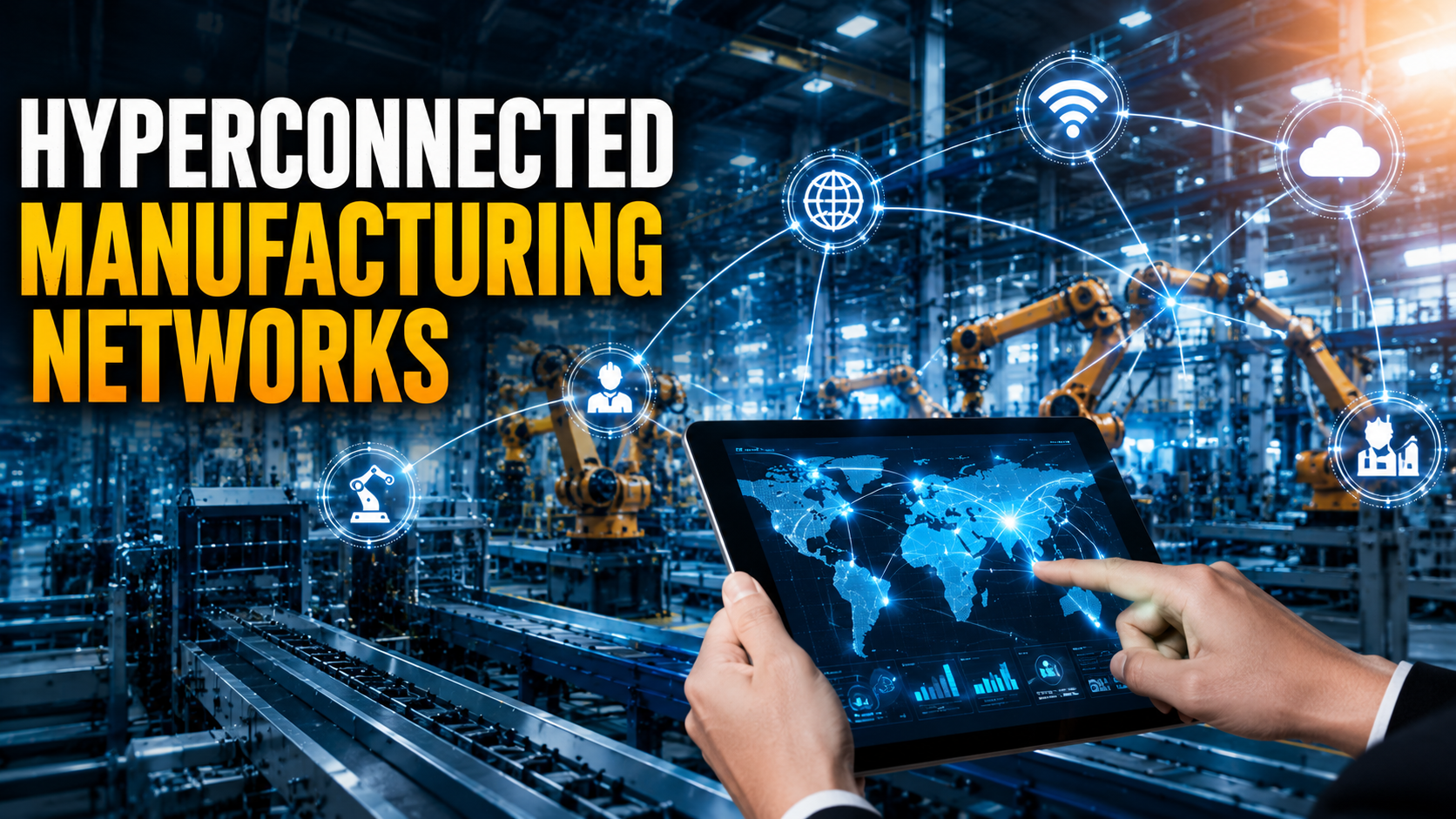
Manufacturing is undergoing one of the most significant transformations in its history. Factories that once operated as isolated production environments are evolving into intelligent, interconnected ecosystems where machines, software platforms, employees, suppliers, and customers communicate continuously through advanced digital technologies. Hyperconnected Manufacturing Networks: The Future of Intelligent, Connected Industrial Ecosystems.
This transformation is being driven by the rise of Hyperconnected Manufacturing Networks.
Hyperconnected Manufacturing Networks represent a new generation of industrial connectivity where every important element of the manufacturing ecosystem can exchange information in real time. Instead of relying on separate systems and delayed decision-making processes, modern manufacturers are creating connected environments where data flows seamlessly across production lines, factories, supply chains, and business operations.
The purpose of hyperconnectivity is not simply to connect more machines or collect more data. The real objective is to create an intelligent manufacturing environment where organizations can understand operational conditions, predict future challenges, improve efficiency, and make faster strategic decisions.
The modern industrial landscape has become increasingly complex. Manufacturers must manage changing customer expectations, shorter product development cycles, global supply networks, sustainability goals, and increasing pressure to deliver high-quality products at competitive prices. These challenges require a level of visibility and adaptability that traditional manufacturing approaches cannot provide.
Hyperconnected manufacturing networks provide the digital foundation needed for this new industrial reality. By combining artificial intelligence, Industrial Internet of Things, cloud computing, edge technologies, digital twins, advanced analytics, and automation systems, manufacturers can create factories that are more responsive, efficient, and intelligent.
The future factory will not operate as an independent production unit. It will function as part of a larger connected industrial ecosystem where information drives every decision.
Table of Contents
Understanding Hyperconnected Manufacturing Networks
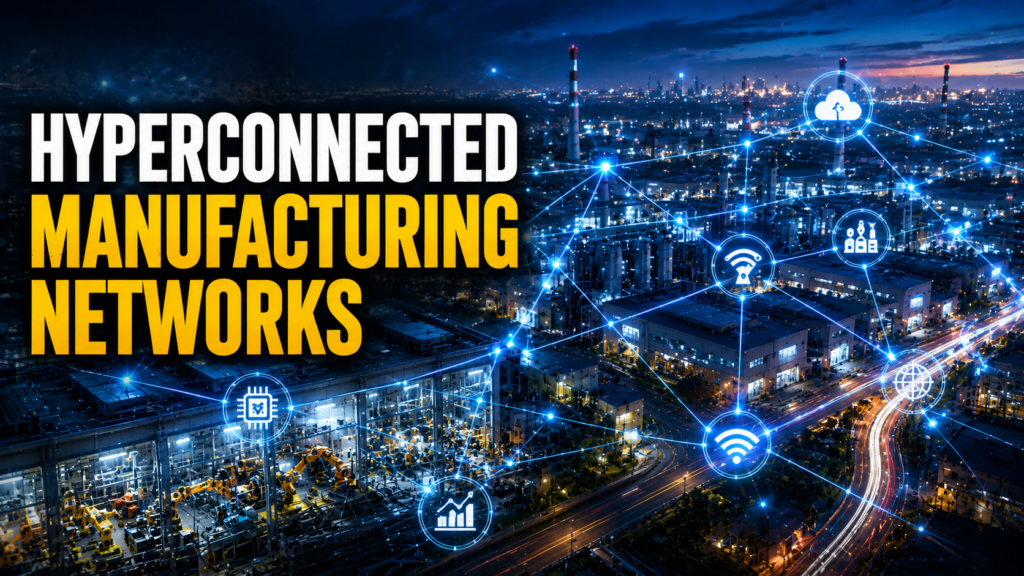
A hyperconnected manufacturing network is an advanced industrial framework that connects machines, production systems, people, software applications, suppliers, and business processes through digital communication technologies.
Traditional manufacturing environments often contain separate systems that perform specific tasks. Production equipment may operate independently from inventory systems, maintenance platforms, and business planning tools. Although these systems may function effectively, limited communication between them can create delays, inefficiencies, and missed opportunities.
Hyperconnected manufacturing networks remove these barriers by creating a unified digital environment.
In a hyperconnected factory, a machine can share performance information with maintenance systems. Production data can influence supply chain planning. Customer demand information can automatically affect manufacturing schedules. Quality data can help engineers improve future product designs.
This continuous exchange of information creates a manufacturing environment that can react faster and operate more intelligently.
The key difference between traditional connectivity and hyperconnectivity is the level of integration. Traditional connected systems may allow individual machines to communicate, while hyperconnected networks connect the entire industrial ecosystem.
The Evolution of Manufacturing Connectivity
The development of hyperconnected manufacturing networks is the result of several industrial advancements.
Early manufacturing systems depended mainly on human expertise and manual coordination. Workers monitored machines, managed production activities, and solved problems using experience and observation.
The introduction of automation changed manufacturing by allowing machines to perform repetitive tasks with greater speed and precision. However, many automated systems operated independently and followed fixed instructions.
Digital manufacturing introduced computer-based design tools, enterprise software, and production management systems. Companies gained better control over information and improved their ability to plan operations.
Smart manufacturing introduced sensors, connected equipment, and real-time monitoring. Factories became more data-driven, allowing organizations to understand production performance more clearly.
Hyperconnected manufacturing represents the next stage of this evolution. It combines connectivity with intelligence, allowing industrial systems to communicate, analyze information, and support continuous improvement.
Why Hyperconnected Manufacturing Networks Are Becoming Essential
Modern manufacturing requires a level of flexibility and intelligence that older systems cannot easily provide.
Companies today operate in a highly competitive environment where customer expectations change quickly and product requirements become more personalized. Manufacturers must respond faster while maintaining quality and controlling costs.
At the same time, supply chains have become more complex. A disruption in one region can affect production activities across multiple locations. Manufacturers need better visibility into suppliers, inventory levels, transportation conditions, and market demand.
Hyperconnected manufacturing networks help organizations manage this complexity by creating a complete view of industrial operations.
Instead of relying on disconnected information sources, decision-makers can access real-time insights from across the manufacturing ecosystem.
This allows companies to identify problems earlier, optimize resources more effectively, and respond to changes with greater confidence.
Core Technologies Behind Hyperconnected Manufacturing Networks
The success of hyperconnected manufacturing depends on several advanced technologies working together.
Industrial Internet of Things
The Industrial Internet of Things is one of the most important technologies behind connected manufacturing.
Industrial sensors installed on machines and production equipment continuously collect information about operational conditions. This data may include equipment performance, temperature levels, energy usage, production speed, and maintenance requirements.
When connected through industrial networks, these devices create a continuous flow of information.
This information allows manufacturers to understand what is happening inside their factories and identify opportunities for improvement.
Artificial Intelligence and Machine Learning
Connectivity creates large amounts of industrial data, but data alone does not create value. Artificial intelligence transforms this information into meaningful insights.
AI systems analyze manufacturing data to identify patterns, predict future events, and support decision-making.
Machine learning models can study historical production information and recognize relationships between different operational factors.
For example, AI can identify conditions that usually occur before equipment failure and provide early warnings. It can also recommend production adjustments that improve efficiency.
As AI systems continue learning from new information, they become increasingly valuable for industrial optimization.
Cloud Computing
Cloud computing provides the infrastructure required to store, process, and manage massive amounts of manufacturing data.
Large manufacturers often operate multiple facilities across different locations. Cloud platforms allow these facilities to share information and operate as connected networks.
Cloud-based manufacturing systems support:
Real-time data access
Advanced analytics
Remote monitoring
Collaboration between teams
Centralized management
This creates greater visibility across global manufacturing operations.
Edge Computing
While cloud computing provides large-scale processing capabilities, edge computing focuses on processing data closer to where it is generated.
In manufacturing environments, immediate responses are often necessary.
For example, robotic systems, safety applications, and quality inspection systems may require decisions within milliseconds.
Edge computing reduces delays by analyzing information near machines instead of sending every piece of data to distant servers.
Digital Twins
Digital twins create virtual models of physical manufacturing systems.
These digital representations allow companies to simulate operations, test improvements, and predict possible outcomes without affecting real production.
A manufacturer can use a digital twin to evaluate a process change before implementing it in a factory.
This reduces risks and helps organizations make better engineering decisions.
Advanced Communication Networks
Reliable communication infrastructure is essential for hyperconnected manufacturing.
Technologies such as advanced industrial networks and next-generation wireless communication enable faster and more reliable connections between machines and systems.
These networks support large numbers of connected devices while maintaining performance and security.
How Hyperconnected Manufacturing Networks Operate
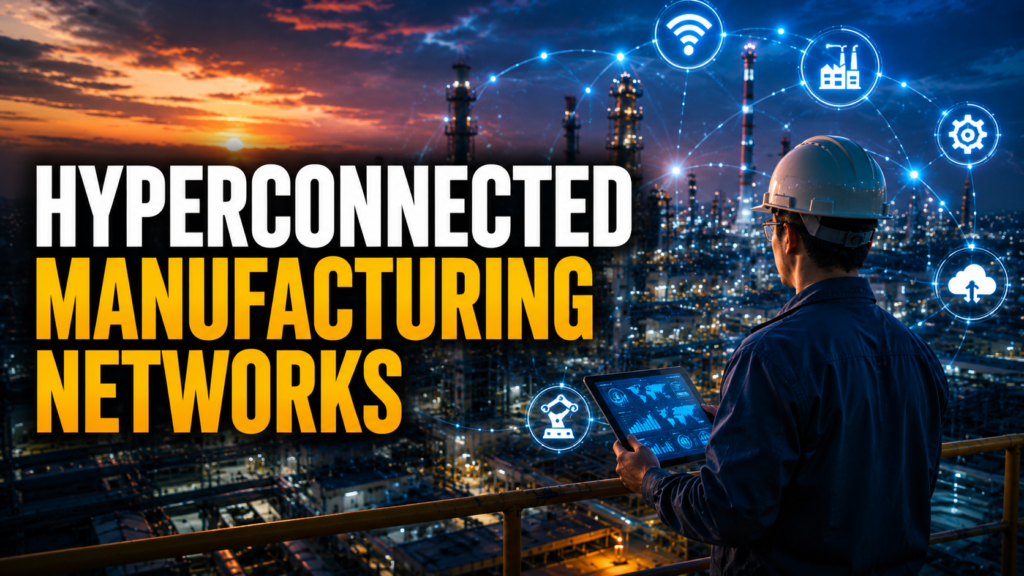
Hyperconnected manufacturing networks work through continuous information exchange between physical and digital systems.
Machines, sensors, software platforms, and employees generate valuable operational information. This information is collected, analyzed, and transformed into actionable insights.
For example, a connected production line can monitor equipment performance continuously. If unusual behavior appears, artificial intelligence systems can analyze the situation and determine whether it represents a potential problem.
The system may recommend maintenance, adjust production parameters, or alert operators before the issue affects productivity.
This creates a proactive manufacturing environment where companies can prevent problems rather than simply react to them.
Major Applications of Hyperconnected Manufacturing Networks
Intelligent Production Management
Hyperconnected networks allow manufacturers to monitor production activities with greater accuracy.
Managers can understand factory performance in real time and identify areas where improvements are needed.
Production planning becomes more flexible because decisions are based on current operational information rather than outdated reports.
Predictive Maintenance
Equipment downtime is one of the biggest challenges in manufacturing.
Hyperconnected systems collect continuous machine data and use artificial intelligence to identify early signs of equipment problems.
Instead of waiting for failures to occur, manufacturers can schedule maintenance at the most appropriate time.
This improves equipment reliability and reduces unnecessary interruptions.
Smart Quality Control
Quality management becomes more advanced when manufacturing systems are connected.
AI-powered inspection technologies can analyze products, identify defects, and determine possible causes.
Quality information can also be shared across production systems, helping manufacturers improve processes continuously.
Supply Chain Integration
Hyperconnected manufacturing extends beyond the factory.
Production systems can connect with suppliers, logistics providers, and inventory management platforms.
This improves supply chain visibility and helps companies respond more effectively to changes in demand or availability.
Sustainable Manufacturing Operations
Sustainability has become a major priority for industries worldwide.
Hyperconnected networks help companies monitor resource consumption and identify opportunities to reduce waste.
Manufacturers can analyze energy usage, material efficiency, and production processes to create more sustainable operations.
Benefits of Hyperconnected Manufacturing Networks
Hyperconnected manufacturing networks provide significant advantages for modern industries.
One of the most important benefits is improved operational visibility. Companies gain a clearer understanding of their entire manufacturing environment because information is available from multiple sources in real time.
Another major advantage is faster decision-making. When managers have access to accurate and timely information, they can respond quickly to challenges and opportunities.
Hyperconnected networks also improve productivity by identifying inefficiencies and optimizing production processes.
They support better collaboration because different teams can work with shared information instead of relying on separate data sources.
Manufacturers can also improve resilience by identifying risks earlier and adapting operations more effectively.
Challenges of Implementing Hyperconnected Manufacturing Networks
Although hyperconnected manufacturing offers many advantages, organizations must overcome several challenges.
One major challenge is cybersecurity. Connecting more devices and systems creates additional security concerns. Manufacturers must protect industrial networks, operational data, and critical infrastructure from potential threats.
Another challenge is managing large amounts of data. Hyperconnected factories generate enormous volumes of information, requiring strong data management strategies.
Integration with existing equipment can also be difficult. Many factories still operate older machinery that was not designed for modern digital connectivity.
Organizations must also invest in workforce development. Employees need new skills to manage and operate intelligent manufacturing systems effectively.
The Role of Humans in Hyperconnected Manufacturing
Although technology plays a central role in hyperconnected manufacturing, human expertise remains essential.
Artificial intelligence can analyze information quickly, but humans provide creativity, strategic thinking, and industry knowledge.
Future manufacturing workers will spend less time monitoring routine operations and more time managing intelligent systems, improving processes, and developing innovative solutions.
The relationship between humans and technology will become increasingly collaborative.
The most successful manufacturers will combine machine intelligence with human creativity.
Hyperconnected Manufacturing and Industry 5.0
Industry 5.0 focuses on creating a balance between advanced technology and human-centered manufacturing.
Hyperconnected manufacturing networks support this vision by enabling closer collaboration between people and intelligent systems.
Machines provide automation and analytical capabilities, while humans contribute innovation and decision-making skills.
This creates a more flexible and sustainable industrial environment.
Future Trends in Hyperconnected Manufacturing Networks
The future of hyperconnected manufacturing will continue to evolve as technologies improve.
Factories will become more autonomous, with artificial intelligence systems capable of managing increasingly complex operations.
Manufacturing networks will become more globally connected, allowing companies to coordinate production across multiple locations.
Digital twins will become more advanced, creating highly accurate simulations of industrial environments.
AI-powered systems will provide deeper insights and support more intelligent decision-making.
The result will be a new generation of factories that can adapt continuously to changing conditions.
Conclusion
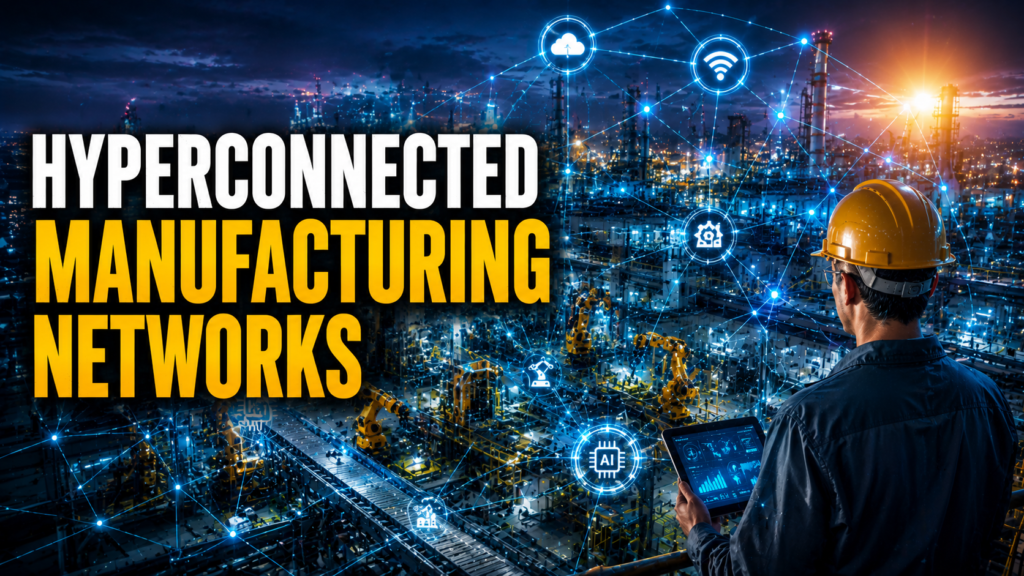
Hyperconnected Manufacturing Networks represent a fundamental transformation in the way industries operate.
By connecting machines, people, software systems, and supply chains, manufacturers can create intelligent ecosystems that improve efficiency, flexibility, and resilience.
The future of manufacturing will depend on the ability to transform industrial data into meaningful intelligence.
Companies that successfully adopt hyperconnected manufacturing approaches will be better positioned to compete in an increasingly digital economy.
The factory of the future will not simply be automated.
It will be connected, intelligent, adaptive, and continuously improving.
Also Read: “What Is Agentic Manufacturing?“
Author
Frequently Asked Questions
What are Hyperconnected Manufacturing Networks?
Hyperconnected Manufacturing Networks are advanced industrial systems that connect machines, people, software platforms, and supply chains through digital technologies to enable real-time communication and intelligent decision-making.
How do hyperconnected networks improve manufacturing efficiency?
They improve efficiency by providing better operational visibility, enabling predictive maintenance, optimizing production processes, improving collaboration, and supporting faster decisions.
What technologies are used in hyperconnected manufacturing?
Key technologies include Industrial Internet of Things, artificial intelligence, machine learning, cloud computing, edge computing, digital twins, robotics, and advanced communication networks.