How AI Control Towers Are Redefining Smart Manufacturing, Supply Chains, and Industrial Decision-Making
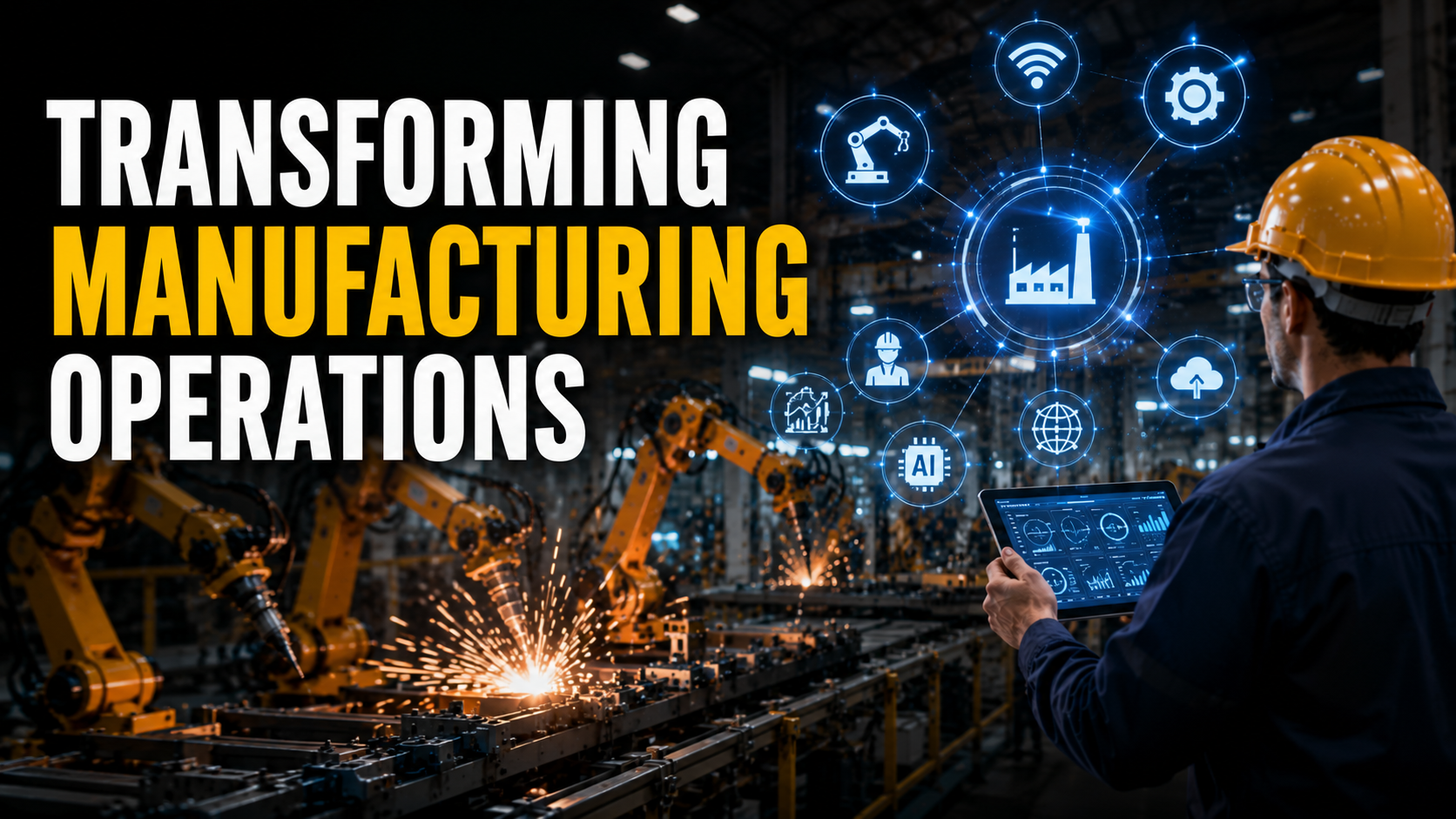
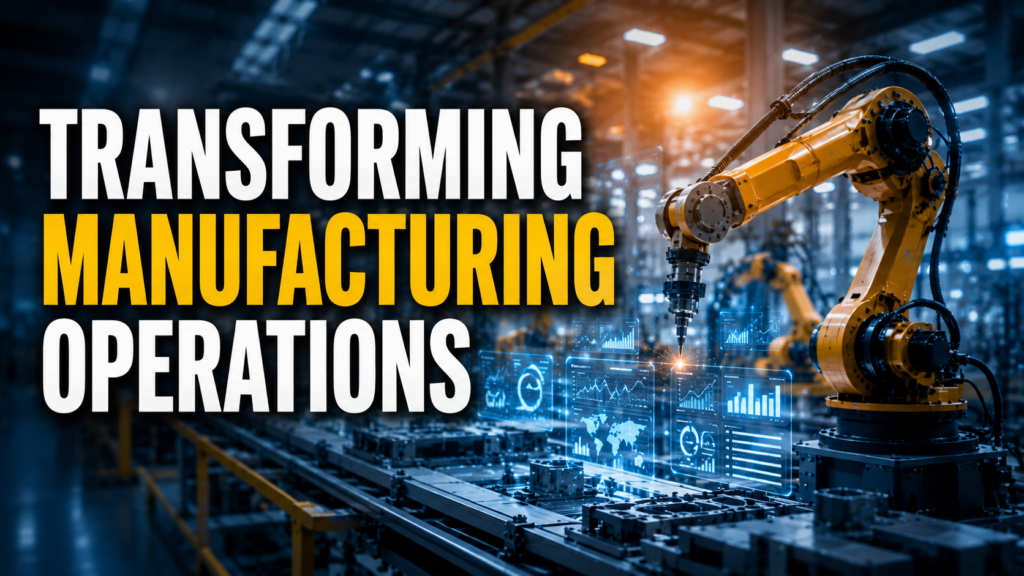
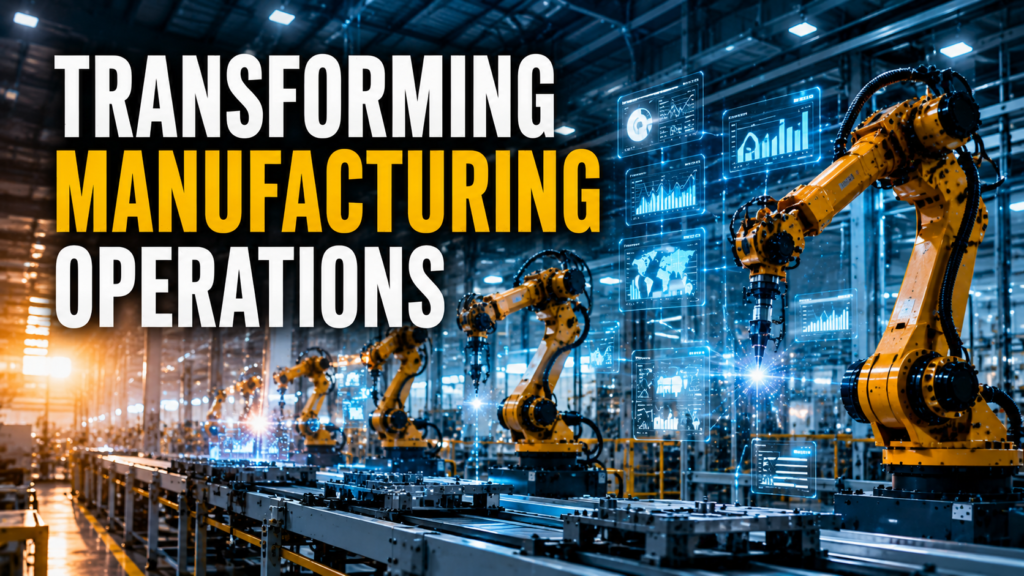
Manufacturing has entered an era where data is one of the most valuable production assets. Every machine, production line, warehouse, supplier, and logistics network continuously generates vast amounts of operational information. However, collecting data alone does not create a competitive advantage. The real value lies in transforming that information into timely, intelligent decisions that improve productivity, reduce costs, minimize risks, and enhance customer satisfaction. Transforming Manufacturing Operations.
For many manufacturers, fragmented systems remain one of the biggest obstacles to operational excellence. Production data may reside in Manufacturing Execution Systems, inventory information in Enterprise Resource Planning platforms, machine performance in Industrial Internet of Things devices, maintenance records in asset management systems, and logistics updates in separate transportation platforms. When information is scattered across disconnected systems, decision-making becomes slower, less accurate, and reactive rather than proactive.
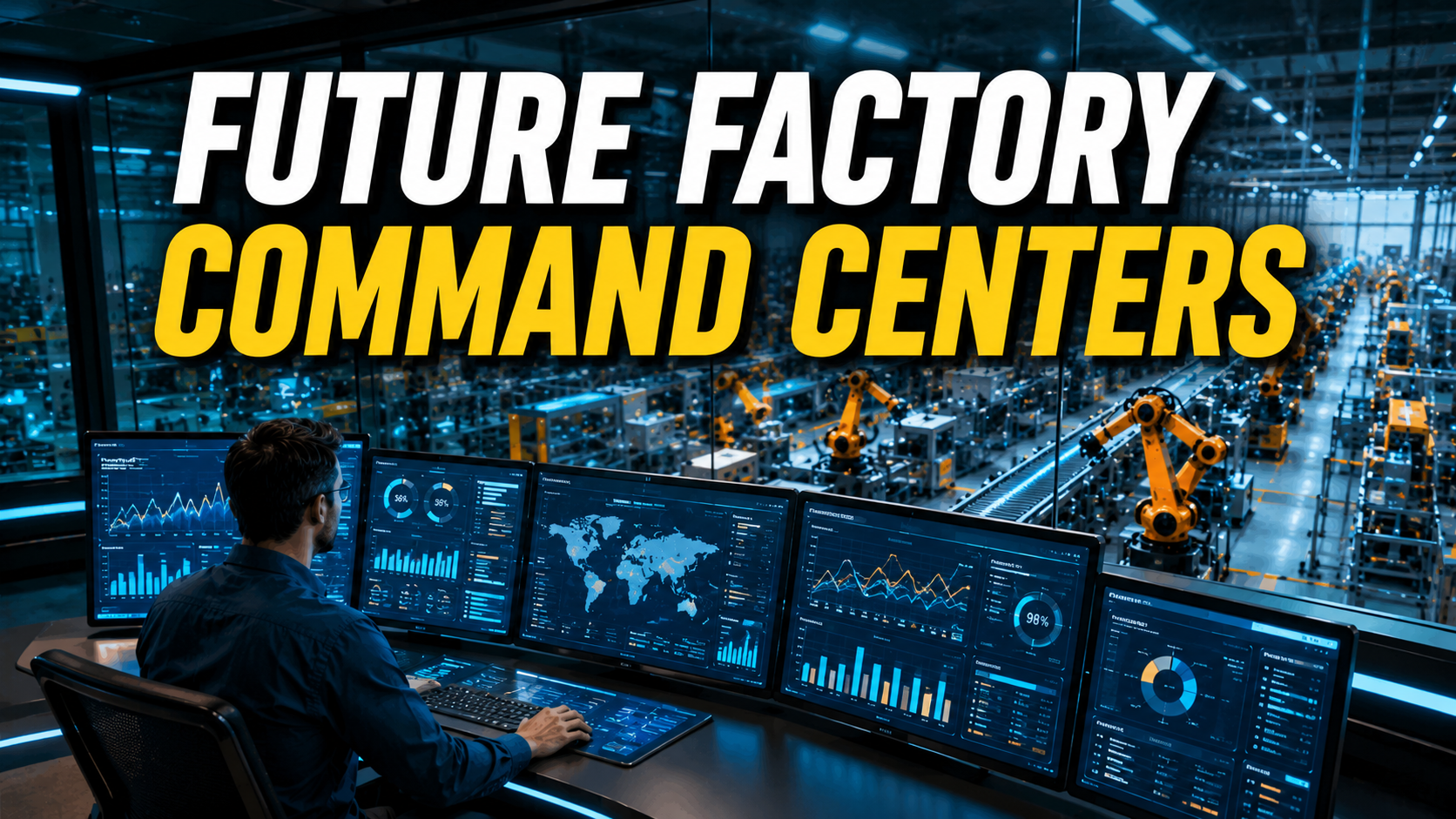
This challenge has accelerated the emergence of AI Control Towers, one of the most significant innovations in modern manufacturing. By combining Artificial Intelligence, Industrial Internet of Things, advanced analytics, digital twins, cloud computing, and real-time operational intelligence, AI Control Towers provide manufacturers with a centralized, intelligent command center capable of monitoring, predicting, and optimizing factory operations from end to end.
Unlike traditional dashboards that merely display historical information, AI Control Towers continuously analyze live operational data, detect emerging issues, recommend corrective actions, and increasingly automate routine decisions. They provide leaders with a complete, real-time view of manufacturing performance while enabling faster, smarter, and more resilient operations.
As Industry 4.0 continues evolving toward Industry 5.0, AI Control Towers are becoming the digital nerve center of intelligent factories.
This comprehensive guide explores what AI Control Towers are, how they work, their core technologies, industrial applications, benefits, implementation strategies, challenges, and why they are shaping the future of manufacturing operations.
Table of Contents
What Is an AI Control Tower?
An AI Control Tower is a centralized digital platform that provides real-time visibility, predictive intelligence, and decision support across manufacturing operations by integrating data from multiple industrial systems and applying Artificial Intelligence to optimize business processes.
Rather than acting as a simple monitoring dashboard, an AI Control Tower functions as an intelligent operational command center.
It continuously gathers information from production equipment, Industrial Internet of Things sensors, Manufacturing Execution Systems, Enterprise Resource Planning software, warehouse management systems, supply chain platforms, quality inspection systems, maintenance databases, and external business data.
Artificial Intelligence then analyzes this information to identify operational risks, predict future events, optimize workflows, and recommend actions before problems impact production.
The result is a manufacturing environment where decisions are proactive instead of reactive.
Why Manufacturing Needs AI Control Towers
Manufacturing operations have become increasingly complex.
Factories must coordinate suppliers across multiple countries, manage thousands of production assets, respond quickly to changing customer demand, maintain strict quality standards, minimize downtime, reduce energy consumption, and comply with regulatory requirements.
Traditional reporting systems often provide historical insights after problems have already occurred.
AI Control Towers address this limitation by delivering continuous operational awareness.
Instead of asking what happened yesterday, manufacturers can understand what is happening right now, what is likely to happen next, and what actions should be taken immediately.
This capability significantly improves operational resilience and business agility.
Traditional Manufacturing Dashboards vs AI Control Towers
| Traditional Dashboards | AI Control Towers |
|---|---|
| Display historical reports | Deliver real-time operational intelligence |
| Manual data analysis | AI-powered predictive analytics |
| Reactive problem solving | Proactive decision support |
| Separate operational systems | Unified enterprise visibility |
| Limited forecasting | Continuous predictive insights |
| Human-driven monitoring | AI-assisted monitoring and recommendations |
| Static reporting | Dynamic operational optimization |
Core Technologies Behind AI Control Towers
AI Control Towers combine several advanced digital technologies into a unified operational platform.
Artificial Intelligence
Artificial Intelligence serves as the analytical engine of the control tower.
Machine learning models identify production trends, detect anomalies, forecast equipment failures, optimize scheduling, predict inventory shortages, and recommend operational improvements.
The AI continuously learns from new industrial data, becoming more accurate over time.
Industrial Internet of Things
Industrial Internet of Things devices collect real-time information from connected machinery and production equipment.
Examples include machine temperature, vibration, pressure, humidity, power consumption, production speed, cycle time, equipment utilization, and environmental conditions.
These live data streams provide the operational awareness necessary for intelligent decision-making.
Digital Twins
Digital twins create virtual representations of factories, production lines, equipment, and industrial assets.
AI Control Towers use these digital replicas to simulate operational scenarios, evaluate production strategies, test maintenance schedules, and predict future performance before implementing changes in the physical factory.
Cloud Computing
Cloud infrastructure enables manufacturers to consolidate data from multiple facilities into a centralized platform.
Cloud-based AI Control Towers support global manufacturing operations while providing scalability, flexibility, and secure data management.
Edge Computing
Some manufacturing decisions require immediate responses.
Edge computing processes critical information close to production equipment, reducing latency while maintaining continuous operations even when cloud connectivity is limited.
Advanced Analytics
Statistical modeling, optimization algorithms, simulation techniques, and predictive analytics help transform raw industrial data into meaningful operational intelligence.
How AI Control Towers Work
The operation of an AI Control Tower follows a continuous cycle of data collection, analysis, prediction, optimization, execution, and learning.
Industrial sensors, enterprise software, warehouse systems, logistics platforms, quality inspection equipment, and maintenance applications continuously generate operational data.
The control tower consolidates this information into a unified operational view.
Artificial Intelligence analyzes relationships across multiple systems, identifying trends, bottlenecks, production risks, and emerging operational issues.
Predictive models forecast equipment failures, inventory shortages, production delays, quality deviations, and supply chain disruptions.
The platform recommends corrective actions, prioritizes operational decisions, and increasingly automates routine workflows.
Finally, operational outcomes are continuously monitored, allowing the AI to improve future recommendations.
This creates a manufacturing ecosystem capable of self-optimization.
Major Applications of AI Control Towers
Production Monitoring
Manufacturing leaders gain complete visibility into production performance across every facility.
The control tower monitors equipment utilization, production throughput, line efficiency, downtime, cycle times, and output quality in real time.
Operational issues are identified immediately before they escalate.
Predictive Maintenance
Maintenance teams receive early warnings regarding equipment health.
Artificial Intelligence analyzes vibration, temperature, lubrication, electrical consumption, acoustic signals, and maintenance history to predict failures before production interruptions occur.
This minimizes downtime while extending equipment life.
Supply Chain Visibility
Supply chain disruptions remain one of the greatest manufacturing challenges.
AI Control Towers monitor suppliers, transportation networks, inventory levels, warehouse capacity, customer demand, and logistics operations simultaneously.
When disruptions occur, the system recommends alternative sourcing strategies, production adjustments, or inventory reallocations.
Inventory Optimization
Inventory management becomes significantly more intelligent through AI-driven forecasting.
The control tower predicts future demand, identifies slow-moving inventory, recommends replenishment schedules, and minimizes excess stock while reducing material shortages.
Quality Management
Quality inspection data from production lines is continuously analyzed.
The system detects process variations, identifies defect patterns, predicts quality risks, and supports corrective action before defective products reach customers.
Energy Management
Manufacturers increasingly prioritize energy efficiency.
AI Control Towers monitor electricity, gas, compressed air, steam, water, and cooling systems to identify energy waste while recommending operational improvements.
This reduces both operating costs and environmental impact.
Benefits of AI Control Towers
Complete Operational Visibility
Decision-makers gain a single source of truth across production, maintenance, logistics, inventory, quality, and supply chain operations.
Information silos are eliminated.
Faster Decision Making
Artificial Intelligence analyzes millions of operational data points within seconds, enabling rapid responses to changing production conditions.
Increased Productivity
Continuous optimization improves equipment utilization, production efficiency, labor productivity, and manufacturing throughput.
Reduced Downtime
Predictive maintenance capabilities significantly reduce unplanned equipment failures.
Maintenance activities become proactive instead of reactive.
Improved Customer Satisfaction
Better production planning and supply chain coordination improve delivery reliability while maintaining consistent product quality.
Enhanced Business Resilience
AI Control Towers help organizations respond quickly to unexpected disruptions including supplier delays, equipment failures, labor shortages, transportation interruptions, and changing customer demand.
Lower Operational Costs
Optimized production schedules, improved inventory management, reduced maintenance expenses, lower energy consumption, and fewer quality defects contribute to substantial cost savings.
Industry Applications
Automotive Manufacturing
Manufacturers monitor robotic assembly lines, coordinate supplier deliveries, optimize production scheduling, improve quality control, and predict equipment failures across multiple plants.
Aerospace Manufacturing
AI Control Towers coordinate highly complex production programs involving thousands of specialized components while ensuring regulatory compliance and production traceability.
Pharmaceutical Manufacturing
Production quality, regulatory documentation, batch traceability, equipment maintenance, and inventory management are continuously monitored through centralized operational intelligence.
Electronics Manufacturing
Semiconductor and electronics manufacturers use AI Control Towers to improve production yield, monitor cleanroom operations, optimize equipment utilization, and enhance quality inspection.
Food and Beverage Manufacturing
The technology supports food safety monitoring, production scheduling, cold chain visibility, packaging quality, inventory optimization, and sustainability initiatives.
Chemical Manufacturing
Chemical producers optimize reactor performance, monitor process safety, improve resource utilization, and coordinate complex production operations.
AI Control Towers and Industry 4.0
Industry 4.0 introduced connected factories through automation, Industrial Internet of Things, cloud computing, robotics, and advanced analytics.
AI Control Towers serve as the intelligence layer that brings these technologies together.
Rather than operating as isolated digital systems, manufacturing functions become interconnected through centralized operational intelligence.
Production, maintenance, quality, logistics, procurement, engineering, and sustainability teams all work from the same real-time operational picture.
This significantly improves enterprise-wide coordination.
AI Control Towers and Industry 5.0
Industry 5.0 emphasizes collaboration between humans and intelligent technologies.
AI Control Towers support this vision by augmenting rather than replacing human expertise.
Artificial Intelligence handles continuous monitoring, predictive analysis, and routine optimization.
Human experts contribute strategic thinking, innovation, ethical judgment, and complex problem-solving.
This collaborative approach enables smarter, safer, and more sustainable manufacturing operations.
Challenges of Implementing AI Control Towers
Although AI Control Towers offer substantial advantages, organizations should prepare for several implementation challenges.
Data Integration
Manufacturers often operate numerous legacy systems developed by different vendors.
Integrating these systems into a unified operational platform requires careful planning.
Cybersecurity
Centralized operational intelligence increases the importance of industrial cybersecurity.
Manufacturers must protect sensitive production data, intellectual property, and connected industrial infrastructure from cyber threats
Data Quality
Artificial Intelligence depends on accurate and reliable information.
Organizations should establish strong data governance practices before deploying AI Control Towers.
Workforce Adoption
Employees require training to understand AI-generated recommendations and collaborate effectively with intelligent decision-support systems.
Change management plays an essential role in successful implementation.
Initial Investment
Deploying AI Control Towers may involve investments in Industrial Internet of Things devices, cloud infrastructure, analytics platforms, software integration, cybersecurity, and employee development.
However, the resulting operational improvements often deliver significant long-term returns.
Best Practices for Successful Deployment
Organizations should begin with clearly defined business objectives.
High-value applications such as predictive maintenance, inventory optimization, production monitoring, or supply chain visibility often provide the fastest return on investment.
Building a strong industrial data foundation is essential.
Manufacturers should establish standardized data collection, improve sensor reliability, modernize legacy systems where necessary, and ensure consistent operational metrics across facilities.
Cross-functional collaboration between production, engineering, information technology, maintenance, quality, and executive leadership helps maximize business value.
Organizations should also continuously measure key performance indicators such as equipment effectiveness, production efficiency, inventory turnover, defect rates, energy consumption, and customer service levels to evaluate ongoing improvements.
Emerging Trends in AI Control Towers
The future of AI Control Towers is evolving rapidly.
Generative AI is beginning to provide conversational interfaces that allow managers to interact with manufacturing systems using natural language.
Autonomous AI agents are becoming capable of coordinating production workflows with minimal human intervention.
Industrial Foundation Models are improving the contextual understanding of manufacturing operations, enabling more accurate recommendations.
Physics-Informed AI is enhancing simulation accuracy by incorporating engineering principles directly into predictive models.
Digital twins are becoming increasingly dynamic, continuously synchronizing with physical factories to support real-time optimization.
These innovations are transforming AI Control Towers from intelligent monitoring platforms into autonomous operational command centers.
Why AI Control Towers Matter for Business Competitiveness
Manufacturing success increasingly depends on speed, flexibility, resilience, and informed decision-making.
Organizations capable of identifying production risks before they occur, optimizing resources continuously, adapting rapidly to market changes, and coordinating global operations efficiently gain significant competitive advantages.
AI Control Towers enable these capabilities by transforming fragmented industrial data into actionable intelligence.
Rather than reacting to operational problems after they occur, manufacturers become proactive organizations capable of anticipating change and responding intelligently.
This shift supports higher profitability, stronger customer relationships, improved sustainability, and long-term business growth.
Conclusion
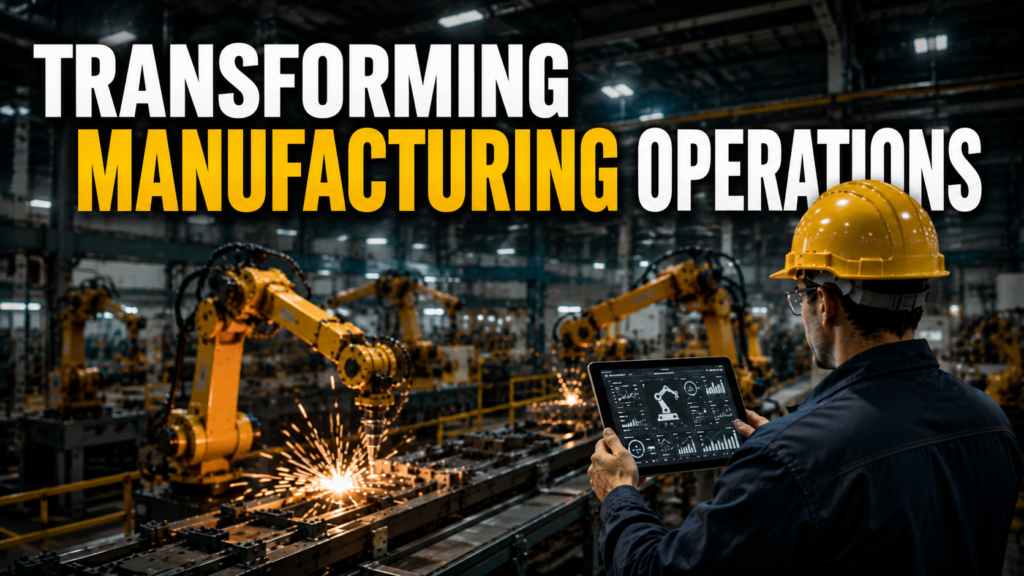
AI Control Towers are transforming manufacturing by bringing together real-time data, Artificial Intelligence, Industrial Internet of Things, digital twins, and predictive analytics into a unified operational intelligence platform. They enable manufacturers to move beyond fragmented systems and reactive decision-making toward a connected, proactive, and continuously optimized manufacturing environment.
From predictive maintenance and supply chain visibility to production monitoring, quality management, and energy optimization, AI Control Towers deliver measurable improvements in efficiency, resilience, and business performance. They empower organizations to detect issues before they become costly disruptions, optimize resources across the enterprise, and support faster, data-driven decisions.
As manufacturing advances toward Industry 5.0, AI Control Towers will become the digital command centers of intelligent factories. Businesses that invest in this technology today will be better positioned to navigate supply chain uncertainty, meet evolving customer expectations, improve sustainability, and maintain a lasting competitive advantage in an increasingly connected industrial landscape.
Also Read: “The Rise of AI-Powered Productivity“
Author
Frequently Asked Questions
What is an AI Control Tower?
An AI Control Tower is a centralized operational platform that combines Artificial Intelligence, real-time industrial data, and advanced analytics to monitor, predict, and optimize manufacturing operations across the enterprise.
How is an AI Control Tower different from a traditional dashboard?
Traditional dashboards display historical reports, while AI Control Towers provide real-time operational intelligence, predictive analytics, automated alerts, and AI-driven decision support.
Which industries benefit from AI Control Towers?
Automotive, aerospace, pharmaceuticals, electronics, chemicals, food and beverage, logistics, energy, heavy manufacturing, and consumer goods industries all benefit from AI Control Towers.
What technologies power AI Control Towers?
Key technologies include Artificial Intelligence, Industrial Internet of Things, digital twins, cloud computing, edge computing, predictive analytics, machine learning, and enterprise software integration.