





Introduction: The Emergence of a New Business Paradigm
Every major technological revolution creates new categories of businesses.
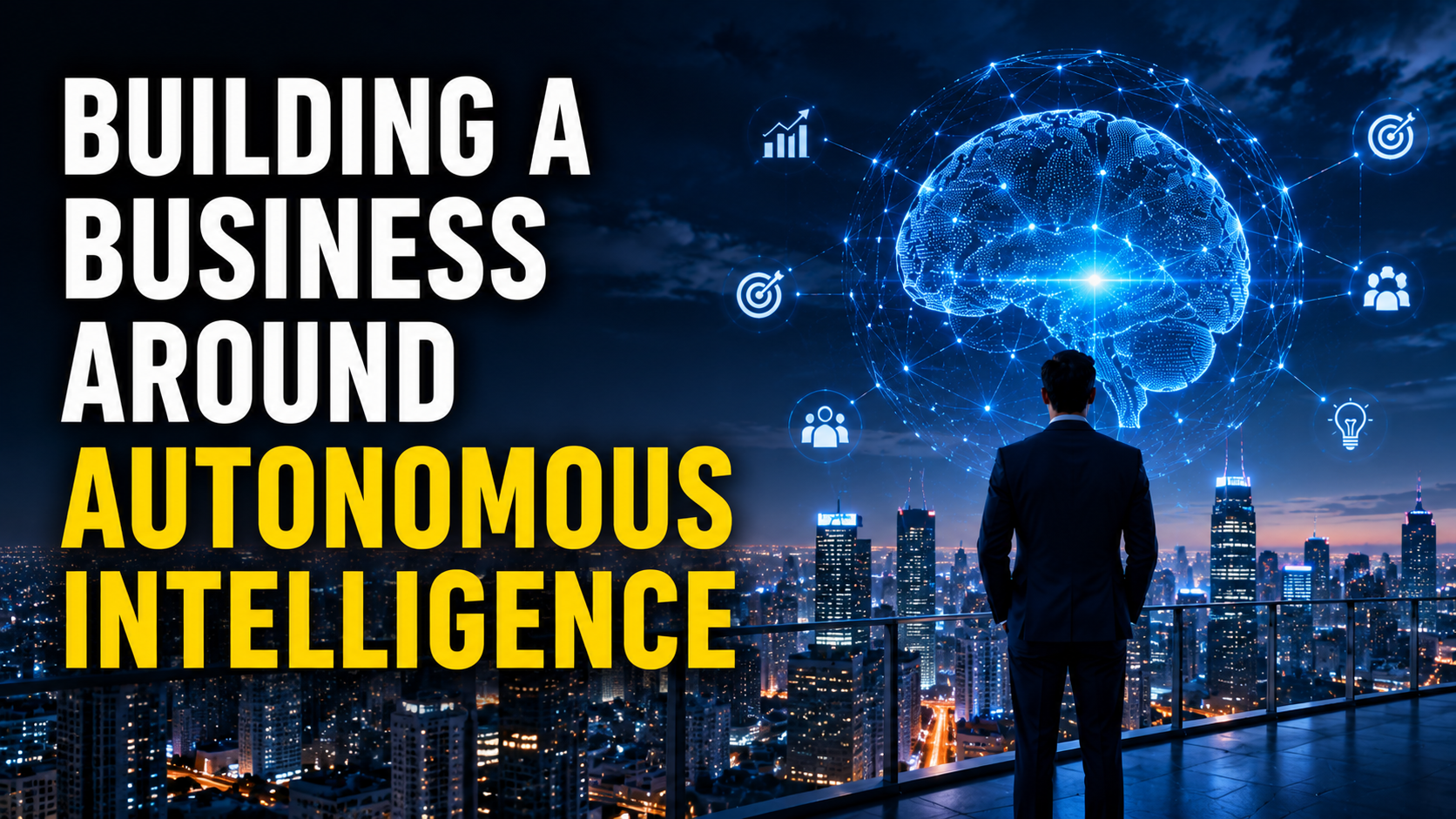
The industrial revolution created manufacturing giants. The internet revolution gave rise to digital platforms. Mobile technology transformed consumer behavior and created entirely new industries. Building a Business Around Autonomous Intelligence.
Today, another transformation is unfolding.
Artificial Intelligence is evolving from a tool into an autonomous operating layer capable of performing tasks, making decisions, coordinating workflows, and generating business value with minimal human intervention.
This evolution is giving rise to what many experts describe as Autonomous Intelligence.
Unlike traditional software, autonomous intelligence systems do more than process information. They can understand objectives, reason through problems, execute actions, and continuously improve outcomes.
For entrepreneurs, startups, and established organizations, this represents an extraordinary opportunity.
Businesses are no longer simply using AI to improve existing operations.
Increasingly, they are being built around AI from the ground up.
The companies that emerge from this shift may become the defining enterprises of the next decade.
Understanding how to build a business around autonomous intelligence is therefore not merely a technology discussion.
It is a strategic business imperative.
Table of Contents
What Is Autonomous Intelligence?

Autonomous intelligence refers to AI systems capable of operating with significant levels of independence while pursuing defined objectives.
These systems can:
- Understand goals
- Plan actions
- Execute tasks
- Analyze outcomes
- Adapt strategies
- Interact with digital environments
The key distinction lies in autonomy.
Traditional software waits for instructions.
Autonomous intelligence actively works toward outcomes.
For example:
A conventional analytics platform presents data.
An autonomous intelligence system may:
- Analyze performance
- Identify opportunities
- Recommend actions
- Execute approved strategies
- Monitor results
This creates entirely new possibilities for business operations.
Why Autonomous Intelligence Is Creating a New Business Opportunity
Historically, businesses scaled by adding:
- Employees
- Infrastructure
- Processes
- Management layers
Autonomous intelligence changes this equation.
Organizations can increasingly scale through intelligent systems rather than human labor alone.
This creates advantages in:
Efficiency
Operations become faster and more streamlined.
Scalability
Growth occurs without proportional staffing increases.
Availability
AI systems operate continuously.
Cost Management
Automation reduces repetitive workload costs.
Decision Support
Organizations gain real-time insights.
These advantages explain the rapid growth of AI-first business models.
The Evolution of Business Technology
| Era | Primary Competitive Advantage |
|---|---|
| Industrial Age | Physical Production |
| Information Age | Data and Computing |
| Internet Age | Connectivity and Scale |
| Cloud Era | Operational Agility |
| AI Era | Autonomous Intelligence |
Each technological era rewarded organizations that adapted early.
The autonomous intelligence era appears poised to follow the same pattern.
Understanding the AI Agent Economy
AI agents are becoming the operational foundation of autonomous intelligence.
These intelligent systems can perform tasks traditionally handled by humans.
Examples include:
- Customer support
- Research
- Sales outreach
- Marketing execution
- Workflow coordination
- Data analysis
As agent capabilities improve, businesses can deploy entire digital workforces.
This creates what many analysts describe as the AI Agent Economy.
In this economy, value is increasingly generated through intelligent automation rather than manual execution.
The Rise of AI-Native Businesses
Many organizations today use AI as a supporting technology.
AI-native businesses take a different approach.
They are designed around AI from inception.
Characteristics include:
AI-First Operations
Workflows are optimized for intelligent automation.
Digital Workforces
AI agents handle substantial portions of daily operations.
Continuous Learning
Systems improve through feedback and data.
Scalable Intelligence
Knowledge and capabilities expand efficiently.
These organizations often achieve greater operational leverage than traditional businesses.
How Autonomous Intelligence Changes Business Models
Autonomous intelligence is reshaping how companies create value.
Traditional business models often depend on labor-intensive processes.
AI-driven businesses increasingly rely on:
Software Leverage
One intelligent system can serve thousands of users.
Data Assets
High-quality data improves performance.
Automation
Routine activities require minimal human involvement.
Intelligence Networks
Multiple agents collaborate toward shared objectives.
This dramatically alters cost structures and growth potential.
Building an AI-Driven Operating System for Business
Organizations seeking to embrace autonomous intelligence should think beyond isolated AI tools.
The goal is to create an AI-powered operating system.
This includes:
Intelligent Data Infrastructure
Reliable information fuels decision-making.
Agent Frameworks
AI systems execute tasks autonomously.
Workflow Automation
Processes become increasingly self-managing.
Governance Structures
Human oversight ensures accountability.
Together, these elements create a foundation for scalable autonomous operations.
Key Areas Where Autonomous Intelligence Creates Value
Customer Experience
AI agents can provide:
- Instant support
- Personalized interactions
- Proactive assistance
- Continuous availability
Customer satisfaction often improves significantly.
Marketing and Growth
Autonomous intelligence enables:
- Audience research
- Content creation
- Campaign management
- Performance optimization
Marketing teams gain substantial efficiency advantages.
Sales Operations
AI systems can:
- Identify prospects
- Qualify leads
- Schedule meetings
- Generate follow-up communications
Sales productivity improves without proportional staffing growth.
Business Intelligence
Organizations increasingly rely on AI for:
- Trend analysis
- Forecasting
- Performance monitoring
- Opportunity identification
Decision-making becomes faster and more data-driven.
The Role of Human Talent in Autonomous Businesses
Despite rapid AI advancement, human talent remains essential.
The most successful organizations combine:
Human Creativity
Innovation requires original thinking.
Strategic Vision
Long-term direction remains a human responsibility.
Emotional Intelligence
Relationships continue to matter.
Leadership
Teams require guidance and coordination.
Ethical Judgment
Humans provide accountability.
Autonomous intelligence amplifies human capabilities rather than replacing them entirely.
Creating Competitive Advantages Through Autonomous Intelligence
Businesses adopting autonomous intelligence early may gain advantages in several areas.
| Competitive Area | AI-Driven Advantage |
|---|---|
| Productivity | Faster execution |
| Customer Experience | Better responsiveness |
| Innovation | Rapid experimentation |
| Cost Structure | Operational efficiency |
| Scalability | Growth without proportional staffing |
These advantages compound over time.
Organizations that delay adoption may face increasing competitive pressure.
The Economics of Autonomous Enterprises
One of the most attractive aspects of autonomous intelligence is economic leverage.
Traditional growth often requires:
- More employees
- More management
- More operational complexity
AI-driven organizations can scale differently.
Benefits include:
Lower Marginal Costs
Serving additional customers becomes more efficient.
Faster Expansion
Operations can scale globally.
Improved Profitability
Automation reduces expenses.
Greater Resilience
Processes become less dependent on individual contributors.
These economic characteristics make autonomous intelligence particularly attractive to investors and entrepreneurs.
Challenges of Building Around Autonomous Intelligence
While opportunities are significant, challenges remain.
Reliability
AI systems are not perfect.
Security
Autonomous systems require strong safeguards.
Compliance
Regulatory environments continue evolving.
Trust
Customers need confidence in AI-driven services.
Data Quality
Poor data reduces effectiveness.
Successful organizations address these challenges proactively.
Governance and Responsible AI
Responsible deployment is essential.
Organizations should establish:
Transparency Standards
Explain how AI systems operate.
Human Oversight
Maintain accountability structures.
Privacy Protections
Safeguard sensitive information.
Ethical Guidelines
Ensure fair and responsible outcomes.
Trust becomes a critical competitive asset.
Industries Most Likely to Be Transformed
Several sectors appear particularly well-positioned.
Software and SaaS
AI-native applications are emerging rapidly.
Financial Services
Automation supports compliance and analysis.
Healthcare
Administrative workflows become more efficient.
Marketing
AI agents accelerate content and campaign execution.
Customer Service
Autonomous support systems reduce costs and improve response times.
Virtually every knowledge-intensive industry can benefit from autonomous intelligence.
The Future of Entrepreneurship in the AI Era
Entrepreneurship itself is changing.
Future founders may launch businesses with:
- Smaller teams
- Lower costs
- Greater automation
- Faster execution
AI agents can function as:
- Researchers
- Analysts
- Marketers
- Developers
- Customer support representatives
This dramatically lowers barriers to entry.
Small organizations gain capabilities once reserved for large enterprises.
The Next Decade of Autonomous Intelligence
The coming decade may bring:
Multi-Agent Organizations
Teams of AI systems working together.
Autonomous Decision Systems
Greater operational independence.
AI-Native Business Models
Entire companies built around intelligent automation.
Personalized Customer Experiences
Highly adaptive interactions.
Continuous Optimization
Self-improving operational systems.
These developments may reshape global business landscapes.
How Businesses Can Prepare Today
Organizations should begin preparing immediately.
Build AI Literacy
Educate teams about emerging technologies.
Identify High-Value Use Cases
Focus on areas with measurable impact.
Modernize Infrastructure
Prepare systems for AI integration.
Invest in Data Quality
Strong data improves outcomes.
Develop Governance Policies
Ensure responsible adoption.
Preparation creates long-term competitive advantages.
Conclusion
Building a business around autonomous intelligence represents one of the most significant opportunities of the modern digital era. As AI agents and intelligent systems become increasingly capable, organizations gain the ability to automate complex workflows, enhance productivity, improve customer experiences, and scale operations in entirely new ways.
The future will belong to businesses that view AI not merely as a tool but as a foundational operating capability.
Success will depend on combining technological innovation with human creativity, ethical governance, and strategic leadership.
Autonomous intelligence is not simply another software trend.
It is becoming the infrastructure upon which the next generation of companies will be built.
Organizations that embrace this transformation today will be better positioned to lead tomorrow’s economy.
The age of autonomous enterprises has begun.
And its impact is only just starting to unfold.
Also Read: “The Competitive Advantage of AI Adoption“
Frequently Asked Questions (FAQs)
1. What is autonomous intelligence in business?
Autonomous intelligence refers to AI systems capable of independently performing tasks, making decisions, and optimizing operations to achieve business objectives with minimal human intervention.
2. How can businesses benefit from autonomous intelligence?
Businesses can improve productivity, reduce operational costs, enhance customer experiences, automate workflows, and scale more efficiently through autonomous intelligence.
3. Are AI agents replacing human employees?
AI agents primarily automate tasks rather than entire jobs. Human skills such as leadership, creativity, emotional intelligence, and strategic thinking remain highly valuable.