







The Opportunities, Challenges, and Future of Digital Publishing in the Age of Artificial Intelligence
Introduction: Publishing Is Entering Its Biggest Transformation Since the Internet
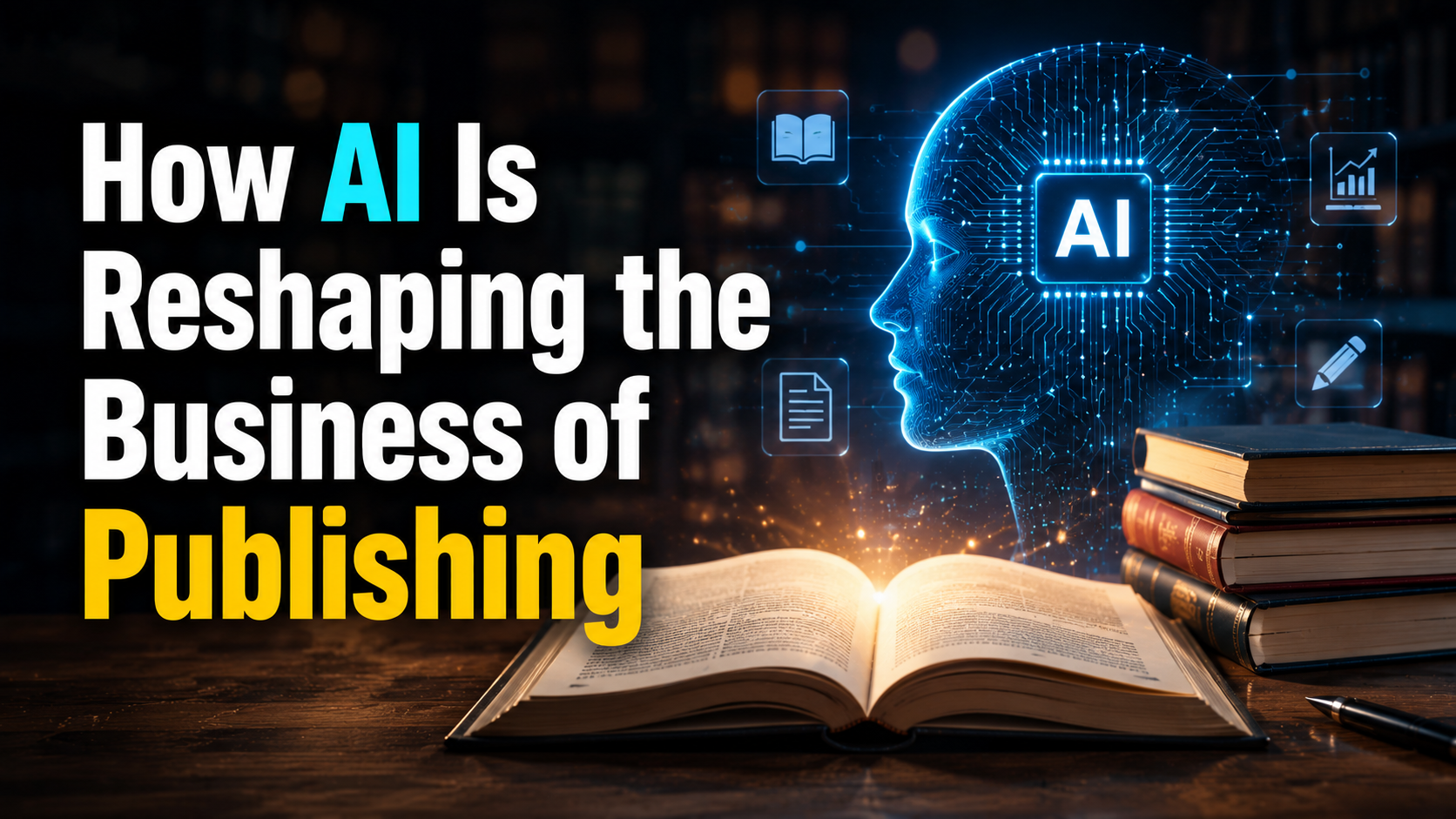
The publishing industry has experienced multiple waves of disruption over the past three decades. How AI Is Reshaping the Business of Publishing.
The rise of the internet transformed how content was distributed. Social media changed how audiences discovered information. Smartphones altered consumption habits. Search engines became powerful traffic gateways that determined which publishers succeeded online.
Today, another transformation is underway, one that may prove even more significant than the digital revolution itself.
Artificial Intelligence is fundamentally reshaping the business of publishing.
AI is no longer simply a productivity tool used by technology companies. It is becoming an integral part of how content is created, discovered, distributed, monetized, and consumed. From AI-generated summaries and personalized recommendations to generative search engines and intelligent content assistants, Artificial Intelligence is altering every layer of the publishing ecosystem.
For publishers, this creates a mixture of excitement and uncertainty.
AI offers opportunities to improve efficiency, reduce costs, enhance personalization, and unlock new revenue streams. At the same time, it introduces serious challenges around traffic, content ownership, attribution, trust, and monetization.
The publishing industry now faces a pivotal question:
How can publishers thrive in an internet where AI increasingly sits between audiences and content creators?
The answer may determine the future of digital journalism, online media, independent publishing, and content-driven businesses for years to come.
Table of Contents
Understanding the Traditional Publishing Economy
To understand AI’s impact, it is important to understand how digital publishing traditionally worked.
The modern publishing ecosystem relied on a relatively straightforward model:
- Publishers create content.
- Search engines and social platforms distribute content.
- Users visit websites.
- Publishers monetize traffic.
Revenue typically came from:
- Display advertising
- Sponsored content
- Affiliate marketing
- Subscriptions
- Memberships
The key driver was traffic.
More visitors generally meant more revenue.
This model created a strong incentive for publishers to produce valuable content and optimize it for discoverability.
Why Artificial Intelligence Changes Everything
Artificial Intelligence alters a fundamental assumption of digital publishing.
Historically, users needed to visit a publisher’s website to consume information.
AI increasingly allows users to obtain information without leaving the platform they are using.
Instead of reading an article directly, users may receive:
- AI-generated summaries
- Direct answers
- Personalized recommendations
- Synthesized insights
- Conversational explanations
This shift changes how value flows across the internet.
The relationship between content creation and content consumption is being redefined.
The Rise of AI-Powered Content Discovery
One of the most significant developments is AI-powered content discovery.
Traditional discovery relied on:
- Search engines
- Social media feeds
- Email newsletters
- Direct navigation
AI discovery works differently.
Users ask questions, describe needs, or seek recommendations.
AI systems then:
- Analyze available information
- Evaluate sources
- Generate responses
- Recommend content
This creates a new layer between publishers and audiences.
The AI becomes an intermediary.
Traditional Search vs AI Discovery
| Traditional Search | AI-Powered Discovery |
|---|---|
| User clicks links | User receives answers |
| Publisher gains traffic | AI may satisfy query directly |
| Rankings drive visibility | Authority drives visibility |
| Search results page | Conversational interface |
| Website visit required | Website visit optional |
This shift has major economic implications for publishers.
The Publisher Traffic Challenge
Traffic has long been the lifeblood of digital publishing.
When users visit websites, publishers can:
- Display advertisements
- Promote subscriptions
- Build audience relationships
- Generate affiliate revenue
AI-generated answers may reduce the need for direct visits.
If users obtain information directly from AI systems, publishers may experience:
- Lower click-through rates
- Reduced ad impressions
- Fewer subscriber opportunities
- Decreased audience engagement
This challenge is often referred to as the “publisher traffic crisis.”
It represents one of the most important issues facing the industry today.
Why AI Still Needs Publishers
Despite concerns, AI systems depend heavily on publishers.
Artificial Intelligence does not create knowledge independently.
It relies on information produced by:
- Journalists
- Researchers
- Industry experts
- Analysts
- Content creators
Without high-quality content, AI systems have less reliable information to reference and summarize.
This creates a mutual dependency.
Publishers need audiences.
AI platforms need content.
The future likely requires sustainable economic relationships between both parties.
The Growing Importance of Content Licensing
Content licensing is emerging as a potential solution.
Under licensing arrangements:
- Publishers grant access to content.
- AI companies compensate publishers.
- AI systems utilize licensed information.
This model mirrors existing practices in:
- Music streaming
- Film distribution
- Software licensing
Content licensing may become an increasingly important revenue source for publishers in the AI era.
AI as a Productivity Tool for Publishers
While AI presents challenges, it also offers significant opportunities.
Many publishers are already using AI to improve efficiency.
Common applications include:
Content Research
AI accelerates information gathering.
Headline Generation
Tools help create engaging headlines.
Content Summarization
Long articles can be condensed efficiently.
Translation
Global audiences become more accessible.
Workflow Automation
Repetitive tasks can be streamlined.
These applications help publishers produce content more efficiently without necessarily replacing human expertise.
Why Human Expertise Remains Essential
AI can generate text.
It cannot replace genuine expertise.
Readers increasingly value:
- Original reporting
- First-hand experience
- Investigative journalism
- Expert analysis
- Authentic perspectives
The most valuable content often comes from human insight rather than automated generation.
This creates an important competitive advantage for publishers focused on quality.
The Rise of Authority-Based Publishing
In an AI-driven world, authority becomes increasingly important.
AI systems must determine which sources deserve trust.
As a result, authoritative publishers gain advantages.
Authority is built through:
Expertise
Deep knowledge of a subject.
Accuracy
Consistently reliable information.
Reputation
Industry recognition and trust.
Transparency
Clear sourcing and accountability.
Authority increasingly influences discoverability.
Google’s EEAT Framework and Publishing
Google’s EEAT principles have become increasingly relevant.
EEAT stands for:
- Experience
- Expertise
- Authoritativeness
- Trustworthiness
These factors help search engines and AI systems evaluate content quality.
Publishers that align with EEAT principles are often better positioned for long-term visibility.
In an AI-first internet, trust becomes a competitive advantage.
The Future of Advertising in Publishing
Advertising remains a critical revenue source.
However, AI is changing advertising dynamics.
Future opportunities may include:
Personalized Advertising
More relevant audience targeting.
Contextual Advertising
Ads aligned with AI-generated conversations.
Native Recommendations
Integrated product suggestions.
Commerce Experiences
AI-assisted purchasing journeys.
Advertising will likely evolve alongside AI-powered content experiences.
Subscription Models Gain Importance
As traffic patterns change, publishers may become less dependent on advertising alone.
Subscription models offer several advantages:
- Predictable revenue
- Strong audience relationships
- Reduced platform dependence
- Higher lifetime value
Publishers increasingly invest in premium content and membership communities.
Direct audience relationships become strategically valuable.
How AI Is Changing SEO for Publishers
SEO is evolving significantly.
Traditional SEO focused on:
- Keywords
- Rankings
- Backlinks
- Technical optimization
AI-era SEO increasingly emphasizes:
| Traditional SEO | AI-Era SEO |
|---|---|
| Rankings | Authority |
| Keywords | Topics |
| Traffic | Influence |
| Links | Trust Signals |
| Optimization | Expertise |
Publishers must optimize for both search engines and AI systems.
Visibility increasingly depends on becoming a trusted source.
The New Metrics of Success
Publishing success is no longer measured solely by page views.
Future metrics may include:
- Brand authority
- Citation frequency
- AI references
- Subscriber growth
- Audience loyalty
- Engagement quality
Influence becomes as important as traffic.
The publishing industry must adapt its measurement frameworks accordingly.
Emerging Opportunities for Publishers
Despite disruption, AI creates numerous opportunities.
Specialized Expertise
Niche authority becomes more valuable.
Original Research
Unique information attracts citations.
Community Building
Direct audience relationships strengthen resilience.
Premium Content
Exclusive insights justify subscriptions.
Educational Products
Courses, reports, and memberships diversify revenue.
Publishers that innovate can create sustainable competitive advantages.
The Future of Publishing in an AI World
Over the next decade, publishing will likely become increasingly focused on:
Trust
Reliable information gains value.
Expertise
Specialized knowledge stands out.
Originality
Unique insights become essential.
Brand Strength
Recognizable publishers gain visibility advantages.
Audience Relationships
Direct engagement reduces platform dependence.
The publishing organizations that thrive will be those that offer something AI cannot easily replicate: credibility, originality, and human insight.
Conclusion
Artificial Intelligence is reshaping the business of publishing in profound ways. It is changing how content is discovered, consumed, monetized, and distributed. While AI introduces challenges—particularly around traffic and revenue—it also creates opportunities for innovation, efficiency, and new business models.
The future of publishing will not be defined by technology alone.
It will be defined by trust.
Publishers that focus on expertise, authority, originality, and audience relationships will be best positioned to succeed in an AI-driven digital landscape.
As AI becomes a central gateway to information, high-quality publishing becomes more important—not less.
The organizations that embrace this reality and adapt strategically will help shape the future of knowledge, journalism, and digital media.
The business of publishing is changing.
But the demand for trustworthy information remains stronger than ever.
Also Read: “The Next Phase of Digital Transformation“
Frequently Asked Questions (FAQs)
1. How is AI affecting digital publishers?
AI is changing how content is discovered and consumed, reducing reliance on traditional search traffic while creating new opportunities in content licensing, personalization, and workflow automation.
2. Will AI replace publishers?
No. AI relies on information created by publishers, journalists, researchers, and experts. Human expertise and original reporting remain essential.
3. What is content licensing in the AI era?
Content licensing involves publishers granting AI companies access to their content in exchange for compensation, creating a potential new revenue stream.