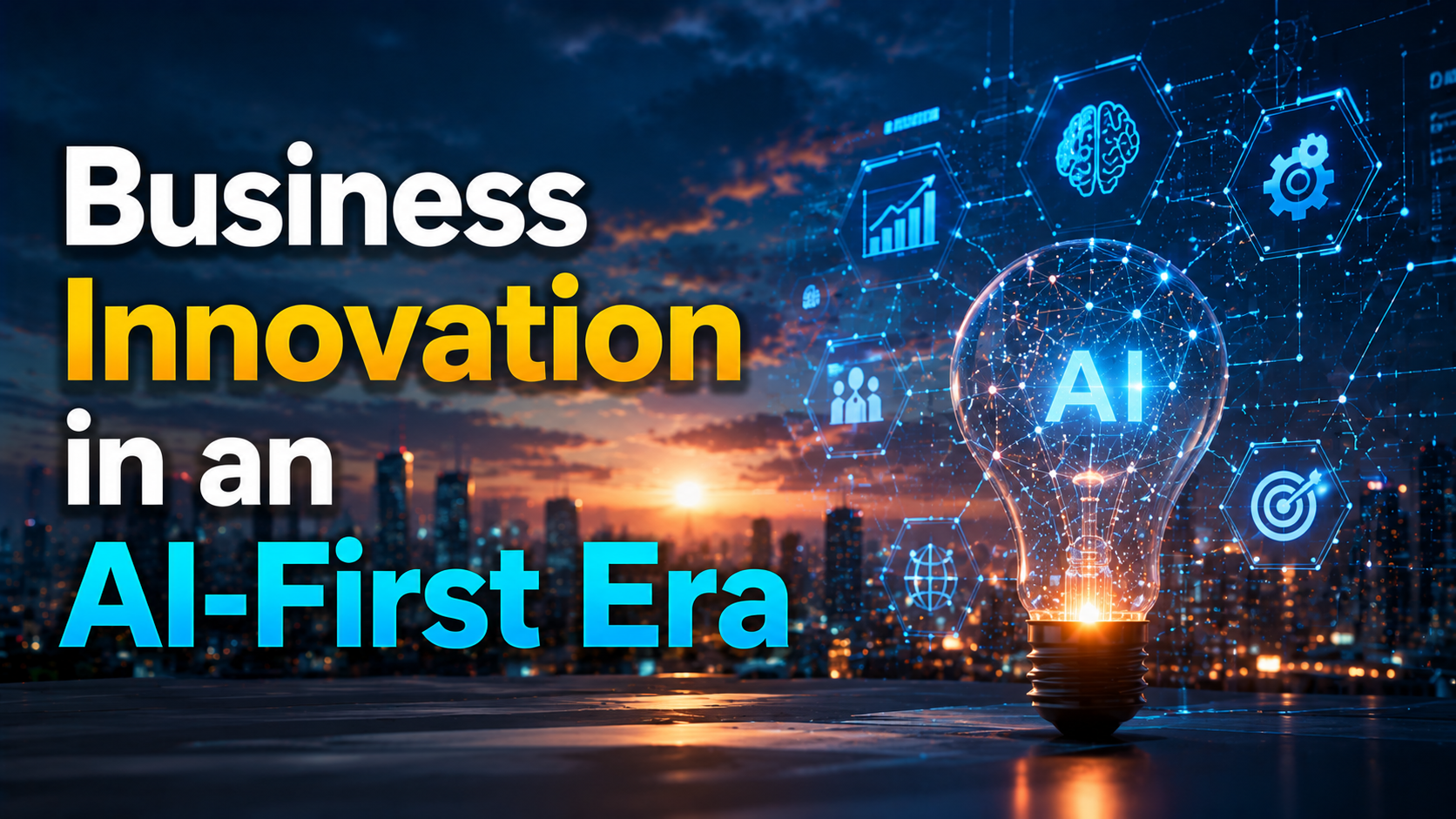





Artificial intelligence is no longer simply a tool that businesses add to existing operations. It is becoming the foundation upon which entirely new companies are being built. Around the world, a new generation of organizations is emerging, businesses designed from day one with artificial intelligence embedded into their products, operations, decision-making, and customer experiences. The Emergence of AI-Native Businesses.
These organizations are known as AI-native businesses.
Unlike traditional enterprises that adopt AI to optimize existing processes, AI-native companies are created around the assumption that intelligent systems will perform a significant portion of cognitive work. Their structures, workflows, products, and business models are fundamentally different from those of conventional organizations.
As AI agents, automation, and machine learning continue to evolve, AI-native businesses are changing the economics of entrepreneurship, lowering barriers to entry, and creating opportunities that were unimaginable just a decade ago.
At the same time, another revolution is unfolding in education. The future classroom is already here, and digital literacy beyond search engines is becoming one of the most important skills required to participate in this new AI-powered economy.
The rise of AI-native businesses represents one of the most significant transformations since the emergence of the internet economy. Understanding this shift is essential for entrepreneurs, professionals, investors, and students preparing for the future.
Table of Contents
What Are AI-Native Businesses?
AI-native businesses are organizations built with artificial intelligence as a core component rather than an add-on feature.
Traditional businesses often view AI as a productivity tool. AI-native companies view AI as the operating system of the enterprise.
These organizations integrate AI into:
- Product development
- Customer service
- Marketing
- Sales
- Operations
- Decision-making
- Data analysis
- Research and innovation
Instead of asking:
“How can we use AI?”
AI-native companies begin with:
“How should we design our company assuming AI capabilities already exist?”
This shift creates entirely new economic and operational models.
From Digital Businesses to AI-Native Enterprises
Over the last three decades, businesses evolved through several stages.
| Era | Business Type | Core Technology |
|---|---|---|
| Industrial Age | Manufacturing Businesses | Machines |
| Internet Era | Digital Businesses | Web Platforms |
| Mobile Era | App-Based Companies | Smartphones |
| Cloud Era | SaaS Businesses | Cloud Computing |
| AI Era | AI-Native Businesses | Artificial Intelligence |
Digital businesses digitized workflows.
AI-native businesses automate cognition itself.
This difference represents a profound transformation.
Characteristics of AI-Native Businesses
AI-native organizations possess several defining features.
AI Embedded Everywhere
Artificial intelligence is integrated into every layer of operations.
Examples include:
- Automated customer interactions
- Predictive analytics
- Intelligent recommendation systems
- AI-driven product development
- Autonomous workflows
AI becomes part of the company’s DNA.
Data-Centric Operations
Data serves as a strategic asset.
AI-native companies continuously collect, analyze, and refine information to improve:
- Products
- User experiences
- Marketing campaigns
- Operational efficiency
The more data they gather, the stronger their competitive advantage becomes.
Human-AI Collaboration
These businesses do not eliminate human workers entirely.
Instead, they combine:
Human intelligence + AI capabilities
Humans focus on:
- Creativity
- Strategy
- Relationships
- Leadership
AI systems handle:
- Repetitive tasks
- Analysis
- Automation
- Content generation
This collaboration dramatically increases productivity.
Why AI-Native Businesses Are Emerging Now
Several technological developments have accelerated their rise.
Generative AI
Large language models have made advanced AI accessible to businesses of all sizes.
Companies can now automate:
- Writing
- Coding
- Research
- Customer support
- Design assistance
Without massive R&D budgets.
Cloud Infrastructure
Cloud computing enables startups to access powerful computing resources without building expensive infrastructure.
AI Agents
Autonomous AI agents are capable of:
- Planning tasks
- Executing workflows
- Interacting with software tools
They are becoming digital coworkers.
Lower Costs
AI tools significantly reduce:
- Labor expenses
- Development costs
- Customer acquisition costs
This allows smaller teams to compete with larger organizations.
The Economics of AI-Native Businesses
One of the most remarkable aspects of AI-native companies is their efficiency.
Traditional businesses often scale through headcount.
AI-native businesses scale through intelligence.
Smaller Teams, Bigger Impact
Startups with fewer than 20 employees can now achieve revenues previously requiring hundreds of workers.
This changes the economics of entrepreneurship.
Lower Marginal Costs
Once AI systems are deployed, serving additional customers becomes increasingly inexpensive.
Examples include:
- AI chatbots
- Digital assistants
- Automated analytics
These systems scale efficiently without proportional increases in labor.
Faster Innovation
AI accelerates:
- Product development
- Market research
- Customer feedback analysis
Companies can launch products faster and iterate continuously.
AI Agents: The New Workforce
AI agents are transforming businesses into hybrid organizations.
Future companies may consist of:
Human Teams
Responsible for:
- Vision
- Leadership
- Creativity
AI Teams
Responsible for:
- Research
- Documentation
- Customer support
- Scheduling
- Data analysis
The result is a workforce that combines human and machine intelligence.
Industries Experiencing AI-Native Transformation
Healthcare
AI-native healthcare companies use intelligent systems for:
- Diagnostics
- Medical transcription
- Drug discovery
- Patient support
Healthcare becomes more efficient and personalized
Finance
AI-native fintech companies automate:
- Fraud detection
- Risk assessment
- Investment analysis
Financial services become smarter and faster.
Education
Educational platforms leverage AI for:
- Personalized learning
- AI tutoring
- Adaptive assessments
Students receive customized educational experiences.
Marketing
AI transforms:
- Content generation
- SEO optimization
- Audience segmentation
- Customer engagement
Marketing becomes data-driven and highly personalized.
Software Development
AI coding assistants accelerate:
- Programming
- Debugging
- Documentation
Developers focus more on architecture and innovation.
The Rise of One-Person Unicorns
AI-native businesses are creating a new entrepreneurial model.
Some experts predict the rise of “one-person unicorns.”
These entrepreneurs leverage AI to perform work traditionally requiring:
- Designers
- Analysts
- Writers
- Marketers
- Developers
AI becomes a multiplier of human capability.
Although large teams still matter, small organizations can now compete globally.
AI-Native Customer Experiences
Customers increasingly expect:
- Personalized recommendations
- Instant support
- Intelligent interactions
AI-native businesses excel because they provide:
24/7 Service
AI assistants never sleep.
Personalization
Experiences are tailored to individual preferences.
Speed
Responses occur instantly.
Scalability
Millions of users can be served simultaneously.
These advantages improve customer satisfaction and loyalty.
The Future Classroom Is Already Here
The AI revolution extends beyond business.
Education itself is undergoing transformation.
Today’s students have access to:
- AI tutors
- Virtual classrooms
- Adaptive learning systems
- Intelligent study assistants
Traditional education emphasized memorization.
Future classrooms prioritize:
- Creativity
- Problem solving
- Collaboration
- Critical thinking
- AI literacy
The classroom of tomorrow already exists.
Preparing students for AI-native economies has become essential.
Digital Literacy Beyond Search Engines
Digital literacy is evolving rapidly.
For decades, knowing how to search the internet was sufficient.
Today, individuals must understand:
AI Collaboration
Working effectively with intelligent systems.
Prompt Engineering
Communicating clearly with AI tools.
Information Verification
Checking:
- Accuracy
- Bias
- Sources
Human judgment remains critical.
Data Privacy
Understanding how personal information is used and protected.
Critical Thinking
As AI-generated content grows, analytical thinking becomes increasingly valuable.
Digital literacy now extends far beyond search engines.
Organizational Structures Are Changing
AI-native companies often possess flatter hierarchies.
Instead of many management layers, organizations rely on:
- Small teams
- AI agents
- Automated workflows
Decision-making becomes faster.
Communication improves.
Innovation accelerates.
These structures are more adaptable to rapidly changing markets.
Competitive Advantages of AI-Native Businesses
| Advantage | Impact |
|---|---|
| Automation | Reduced costs |
| AI Agents | Higher productivity |
| Personalization | Better customer experience |
| Data Analytics | Improved decisions |
| Scalability | Faster growth |
| Continuous Learning | Constant optimization |
These capabilities provide powerful advantages over traditional competitors.
Challenges Facing AI-Native Businesses
Despite their potential, AI-native organizations face several challenges.
Data Quality
Poor data produces inaccurate AI outputs.
Security Risks
Cybersecurity threats continue to increase.
Ethical Concerns
Questions surrounding:
- Bias
- Transparency
- Accountability
require responsible governance.
Regulatory Changes
Governments are introducing AI regulations that companies must navigate carefully.
Dependence on External Platforms
Many startups rely heavily on cloud providers and AI model vendors.
Diversification remains important.
Human Skills That Become More Valuable
Ironically, AI increases the importance of uniquely human strengths.
Creativity
Innovation remains difficult to automate.
Emotional Intelligence
Relationships and empathy matter more than ever.
Leadership
Vision and strategic thinking remain human domains.
Adaptability
Continuous learning becomes essential.
Critical Thinking
Humans provide context and judgment.
The future belongs to those who effectively collaborate with AI.
What Businesses Should Do Today
Organizations preparing for AI-native competition should:
Invest in AI Literacy
Employees need AI-related skills.
Experiment With AI Tools
Small pilot projects create valuable insights.
Focus on Data Quality
Reliable data strengthens AI systems.
Encourage Human-AI Collaboration
Empower teams instead of replacing them.
Build Responsible AI Practices
Trust is becoming a competitive advantage.
The Next Decade of AI-Native Enterprises
By 2035, AI-native organizations may become the dominant form of enterprise.
Future companies could consist of:
- Human leaders
- AI agents
- Autonomous workflows
- Personalized customer ecosystems
Businesses that embrace this transformation early will likely enjoy significant competitive advantages.
Those that ignore it risk becoming obsolete.
Conclusion
The emergence of AI-native businesses marks the beginning of a new economic era. These organizations are not simply using artificial intelligence; they are being built around it. By combining human creativity with machine intelligence, AI-native companies are redefining productivity, entrepreneurship, and competitive advantage.
At the same time, the future classroom is already here. Digital literacy beyond search engines is becoming a fundamental requirement for success in the AI economy. Students, professionals, and entrepreneurs must learn how to collaborate with intelligent systems, evaluate information critically, and continuously adapt to technological change.
AI-native businesses represent more than a trend. They are a glimpse into the future of work, education, and society itself.
The organizations and individuals who embrace this shift today will help shape the economy of tomorrow.
Also Read: “Next Big Tech Breakthrough“
Frequently Asked Questions (FAQs)
1. What is an AI-native business?
An AI-native business is a company built with artificial intelligence integrated into its core operations, products, and decision-making processes rather than treating AI as an add-on tool.
2. How are AI-native companies different from traditional businesses?
Traditional companies adopt AI to improve existing processes, whereas AI-native businesses are designed from the ground up assuming AI capabilities already exist.
3. Will AI-native businesses replace human workers?
AI-native companies typically combine human creativity and leadership with AI automation. Human-AI collaboration is expected to become the dominant model rather than complete replacement