



Introduction: The Most Influential Technology You Barely Notice
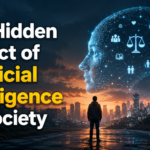
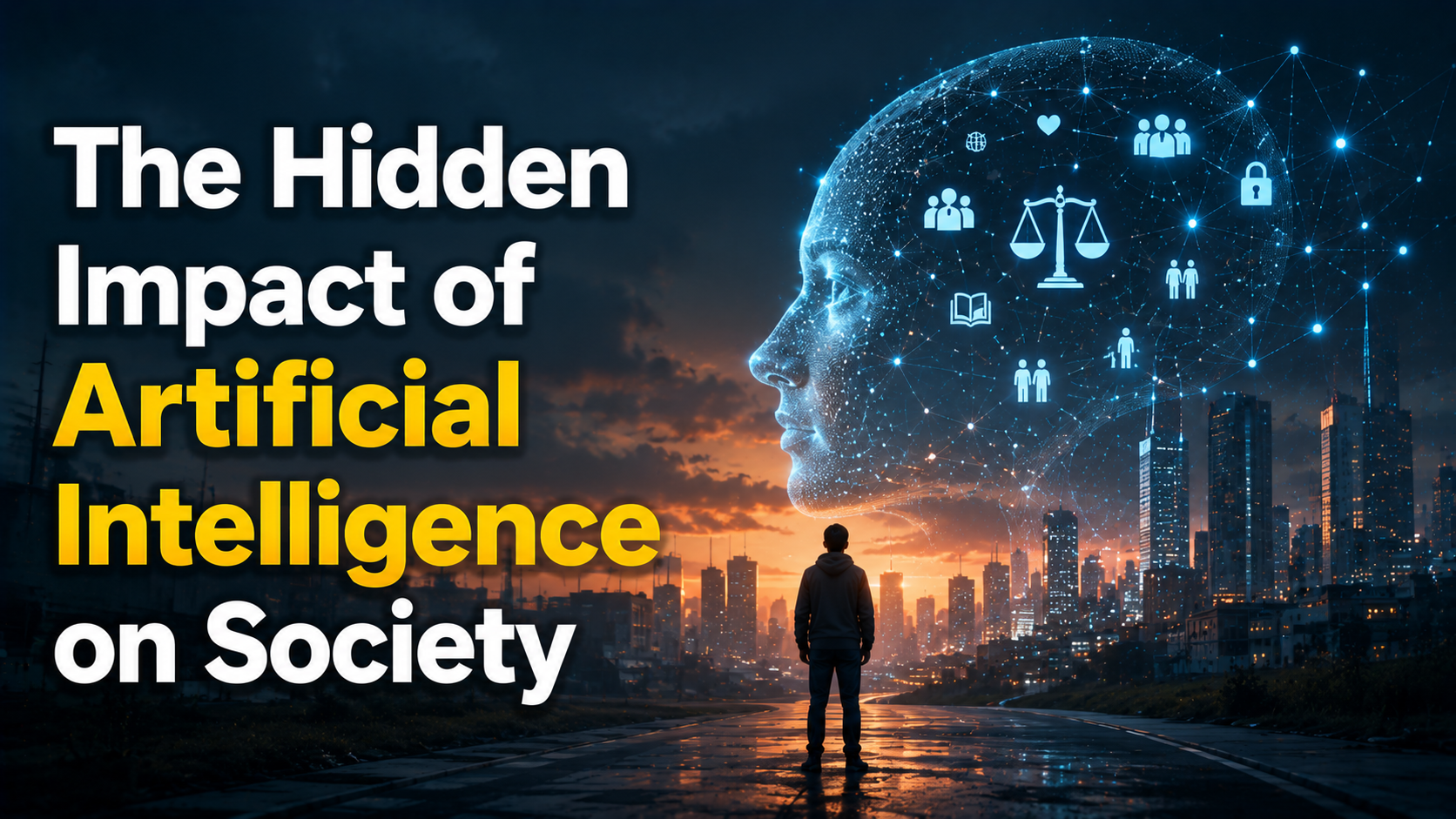
Artificial intelligence is often discussed in terms of futuristic robots, autonomous vehicles, and advanced technologies that seem years away from everyday life. Headlines frequently focus on breakthrough innovations, powerful AI models, and dramatic predictions about the future. The Hidden Impact of Artificial Intelligence on Society.
Yet the most significant impact of AI is not happening in science fiction.
It is happening quietly.
Every day, billions of people interact with artificial intelligence without fully realizing it. AI recommends the videos they watch, the products they buy, the routes they drive, the news they read, and even the words they type. It influences business decisions, healthcare systems, financial markets, educational platforms, and government services.
Unlike previous technological revolutions that were highly visible, AI often operates behind the scenes. Its influence is subtle but pervasive. It changes behavior gradually rather than suddenly. It reshapes society through countless small interactions that accumulate over time.
This hidden transformation is affecting nearly every aspect of modern life.
As artificial intelligence becomes more powerful and integrated into daily routines, understanding its broader societal impact becomes increasingly important. The conversation is no longer about whether AI will change society. The reality is that it already has.
The question now is how deeply these changes will influence the future of humanity.
Table of Contents
Understanding AI’s Invisible Presence
One reason AI’s impact often goes unnoticed is that most people do not interact with artificial intelligence as a standalone product.
Instead, AI is embedded into other technologies.
Examples include:
- Search engines
- Social media platforms
- E-commerce websites
- Streaming services
- Navigation applications
- Digital assistants
- Customer support systems
- Financial platforms
Because AI works in the background, many users focus on the service rather than the intelligence powering it.
This invisibility makes AI uniquely influential.
When technology becomes seamless, it begins shaping habits without demanding conscious attention.
The Evolution of Societal Transformation Through Technology
Throughout history, major technologies have transformed society.
| Technology Era | Primary Innovation | Societal Impact |
|---|---|---|
| Agricultural Revolution | Farming | Permanent settlements |
| Industrial Revolution | Machinery | Mass production |
| Information Age | Computers | Digital productivity |
| Internet Era | Connectivity | Global communication |
| AI Era | Intelligence | Augmented decision-making |
Each technological era altered how people worked, communicated, and organized society.
The AI era differs because it directly influences cognitive activities such as learning, reasoning, decision-making, and problem-solving.
This makes its societal impact particularly profound.
How AI Is Changing Human Behavior
Human behavior evolves in response to environmental changes.
AI is increasingly shaping digital environments.
People interact with recommendation systems, personalized content feeds, intelligent assistants, and predictive technologies throughout the day.
These systems influence:
- Information consumption
- Shopping habits
- Entertainment choices
- Communication patterns
- Learning behaviors
Over time, repeated exposure changes expectations and habits.
Individuals begin expecting:
- Instant answers
- Personalized experiences
- Automated solutions
- Predictive recommendations
These behavioral shifts represent one of AI’s most significant yet least visible impacts.
The Transformation of Decision-Making
Every day, humans make hundreds of decisions.
Historically, decision-making involved:
- Gathering information
- Evaluating alternatives
- Weighing risks
- Applying judgment
AI increasingly assists with these processes.
Examples include:
- Navigation recommendations
- Financial insights
- Product suggestions
- Health guidance
- Travel planning
By narrowing options and presenting recommendations, AI reduces complexity.
While this increases efficiency, it also changes how people approach decision-making.
The relationship between human judgment and machine intelligence is evolving rapidly.
AI and the Future of Work
Perhaps no area receives more attention than AI’s impact on employment.
However, the hidden effects often extend beyond automation.
AI is changing:
- Workplace expectations
- Skill requirements
- Productivity standards
- Collaboration methods
Employees increasingly work alongside intelligent systems that assist with research, analysis, writing, coding, customer service, and project management.
This transformation shifts the focus of work from routine execution toward creativity, critical thinking, and strategic decision-making.
The future workplace is becoming a partnership between human intelligence and machine intelligence.
The New Skills Economy
As AI automates repetitive tasks, the value of uniquely human capabilities increases.
Skills growing in importance include:
Critical Thinking
Evaluating information and making sound judgments.
Creativity
Generating innovative ideas and solutions.
Emotional Intelligence
Understanding human emotions and relationships.
Adaptability
Responding effectively to change.
Ethical Reasoning
Making responsible decisions in complex situations.
The hidden societal impact of AI includes redefining what it means to be professionally valuable.
Education Is Quietly Being Reinvented
Artificial intelligence is transforming education in ways many people have yet to fully appreciate.
Traditional learning often relies on standardized instruction.
AI enables:
- Personalized learning paths
- Adaptive assessments
- Intelligent tutoring
- Real-time feedback
- Customized educational experiences
Students can receive support tailored to their individual needs.
As a result, education becomes more flexible and accessible.
The future classroom may look dramatically different from the classrooms of previous generations.
The Influence of AI on Information Consumption
Information has become one of society’s most valuable resources.
AI increasingly determines:
- What information people see
- When they see it
- How it is presented
Recommendation algorithms influence news consumption, educational content, entertainment choices, and social interactions.
This creates both opportunities and challenges.
Benefits include:
- Greater relevance
- Faster discovery
- Improved accessibility
Challenges include:
- Information bubbles
- Reduced diversity of perspectives
- Potential misinformation risks
The way society accesses knowledge is undergoing a fundamental transformation.
AI and the Attention Economy
Attention has become a valuable economic asset.
AI systems analyze behavior to maximize engagement.
These systems study:
- Viewing habits
- Reading patterns
- Interaction preferences
- User behavior
The goal is often to deliver content that captures and retains attention.
This influences:
- Media consumption
- Online behavior
- Social interactions
The hidden consequence is a reshaping of how people allocate their time and attention.
Economic Transformation Beyond Automation
Many discussions focus on AI replacing jobs.
However, AI’s economic impact is far broader.
AI contributes to:
- Increased productivity
- Faster innovation
- New business models
- Improved decision-making
- Enhanced customer experiences
Organizations that leverage AI effectively often gain competitive advantages.
This creates economic shifts that affect industries, labor markets, and global competitiveness.
Healthcare’s Silent AI Revolution
Healthcare represents one of the most promising applications of artificial intelligence.
AI supports:
- Medical imaging analysis
- Predictive diagnostics
- Treatment recommendations
- Administrative efficiency
- Personalized medicine
Many patients benefit from AI-assisted healthcare without ever directly interacting with AI systems.
This quiet transformation has the potential to improve outcomes while reducing costs.
The Privacy Trade-Off
AI relies heavily on data.
The more information AI systems receive, the more personalized and accurate they become.
This creates a societal challenge.
People often exchange data for convenience.
Examples include:
- Location tracking
- Search history
- Shopping behavior
- Social interactions
Balancing innovation with privacy protection remains one of the most important issues of the AI era.
Social Relationships in an AI World
AI is influencing how people connect with one another.
Social media algorithms determine content visibility.
Communication tools assist with messaging and translation.
AI-powered systems increasingly mediate digital interactions.
While these technologies improve connectivity, they also influence:
- Community formation
- Information sharing
- Social engagement
The structure of digital relationships continues to evolve under AI’s influence.
AI and Human Creativity
A common misconception is that AI threatens creativity.
In practice, AI often serves as a creative partner.
AI can:
- Generate ideas
- Accelerate brainstorming
- Assist content creation
- Explore design possibilities
Human creativity remains essential because creativity involves meaning, context, culture, and emotional understanding.
The future of innovation will likely involve collaboration between humans and intelligent systems.
The Ethical Challenges Society Must Address
The hidden impact of AI extends into ethics.
Important questions include:
- How should AI make decisions?
- Who is accountable for AI outcomes?
- How can fairness be ensured?
- What rights should users have regarding data?
Responsible AI governance is critical.
Without clear ethical frameworks, societal trust may decline.
Transparency and accountability must become priorities.
Generational Differences in AI Adoption
Different generations experience AI differently.
Older generations often compare AI-enabled life with a pre-digital world.
Younger generations are growing up with AI as a normal part of daily life.
This creates varying perspectives on:
- Privacy
- Technology trust
- Learning
- Communication
- Digital identity
Future generations may view AI integration as entirely natural.
Understanding these differences helps organizations design more inclusive technologies.
AI and the Future of Human Identity
One of the deepest societal questions concerns identity.
As AI becomes more capable, people may increasingly ask:
- What makes humans unique?
- Which abilities remain distinctly human?
- How should intelligence be defined?
The answer may lie in qualities that extend beyond computation:
- Empathy
- Wisdom
- Morality
- Creativity
- Purpose
These characteristics remain central to human identity.
The Next Decade of AI Influence
The coming years will likely bring:
- More personalized AI systems
- Greater automation
- Enhanced digital assistants
- Smarter educational tools
- More intelligent healthcare solutions
AI will continue integrating into everyday experiences.
Its influence may become even less visible while becoming more significant.
The challenge is ensuring these advancements serve society’s long-term interests.
Why Human Values Matter More Than Ever
Technology alone cannot determine the future.
Human choices shape how technology is developed and applied.
The hidden impact of AI is not simply technical.
It is social, cultural, economic, and ethical.
Society must ensure that AI development aligns with values such as:
- Fairness
- Transparency
- Inclusion
- Accountability
- Human dignity
These principles help ensure that technological progress benefits everyone.
Conclusion
The hidden impact of artificial intelligence on society is one of the defining stories of the 21st century.
AI is transforming how people work, learn, communicate, consume information, make decisions, and interact with the world around them. Unlike previous technological revolutions, its influence is often subtle, operating quietly behind the scenes.
Yet its effects are profound.
Artificial intelligence is reshaping economies, institutions, industries, and individual behaviors in ways that continue to unfold.
The future will not be determined solely by advances in AI technology. It will also be shaped by how society chooses to use, regulate, and integrate these systems into daily life.
The most successful path forward is one that combines innovation with responsibility.
AI should enhance human potential, strengthen opportunities, and support societal progress.
When guided by strong values and thoughtful governance, artificial intelligence can become one of humanity’s most powerful tools for positive transformation.
Also Read: “AI Infrastructure and the Future of Computing“
Frequently Asked Questions (FAQs)
1. What is the hidden impact of artificial intelligence on society?
The hidden impact refers to the subtle ways AI influences behavior, decision-making, education, work, communication, privacy, and social interactions without always being visible to users.
2. How does AI affect everyday life?
AI affects daily life through recommendation systems, navigation tools, digital assistants, online shopping platforms, social media algorithms, and personalized services.
3. Is AI changing human behavior?
Yes. AI influences how people access information, make decisions, communicate, learn, and interact with digital environments, gradually shaping habits and expectations.