







Trust Is Becoming the Internet’s Most Valuable Currency
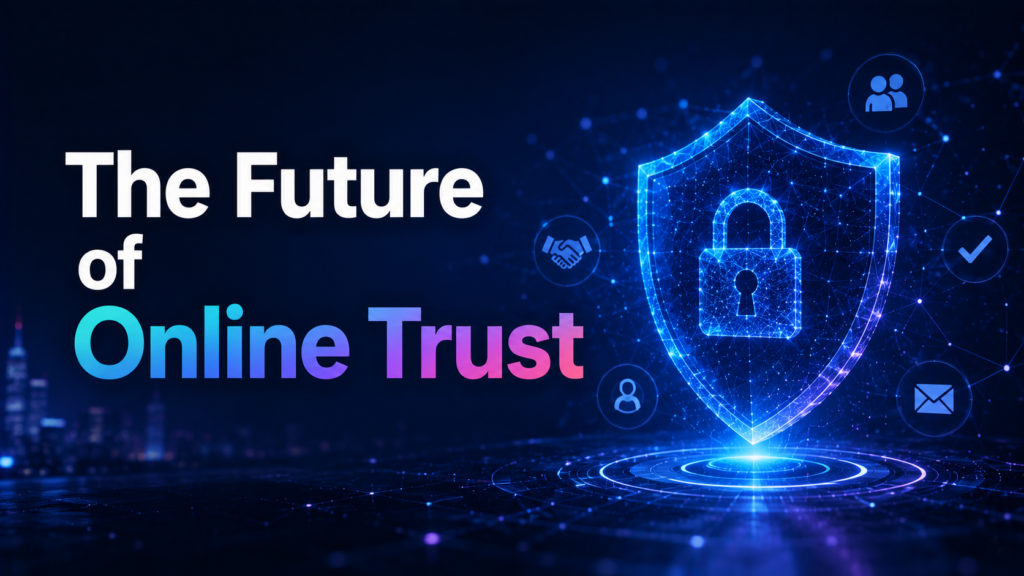
The internet was built on openness. It connected people, democratized information, accelerated communication, and created an unprecedented exchange of ideas. For decades, users relied on websites, search engines, online reviews, social media platforms, and digital communities to navigate the growing world of information. The Future of Online Trust.
However, as the internet expanded, so did the challenges associated with credibility and authenticity. Misinformation, fake reviews, manipulated content, cybercrime, identity theft, and sophisticated artificial intelligence systems have transformed trust into one of the most important issues of the digital age.
Today, online trust is no longer a secondary concern. It has become the foundation upon which digital economies, social interactions, and technological innovation depend. Consumers, businesses, governments, and content creators increasingly recognize that trust is not merely a social value, it is an economic asset.
The future of the internet will not be determined solely by faster technologies or more powerful artificial intelligence. It will be shaped by whether users can trust the information they consume, the platforms they use, and the digital identities they interact with.
As the digital world becomes increasingly intelligent and automated, trust itself is becoming one of the most valuable resources of the twenty-first century.
Table of Contents
Why Trust Has Become More Important Than Ever
The modern internet generates an overwhelming amount of content every second.
People rely on digital platforms to:
- Learn.
- Shop.
- Work.
- Communicate.
- Invest.
- Seek healthcare advice.
- Consume news.
These activities require confidence in the information and systems involved.
Without trust:
- Transactions decline.
- Engagement decreases.
- Communities weaken.
- Businesses lose credibility.
- Economic growth slows.
Trust serves as the invisible infrastructure supporting the digital economy.
The Evolution of Online Trust
| Era | Source of Trust | User Behavior |
|---|---|---|
| Early Internet | Websites and brands | Information retrieval |
| Search Era | Search rankings | Discovery through search engines |
| Social Media Era | Communities and influencers | Peer recommendations |
| Platform Economy | Ratings and reviews | Shared experiences |
| AI Era | Intelligent systems and verification | Trust through transparency |
| Future Internet | Human authenticity and digital identity | Verified interactions |
The mechanisms that establish trust continue to evolve alongside technology.
The Rise of Misinformation
Information abundance has created a paradox.
People have access to more knowledge than ever before, yet distinguishing truth from falsehood has become increasingly difficult.
Challenges include:
- Fake news
- Clickbait content
- Manipulated images
- False claims
- Misleading headlines
- AI-generated misinformation
The speed at which information spreads often exceeds the speed at which it can be verified.
As a result, users are becoming more skeptical and selective about the sources they trust.
Artificial Intelligence Is Changing Trust
Artificial intelligence is simultaneously strengthening and challenging trust.
AI enhances trust by:
- Detecting fraud
- Identifying cyber threats
- Improving recommendations
- Enhancing security
- Verifying identities
However, AI also introduces new risks.
These include:
- Deepfakes
- Synthetic voices
- AI-generated misinformation
- Algorithmic bias
- Hallucinated information
This dual nature makes AI trust one of the defining challenges of the coming decade.
Why Authenticity Is Becoming a Competitive Advantage
Consumers increasingly seek authenticity.
People trust:
- Experts
- Recognized brands
- Original creators
- Transparent organizations
- Communities with shared values
Businesses that prioritize authenticity often build stronger customer relationships.
In an age where content can be generated instantly, genuine expertise and experience become more valuable.
Trust is shifting from quantity to credibility.
Digital Identity Will Define the Future
Identity verification is becoming increasingly important.
Future digital ecosystems may rely heavily on:
Verified Credentials
Ensuring authenticity of users and organizations.
Biometric Authentication
Fingerprint and facial recognition technologies.
Blockchain-Based Identity Systems
Providing secure and decentralized verification.
Reputation Systems
Building trust through verified interactions.
Digital identity may become one of the most important foundations of the future internet.
Deepfakes and the Crisis of Authenticity
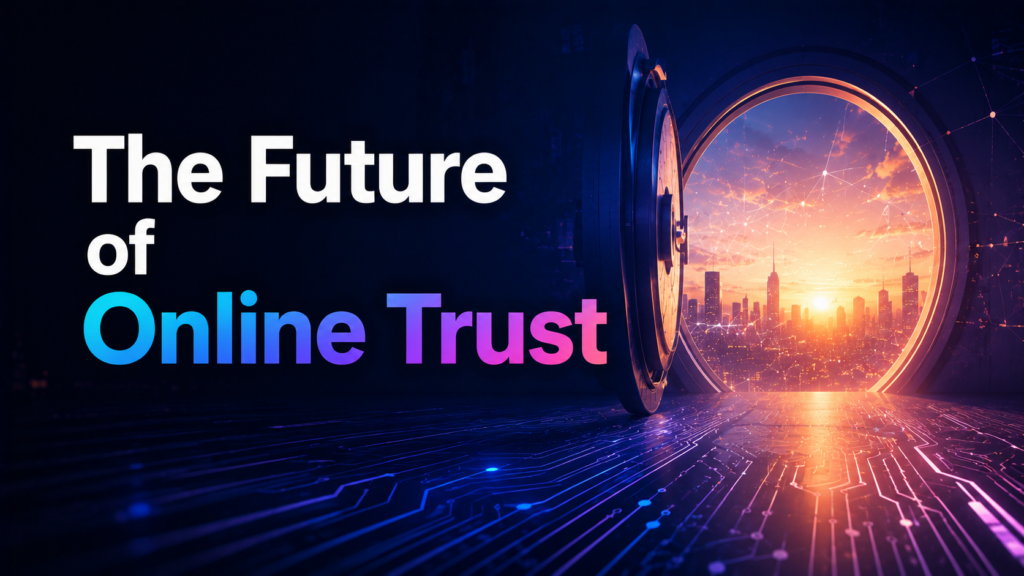
Deepfake technology represents one of the biggest threats to online trust.
Artificial intelligence can now generate:
- Realistic videos
- Human voices
- Images
- Text content
These technologies create opportunities for innovation but also raise concerns regarding:
- Fraud
- Political manipulation
- Identity theft
- Disinformation
The ability to distinguish reality from synthetic media is becoming increasingly difficult.
This challenge highlights the growing importance of verification technologies and media literacy.
Why Brands Must Become Trust Platforms
Modern consumers expect more than products.
They seek:
- Transparency
- Ethical practices
- Data privacy
- Reliability
- Accountability
Brands are evolving into trust platforms.
Companies that consistently deliver value and honesty are likely to enjoy long-term loyalty.
Trust is becoming a major competitive advantage in every industry.
Online Reviews and Reputation
The digital economy relies heavily on reputation.
Consumers often make purchasing decisions based on:
- Customer reviews
- Testimonials
- Ratings
- Influencer opinions
However, fake reviews have become widespread.
Future reputation systems may increasingly emphasize:
- Verified purchases
- AI-powered fraud detection
- Authentic feedback mechanisms
- Community validation
Reputation itself is becoming a form of digital currency.
The Future of Search and Trust
Search engines are evolving into answer engines powered by AI.
This transformation raises important questions.
Who decides which information is trustworthy?
Future search ecosystems will likely prioritize:
| Ranking Factors of the Future | Importance |
|---|---|
| Expertise | High |
| Authority | High |
| Experience | High |
| Source Transparency | High |
| Reputation | High |
| Originality | High |
Google’s EEAT principles—Experience, Expertise, Authoritativeness, and Trustworthiness—are becoming increasingly important.
Trust may become the primary ranking factor in AI-driven search environments.
Cybersecurity and Digital Confidence
Cybersecurity forms the foundation of online trust.
Consumers expect protection of:
- Personal information
- Financial records
- Digital identities
- Private communications
Organizations investing in cybersecurity strengthen customer confidence and resilience.
Trust and security are becoming inseparable.
Human Verification Will Gain Value
As AI-generated content becomes widespread, human authenticity becomes increasingly valuable.
People will seek:
- Expert opinions
- Real experiences
- Verified creators
- Genuine communities
Ironically, the rise of AI may increase the importance of human credibility.
Human trust signals may become premium assets.
Transparency Will Shape AI Adoption
Trust depends on transparency.
Users want answers to questions such as:
- How does the AI system work?
- What data is collected?
- Why was this recommendation made?
- Who is responsible for mistakes?
Transparent systems foster confidence and long-term adoption.
Opaque systems create skepticism.
Trust grows when users understand how technology functions.
Education and Digital Literacy
Building trust requires informed users.
Future digital literacy extends beyond technical skills.
People must learn:
- Critical thinking
- Fact-checking
- Source evaluation
- AI literacy
- Media literacy
The ability to assess credibility will become one of the most valuable skills in modern society.
The Economics of Trust
Trust has measurable economic value.
Organizations with strong reputations often benefit from:
- Higher customer loyalty
- Increased revenue
- Lower acquisition costs
- Better partnerships
- Stronger communities
Trust reduces uncertainty.
Reduced uncertainty enables economic growth.
In many ways, trust functions as an invisible economic infrastructure.
Human Values in an AI-Powered Internet
Technology alone cannot solve trust problems.
Human values remain essential.
These include:
- Integrity
- Fairness
- Accountability
- Empathy
- Responsibility
The future internet must balance innovation with ethics.
Technological progress without trust ultimately becomes unsustainable.
Building a Trust-Centered Internet
The next generation of digital systems should prioritize:
| Principle | Purpose |
|---|---|
| Transparency | Build confidence |
| Privacy | Protect users |
| Accountability | Establish responsibility |
| Security | Prevent threats |
| Authenticity | Preserve credibility |
| Human Oversight | Maintain ethical standards |
Trust should not be viewed as an afterthought.
It should become a design principle.
The Future of Human Trust in a Digital World
The internet is entering a new phase.
For years, scale, speed, and convenience defined success.
In the coming decade, trust may become the most important differentiator.
Consumers are increasingly asking:
- Can I trust this information?
- Is this content authentic?
- Who created it?
- How do I verify it?
These questions will shape the future of digital platforms, businesses, media organizations, and artificial intelligence systems.
Trust is becoming the foundation upon which the next internet economy will be built.
Conclusion
The future of online trust represents one of the most important challenges and opportunities of the digital age. As artificial intelligence, deepfakes, misinformation, and digital complexity continue to expand, credibility and authenticity are becoming increasingly valuable.
Technology alone cannot create trust. Trust emerges from transparency, accountability, expertise, and human values. Businesses, creators, platforms, and institutions that prioritize these principles are likely to thrive in the next era of the internet.
Ironically, as machines become more capable of generating content and simulating human interactions, genuine human experience and verified authenticity may become premium assets.
The future of the internet will not simply belong to those with the most advanced technology. It will belong to those who earn and maintain trust.
Because in the digital age, trust is no longer just a virtue, it is becoming the world’s most valuable currency.
Also Read: “Digital Ownership in the AI Era“
Frequently Asked Questions (FAQs)
1. Why is online trust becoming more important?
Online trust is becoming critical because misinformation, deepfakes, cyber threats, and AI-generated content are making it harder to verify authenticity and credibility.
2. How does artificial intelligence affect online trust?
AI improves security and fraud detection but also introduces challenges such as deepfakes, misinformation, and algorithmic bias, making transparency increasingly important.
3. What role does digital identity play in the future?
Digital identity systems help verify authenticity, protect users, and establish trust in online interactions and transactions.