






Introduction: A Quiet Revolution in Everyday Behavior
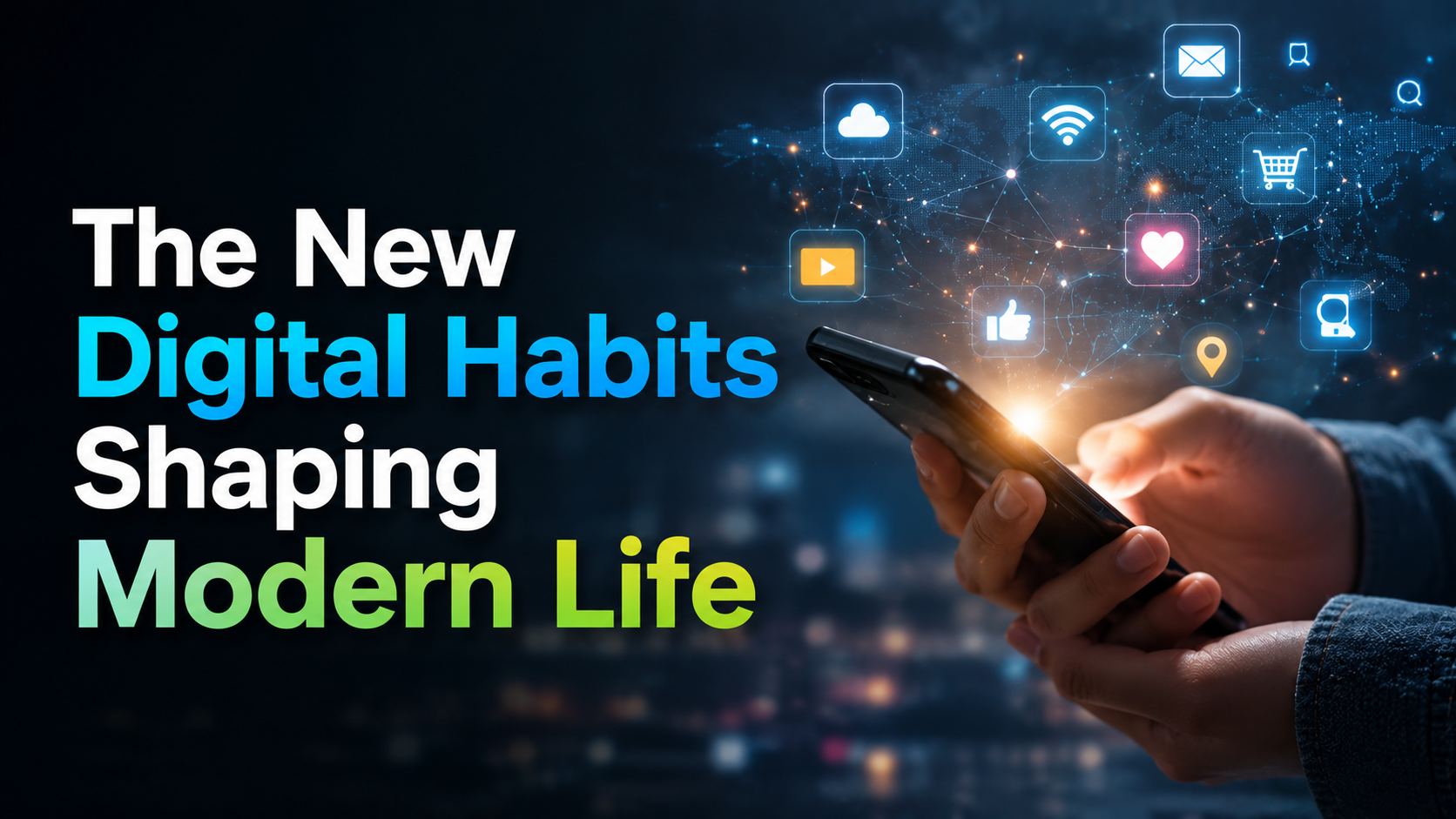
Most technological revolutions are recognized through visible breakthroughs. The arrival of electricity transformed cities. The internet connected the world. Smartphones placed powerful computers into our pockets. The New Digital Habits Shaping Modern Life.
Today’s transformation is different.
Rather than changing only the tools we use, modern technologies are changing the habits that define daily life. From the moment people wake up and check notifications to the way they work, learn, shop, communicate, and make decisions, digital technologies have become deeply integrated into everyday routines.
Artificial intelligence, mobile connectivity, cloud computing, smart devices, digital platforms, and personalized algorithms are creating entirely new patterns of behavior. Many of these habits have emerged gradually, making them easy to overlook. Yet collectively, they represent one of the most significant shifts in human behavior since the rise of the internet.
The modern individual now navigates a world where information is instant, communication is continuous, entertainment is personalized, and digital assistance is available at any moment. As these technologies evolve, they continue to reshape expectations, productivity, relationships, learning, and even how people think.
The new digital habits shaping modern life are not temporary trends. They are becoming the foundation of how society functions in the digital age.
Table of Contents
Understanding Digital Habits
Digital habits are the recurring behaviors people develop through their interactions with technology.
These behaviors influence how individuals:
- Access information
- Communicate with others
- Manage work
- Consume content
- Learn new skills
- Make purchasing decisions
- Organize daily activities
Unlike traditional habits, digital habits evolve rapidly because technology itself changes quickly. New platforms, applications, and AI-powered tools continuously introduce new ways of interacting with the world.
As a result, modern life is increasingly defined by digital routines.
The Evolution of Daily Life Through Technology
Technology’s influence on behavior has expanded dramatically over the past few decades.
| Era | Dominant Technology | Behavioral Change |
|---|---|---|
| 1990s | Personal Computers | Digital productivity |
| Early 2000s | Internet | Online communication |
| 2010s | Smartphones | Always-connected lifestyles |
| 2020s | Artificial Intelligence | Intelligent assistance |
| Future | AI Agents | Autonomous support systems |
Each technological wave introduced new habits that gradually became normalized.
What once seemed revolutionary eventually became routine.
The same process is now occurring with AI-powered technologies.
The Habit of Instant Information Access
One of the most significant digital habits is the expectation of immediate information.
In previous generations, finding answers often required:
- Visiting libraries
- Reading books
- Consulting experts
- Conducting extensive research
Today, answers are available within seconds.
Search engines, AI assistants, digital databases, and knowledge platforms have fundamentally altered how people seek information.
This shift has created a culture where:
- Questions are answered instantly.
- Research begins online.
- Information is available anytime.
- Learning happens continuously.
The ability to access knowledge instantly has become one of the defining characteristics of modern life.
AI-Powered Decision-Making
Artificial intelligence increasingly influences everyday decisions.
People now rely on AI for:
- Navigation routes
- Product recommendations
- Streaming suggestions
- Financial insights
- Travel planning
- Shopping assistance
Many decisions that once required extensive evaluation are now supported by intelligent systems.
This habit saves time while creating highly personalized experiences.
As AI becomes more sophisticated, its role in decision-making is expected to grow significantly.
The Rise of Personalized Digital Experiences
Personalization has become a central feature of modern technology.
Algorithms analyze preferences, behaviors, and interactions to create customized experiences.
Examples include:
- Personalized news feeds
- Tailored advertisements
- Recommended products
- Customized learning paths
- Curated entertainment
Consumers increasingly expect technology to understand their needs.
This expectation is becoming a permanent digital habit that influences how businesses design products and services.
Continuous Connectivity and Communication
Communication has changed dramatically.
Digital platforms enable people to connect instantly regardless of location.
Modern communication habits include:
- Messaging throughout the day
- Video conferencing
- Social networking
- Collaborative workspaces
- Real-time updates
The concept of being continuously connected has reshaped personal relationships, workplace collaboration, and community engagement.
While connectivity offers significant benefits, it also raises important questions about balance and digital well-being.
The Transformation of Work Habits
Technology has fundamentally changed workplace behavior.
Employees increasingly use digital tools for:
- Collaboration
- Project management
- Remote work
- Data analysis
- Knowledge sharing
Artificial intelligence is further transforming workflows by automating routine tasks and assisting with decision-making.
This allows workers to focus more on creativity, problem-solving, and strategic thinking.
The result is a workplace that is increasingly digital, flexible, and intelligent.
Remote Work as a Permanent Digital Habit
Remote and hybrid work models have become a defining feature of modern employment.
Technology enables professionals to:
- Work from anywhere
- Collaborate globally
- Access cloud-based systems
- Attend virtual meetings
- Manage projects remotely
For many organizations, remote work is no longer a temporary adjustment but a long-term strategy.
This habit is reshaping workplace expectations worldwide.
Digital Learning and Lifelong Education
Learning is no longer confined to classrooms.
Digital technologies have created new habits centered around continuous education.
People regularly use:
- Online courses
- Educational apps
- AI tutors
- Digital certifications
- Learning communities
This shift reflects a broader understanding that skill development must continue throughout life.
In an economy increasingly shaped by technological change, lifelong learning has become a necessity.
The Emergence of AI as a Daily Companion
Artificial intelligence is moving beyond specialized applications and becoming part of everyday life.
AI tools now assist with:
- Writing
- Research
- Scheduling
- Customer service
- Language translation
- Productivity management
As AI becomes more accessible, people are developing habits around interacting with intelligent systems daily.
This trend may represent one of the most important behavioral shifts of the coming decade.
Digital Consumption and Content Discovery
The way people discover content has changed dramatically.
Traditional media relied on scheduled programming and editorial selection.
Today, algorithms determine much of what users see.
Modern habits include:
- Scrolling personalized feeds
- Consuming short-form content
- Following recommendations
- Exploring AI-curated information
Content discovery is becoming increasingly automated and personalized.
This transformation affects media, entertainment, education, and marketing industries alike.
Smart Devices and Connected Living
The growth of connected devices has introduced new forms of digital behavior.
Examples include:
- Smart speakers
- Wearable fitness devices
- Connected appliances
- Smart home systems
- Health monitoring tools
These technologies integrate digital functionality into everyday environments.
As a result, technology becomes less visible while becoming more influential.
The Psychology Behind New Digital Habits
Digital habits are not purely technological.
They are also psychological.
Modern technologies are designed to encourage engagement through:
- Personalization
- Convenience
- Instant feedback
- Accessibility
- Automation
These factors reinforce behavioral patterns that become embedded in daily routines.
Understanding these dynamics is essential for both individuals and organizations.
Benefits of Emerging Digital Habits
The new digital habits offer significant advantages.
Greater Productivity
Technology helps individuals accomplish more efficiently.
Improved Accessibility
Information and services become available to larger populations.
Enhanced Learning
Educational opportunities expand globally.
Better Communication
People connect across geographical boundaries.
Increased Convenience
Daily tasks become easier to manage.
These benefits explain why digital habits continue to spread rapidly.
Challenges and Concerns
Despite their advantages, digital habits also present challenges.
Information Overload
Constant access to information can be overwhelming.
Digital Dependency
Excessive reliance on technology may reduce resilience.
Privacy Risks
Data collection raises important concerns.
Attention Fragmentation
Continuous notifications can disrupt focus.
Algorithmic Influence
Technology increasingly shapes decisions and perceptions.
Addressing these issues requires thoughtful digital literacy and responsible technology use.
Building Healthy Digital Habits
As technology becomes more integrated into daily life, developing healthy habits becomes increasingly important.
Strategies include:
- Setting boundaries for screen time
- Practicing critical thinking
- Protecting personal data
- Managing notifications intentionally
- Prioritizing meaningful interactions
The goal is not to reject technology but to use it purposefully.
Balanced digital habits maximize benefits while minimizing risks.
What the Future May Hold
The next generation of digital habits will likely be shaped by:
- AI agents
- Augmented reality
- Personalized education
- Intelligent healthcare systems
- Autonomous digital assistants
Technology will become increasingly proactive rather than reactive.
Instead of waiting for instructions, systems may anticipate needs and offer assistance automatically.
This evolution could redefine convenience, productivity, and human-computer interaction.
Conclusion
The new digital habits shaping modern life reflect a broader transformation in how people interact with technology. Artificial intelligence, connected devices, digital platforms, and intelligent systems are changing how individuals access information, communicate, learn, work, and make decisions.
These habits are becoming deeply embedded in society because they offer unprecedented convenience, personalization, and efficiency. Yet they also require thoughtful management to ensure that technology enhances human well-being rather than diminishing it.
As digital innovation continues to accelerate, understanding these evolving habits becomes essential. The future will not simply be defined by new technologies but by the behaviors those technologies create.
The digital age is no longer about using technology occasionally. It is about living in a world where digital interactions shape everyday life.
Also Read: “Sovereign AI and the Global Technology Race“
Frequently Asked Questions (FAQs)
1. What are digital habits?
Digital habits are recurring behaviors developed through the use of technology, including how people communicate, learn, work, access information, and interact online.
2. How is artificial intelligence influencing daily habits?
AI influences daily habits through personalized recommendations, intelligent assistants, automated decision support, productivity tools, and customized digital experiences.
3. Why are digital habits important?
Digital habits shape productivity, communication, learning, decision-making, and overall quality of life in an increasingly technology-driven society