


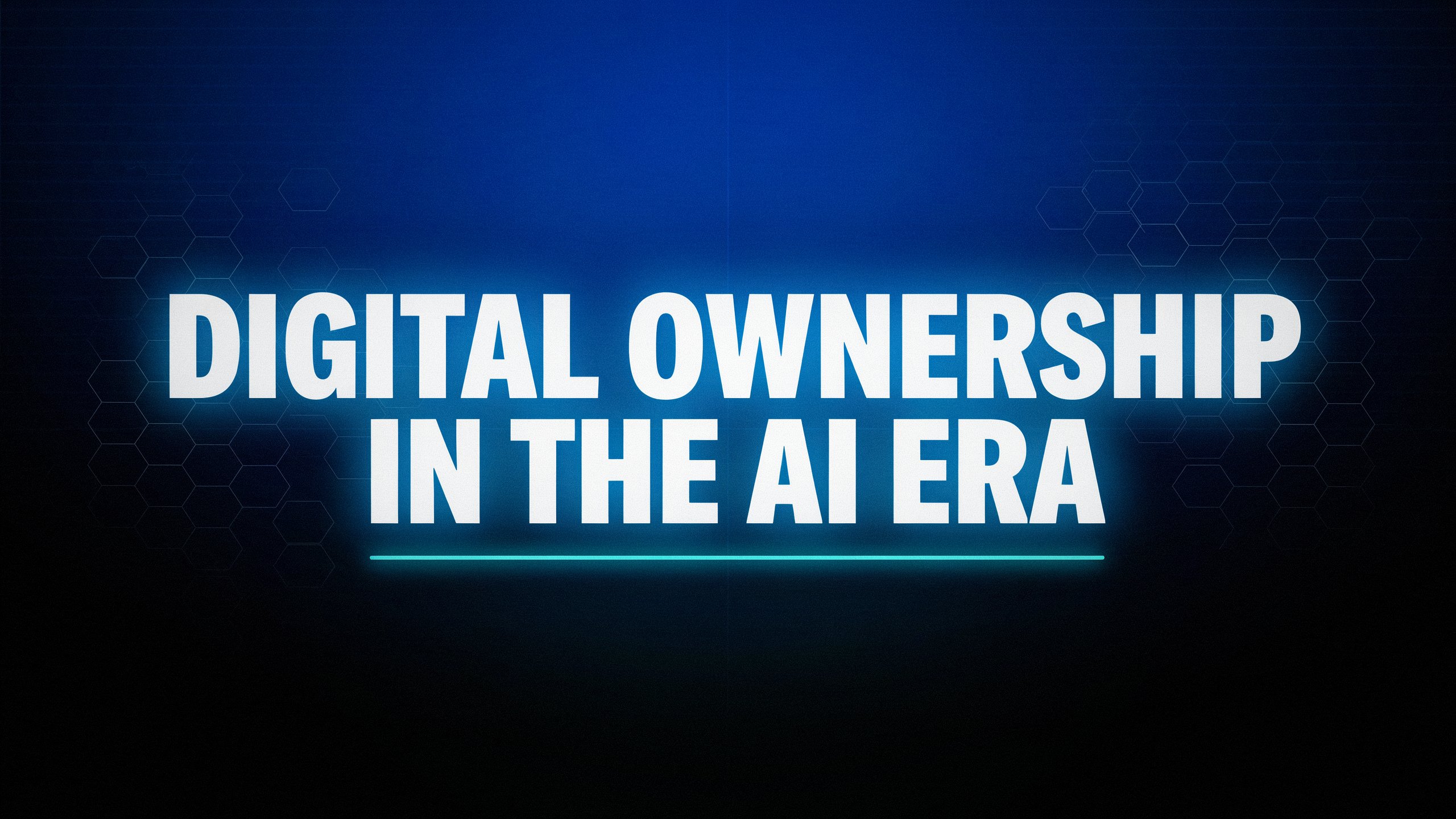
Artificial intelligence is transforming the world at an unprecedented pace. From AI assistants and autonomous agents to intelligent search engines and personalized digital ecosystems, technology is becoming deeply embedded in everyday life. While discussions often focus on innovation and productivity, another equally important question is emerging: Who owns the digital assets created and consumed in the age of artificial intelligence? Digital Ownership in the AI Era.
As AI systems generate content, collect massive amounts of personal data, and increasingly influence economic activity, the concept of ownership itself is undergoing a fundamental transformation. In the industrial age, wealth was tied to physical assets. In the information age, value shifted toward data and digital platforms. In the AI era, ownership is expanding further to include personal information, digital identities, intellectual property, AI-generated creations, and even virtual experiences.
Understanding digital ownership is becoming essential for individuals, businesses, creators, and governments alike. At the same time, the future classroom is already here, and digital literacy beyond search engines is emerging as a critical skill for navigating this new landscape.
The future economy will not simply be shaped by who creates technology, but by who controls and owns digital assets in an increasingly intelligent world.
Table of Contents
Understanding Digital Ownership
Digital ownership refers to the rights, control, and economic value associated with digital assets.
These assets may include:
- Personal data
- Digital identities
- Online content
- Intellectual property
- AI-generated creations
- Virtual goods
- Digital currencies
- Creative works
- Personal knowledge archives
Unlike physical property, digital assets can be copied, shared, and modified almost instantly. This creates new challenges surrounding rights, access, privacy, and compensation.
In the AI era, ownership is becoming more complex because machines increasingly participate in creating and managing these assets. Digital Ownership in the AI Era: Why Data, Identity, and Creativity Are Becoming the New Assets of the Future.
Why Digital Ownership Matters More Than Ever
Artificial intelligence systems rely heavily on data.
Every interaction generates valuable information:
- Search history
- Social media activity
- Purchasing behavior
- Location data
- Voice recordings
- Images and videos
This information fuels AI systems and contributes to economic value.
The central question becomes:
Who benefits from this value?
Is it:
- Individuals?
- Technology platforms?
- Businesses?
- Governments?
- AI developers?
The answer will shape the future digital economy.
The Evolution of Ownership
Throughout history, ownership has evolved alongside technological progress.
| Era | Valuable Assets |
|---|---|
| Agricultural Age | Land |
| Industrial Age | Factories and Machinery |
| Information Age | Data and Networks |
| AI Era | Data, Identity, and Intelligence |
In the AI economy, intangible assets increasingly surpass physical assets in value.
Digital ownership is becoming the foundation of economic participation.
Personal Data: The New Currency
Data has often been described as the “new oil.”
However, unlike oil, personal data originates from individuals.
Examples include:
- Browsing habits
- Financial transactions
- Health information
- Educational records
- Professional activities
AI systems analyze this information to:
- Personalize experiences
- Predict behavior
- Improve products
The economic value generated from personal data raises important questions regarding ownership and compensation.
Many experts argue that individuals should have greater control over how their data is collected and used.
Digital Identity in the AI Age
Our online identities are becoming increasingly valuable.
Digital identity now extends beyond usernames and passwords.
It includes:
- Social profiles
- Professional credentials
- Biometric information
- Digital reputations
- Interaction histories
AI systems use these signals to personalize experiences and automate decisions.
As digital identity grows in importance, protecting it becomes essential.
Future identity systems may provide individuals with greater ownership and portability.
AI-Generated Content and Ownership Challenges
Artificial intelligence can now create:
- Articles
- Images
- Videos
- Music
- Software code
This capability introduces complex legal and ethical questions.
Who owns AI-generated content?
Possibilities include:
- The user who provided prompts
- The AI company
- Original creators whose work trained the model
- Collaborative ownership models
Governments and legal systems worldwide continue to debate these issues.
The answers will influence the future of creativity and intellectual property
Intellectual Property in the Age of AI
Traditional intellectual property laws were designed for human creators.
AI introduces new complexities.
Areas affected include:
Copyright
Determining ownership of AI-generated works.
Patents
Protecting inventions created with AI assistance.
Trademarks
Safeguarding brands in increasingly digital markets.
Licensing
Defining fair use and compensation.
Intellectual property frameworks are likely to evolve significantly over the next decade.
The Creator Economy and Digital Ownership
Creators increasingly rely on digital assets for income.
These assets include:
- Blogs
- Videos
- Podcasts
- Online courses
- Digital products
AI tools enhance creativity but also create concerns regarding:
- Attribution
- Authenticity
- Ownership rights
Successful creators will increasingly focus on building strong personal brands and maintaining control over their intellectual assets.
Personal AI Ecosystems and Data Ownership
AI assistants are becoming deeply integrated into everyday life.
These systems manage:
- Schedules
- Communications
- Health data
- Financial information
As personal AI ecosystems expand, users must consider:
- Where data is stored
- Who can access it
- How it is monetized
Future AI systems may provide individuals with greater transparency and control.
Digital Ownership and Business Models
Technology companies have traditionally monetized user attention and data.
The AI era may introduce new economic models.
Subscription-Based Services
Users pay for premium AI experiences rather than exchanging data.
Data Ownership Platforms
Individuals control and monetize personal information.
Creator-Centric Models
Revenue flows directly to content creators.
Personalized AI Agents
Users own customized AI companions trained on their preferences and histories.
These shifts could redefine digital economics.
The Economics of Digital Ownership
Ownership creates economic power.
Individuals who control valuable digital assets may benefit from:
- Licensing opportunities
- Content monetization
- Personalized AI services
- Reputation-based economies
Digital ownership could become a major source of wealth creation.
The next generation of entrepreneurs may build businesses around:
- Knowledge
- Creativity
- Communities
- Digital identities
Privacy and Control
Ownership without control is meaningless.
Individuals increasingly demand:
- Transparency
- Consent
- Data portability
- Security
Governments are responding with regulations aimed at protecting digital rights.
Future systems may prioritize user-centric data governance. Digital Ownership in the AI Era: Why Data, Identity, and Creativity Are Becoming the New Assets of the Future.
The Future Classroom Is Already Here
Artificial intelligence is transforming education itself.
Students now learn through:
- AI tutors
- Personalized learning platforms
- Virtual simulations
- Intelligent study assistants
Traditional classrooms emphasized memorization.
Modern education focuses on:
- Creativity
- Collaboration
- Critical thinking
- Problem-solving
- AI literacy
The classroom of tomorrow already exists.
Education is becoming increasingly personalized and continuous.
Digital Literacy Beyond Search Engines
Digital literacy is evolving rapidly.
Knowing how to search the internet is no longer sufficient.
Tomorrow’s citizens must understand:
AI Collaboration
Working effectively alongside intelligent systems.
Information Verification
Evaluating accuracy and credibilityPrompt Engineering
Communicating effectively with AI tools.
Data Privacy
Understanding ownership and security.
Critical Thinking
Human judgment remains indispensable.
Digital literacy beyond search engines will define success in the AI economy.
Virtual Worlds and Digital Assets
The growth of immersive technologies is expanding digital ownership further.
People increasingly own:
- Virtual goods
- Online identities
- Digital experiences
These assets may possess real economic value.
Virtual economies could become significant contributors to future wealth creation.
Challenges Facing Digital Ownership
Data Exploitation
Individuals often lack awareness regarding how information is used.
Security Threats
Cyberattacks remain a growing concern.
Regulatory Uncertainty
Legal frameworks continue to evolve.
Algorithmic Bias
AI systems require fairness and accountability.
Concentration of Power
Large technology companies possess enormous influence over digital ecosystems.
Balanced governance remains essential.
Human Skills Become More Valuable
Ironically, the AI era increases the importance of uniquely human capabilities.
Creativity
Original thinking remains highly valuable.
Emotional Intelligence
Relationships and empathy matter.
Critical Thinking
Humans provide context and judgment.
Adaptability
Continuous learning becomes essential.
Ethical Awareness
Responsible decision-making will define trust.
Technology may change rapidly, but human qualities remain irreplaceable.
What Individuals Should Do Today
To prepare for the future of digital ownership:
Understand Data Rights
Know how information is collected and used.
Build Personal Brands
Digital reputation creates opportunities.
Invest in Digital Skills
AI literacy becomes essential.
Protect Privacy
Strong security practices matter.
Embrace Lifelong Learning
Adaptability remains critical.
Preparation today creates resilience tomorrow.
The Future of Digital Ownership
Over the next decade, digital ownership will likely become:
More Personalized
Users will control customized AI experiences.
More Portable
Digital identities will move seamlessly across platforms.
More Valuable
Data and knowledge assets will generate income.
More Secure
Advanced security systems will protect ownership rights.
More Human-Centered
Technology will increasingly prioritize individual control.
The future digital economy will reward those who understand and manage their digital assets wisely.
Conclusion
Digital ownership in the AI era represents one of the most important challenges and opportunities of the twenty-first century. As artificial intelligence reshapes industries and daily life, ownership is expanding beyond physical assets to encompass data, identities, creativity, and knowledge.
At the same time, the future classroom is already here. Digital literacy beyond search engines is becoming essential for navigating this new world. Understanding AI collaboration, information verification, privacy, and critical thinking will determine success in the intelligent economy.
Ultimately, the future belongs not only to those who create AI but also to those who understand how to own, protect, and responsibly manage the digital assets that define modern life.
The age of digital ownership has only just begun.
Also Read: “From SaaS to AaaS: Navigating the Legal and Ethical Shift to Agents-as-a-Service“
Frequently Asked Questions (FAQs)
1. What is digital ownership in the AI era?
Digital ownership refers to the control, rights, and economic value associated with digital assets such as personal data, digital identities, intellectual property, and AI-generated content.
2. Why is personal data considered valuable?
Personal data helps power AI systems, personalize services, and generate economic value, making it one of the most important assets in the digital economy.
3. Who owns AI-generated content?
Ownership rules vary and continue to evolve. Depending on legal frameworks, ownership may involve users, AI developers, or collaborative models