



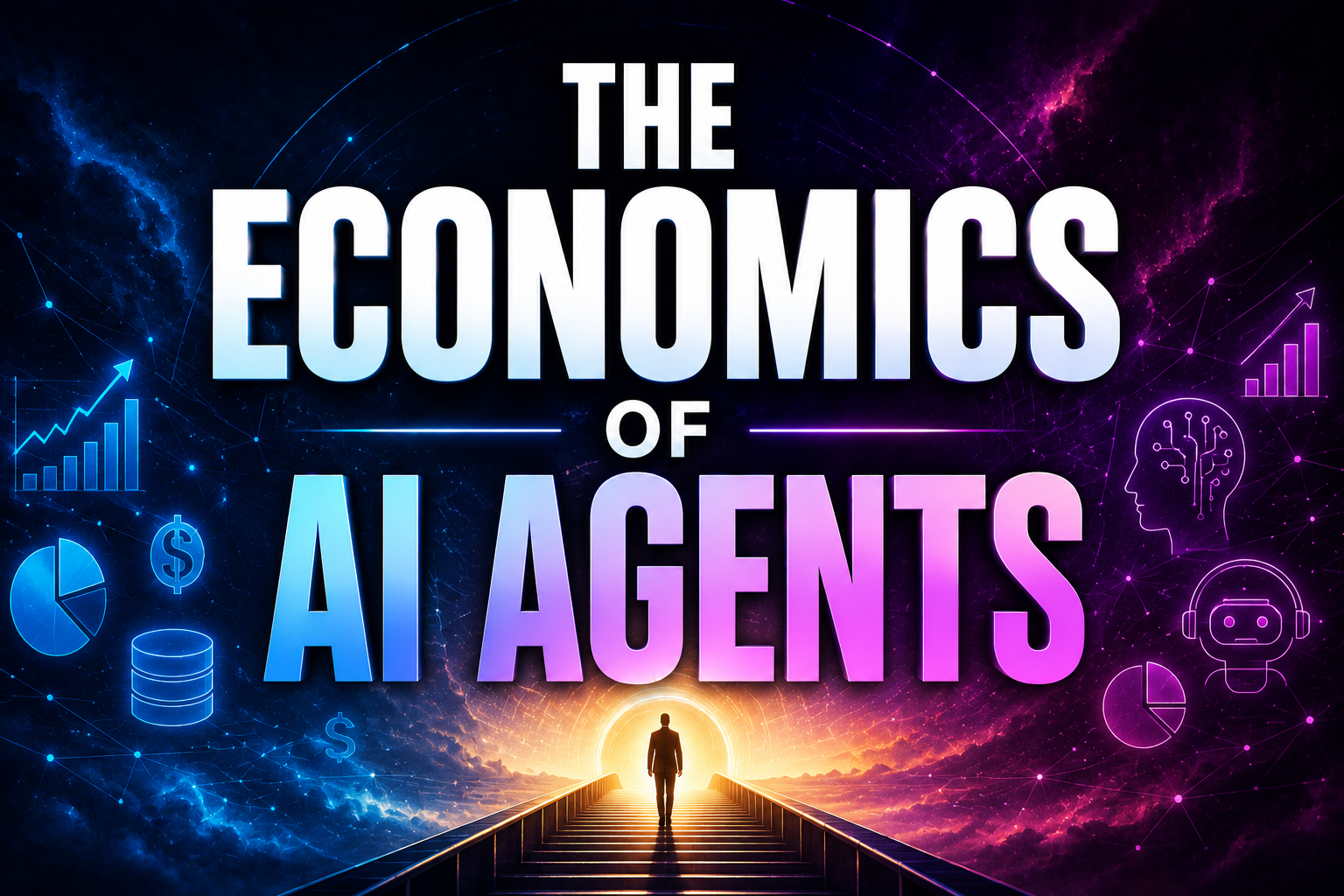
Artificial intelligence has entered a new phase. While traditional AI systems focused on answering questions or generating content, AI agents are transforming into autonomous digital workers capable of performing tasks, making decisions, collaborating with humans, and even interacting with other software systems. From customer support and software development to financial analysis and healthcare operations, AI agents are becoming active participants in the global economy. The Economics of AI Agents.
The economics of AI agents is no longer a futuristic concept, it is a present-day reality. Businesses, governments, and individuals are beginning to understand that AI agents represent not merely another technological upgrade, but a fundamental shift in productivity, labor markets, value creation, and economic structures.
At the same time, another transformation is taking place in education. The future classroom is already here, and digital literacy beyond search engines is becoming essential for individuals who want to thrive in an AI-driven economy.
This article explores the economics behind AI agents, their impact on industries and employment, emerging business models, challenges, and why preparing the next generation for an AI-powered world is more important than ever.
Table of Contents
Understanding AI Agents
AI agents are intelligent systems capable of performing tasks autonomously. Unlike traditional AI chatbots that only respond to prompts, AI agents can:
- Plan and execute tasks
- Learn from interactions
- Access external tools and databases
- Make decisions based on goals
- Collaborate with humans and other agents
- Automate workflows
Examples include:
- Customer service agents
- Coding assistants
- Personal productivity agents
- Financial analysis systems
- Research assistants
- Supply chain optimization agents
- Healthcare diagnostic agents
In essence, AI agents are becoming digital employees.
Why AI Agents Matter Economically
Throughout history, major technological breakthroughs have changed the structure of economies.
| Era | Major Technology | Economic Impact |
|---|---|---|
| Industrial Revolution | Steam Engine | Mechanization |
| Electricity Era | Power Systems | Mass Production |
| Internet Era | Digital Connectivity | Global Information Economy |
| AI Era | AI Agents | Cognitive Automation |
AI agents automate not physical labor, but cognitive work.
This distinction makes their economic impact potentially larger than previous technological revolutions because knowledge work represents a significant portion of modern economies.
The Rise of Digital Labor
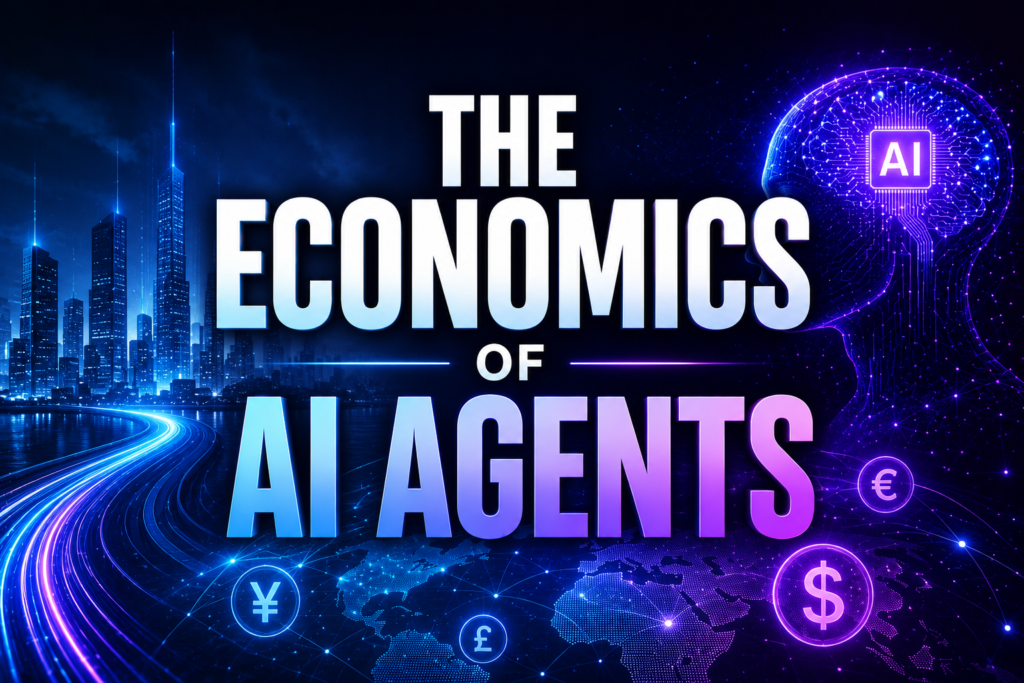
One of the biggest economic consequences of AI agents is the emergence of digital labor.
Traditional businesses rely on:
- Human employees
- Contractors
- Outsourcing firms
AI agents introduce a fourth workforce category:
Autonomous digital workers
These workers can operate:
- 24/7
- Without vacations
- Across multiple time zones
- At significantly lower costs
For businesses, this translates into:
Lower Operational Expenses
Tasks that once required large teams can now be managed by AI agents.
Examples include:
- Data entry
- Report generation
- Customer support
- Scheduling
- Research
- Documentation
Increased Productivity
Employees equipped with AI agents can accomplish significantly more work.
Rather than replacing humans entirely, AI agents often act as force multipliers.
The Economics of Cost Reduction
AI agents dramatically reduce the cost of performing repetitive knowledge work.
Consider customer support:
| Traditional Model | AI Agent Model |
|---|---|
| Human staff salaries | Low operating costs |
| Limited working hours | 24/7 availability |
| Training expenses | Continuous learning |
| High scaling costs | Near-zero marginal scaling |
This creates enormous economic incentives for businesses to adopt AI.
Companies that successfully deploy AI agents can:
- Reduce expenses
- Improve customer experience
- Increase profit margins
- Scale faster
AI Agents and Productivity Growth
Economists have long viewed productivity growth as the foundation of economic prosperity.
AI agents are expected to accelerate productivity in several sectors.
Software Development
AI coding agents help developers:
- Write code
- Debug errors
- Generate documentation
- Test applications
Developers become more productive rather than obsolete.
Healthcare
AI agents assist with:
- Diagnosis support
- Medical transcription
- Appointment scheduling
- Administrative tasks
Doctors spend more time treating patients and less time on paperwork.
Finance
Financial institutions employ AI agents for:
- Fraud detection
- Market analysis
- Risk assessment
- Portfolio management
This increases efficiency and reduces operational risks.
Legal Services
Law firms use AI agents to:
- Review contracts
- Conduct legal research
- Summarize documents
Tasks that previously required hours can now be completed within minutes.
The New Economics of Labor
One of the most debated topics surrounding AI agents is employment.
Historically, technology has:
- Eliminated some jobs.
- Created new industries.
- Increased overall productivity.
AI agents are likely to follow a similar pattern.
Jobs Most Vulnerable
Routine knowledge-based roles face the highest disruption.
Examples include:
- Data entry
- Administrative support
- Basic customer service
- Scheduling
- Documentation processing
Jobs Likely to Grow
Demand is increasing for:
- AI engineers
- Data scientists
- Prompt engineers
- Cybersecurity experts
- Human-AI collaboration specialists
- AI governance professionals
- Ethics consultants
Human creativity, leadership, emotional intelligence, and critical thinking remain highly valuable.
AI Agents as Economic Multipliers
The impact of AI agents extends beyond cost savings.
They function as economic multipliers.
A single entrepreneur can now run operations previously requiring:
- Marketing teams
- Customer support departments
- Analysts
- Designers
- Researchers
This lowers barriers to entry and creates opportunities for small businesses and startups.
The result is:
- Faster innovation
- Increased competition
- Greater economic dynamism
AI Agents and New Business Models
AI agents are enabling entirely new business structures.
Agent-as-a-Service (AaaS)
Companies are beginning to offer AI agents on subscription models.
Examples include:
- Sales agents
- Research agents
- Marketing agents
- Accounting assistants
Businesses pay monthly fees instead of hiring large teams.
Autonomous Companies
Future organizations may consist of:
- Small human teams
- Networks of specialized AI agents
Humans provide:
- Vision
- Strategy
- Creativity
AI agents perform:
- Operations
- Analysis
- Execution
This dramatically changes organizational economics.
Personalized AI Services
Individuals increasingly rely on AI agents for:
- Personal finance management
- Travel planning
- Learning assistance
- Health tracking
These services represent rapidly expanding markets.
The Economics of Data
Data serves as the fuel powering AI agents.
Organizations with high-quality proprietary data gain competitive advantages.
Why Data Matters
AI agents become more effective when trained on:
- Customer behavior
- Operational records
- Industry knowledge
- Historical transactions
Companies possessing valuable datasets may become dominant players in the AI economy.
This creates a new economic reality where:
Data becomes a strategic asset similar to oil in the industrial age.
AI Agents and Global Competition
Countries worldwide are investing heavily in AI.
Leading nations include:
- United States
- China
- United Kingdom
- India
- Singapore
- South Korea
Governments recognize that AI leadership translates into:
- Economic growth
- Military strength
- Technological influence
- Geopolitical power
AI agents may become critical infrastructure similar to:
- Electricity
- Telecommunications
- Internet networks
The Future Classroom Is Already Here
The AI revolution is not limited to businesses.
Education itself is undergoing a transformation.
The classroom of the future already exists.
Students today have access to:
- AI tutors
- Personalized learning systems
- Virtual laboratories
- Intelligent assistants
- Adaptive educational platforms
Traditional education focused on memorization.
Future education focuses on:
- Creativity
- Problem solving
- Collaboration
- AI literacy
- Critical thinking
Students increasingly learn alongside AI rather than competing against it.
Digital Literacy Beyond Search Engines
For decades, digital literacy meant knowing how to use:
- Word processors
In the AI era, digital literacy goes much further.
Tomorrow’s workforce must understand:
Prompt Engineering
Knowing how to communicate effectively with AI systems.
AI Verification
Evaluating information for:
- Accuracy
- Bias
- Hallucinations
- Credibility
Human-AI Collaboration
Learning how to combine human creativity with machine intelligence.
Data Awareness
Understanding:
- Privacy
- Security
- Data ownership
Critical Thinking
As AI generates increasing amounts of content, human judgment becomes even more important.
Digital literacy is evolving from search skills into cognitive partnership with intelligent systems.
Economic Risks and Challenges
Despite enormous opportunities, AI agents present significant risks.
Job Displacement
Workers in repetitive roles may face disruptions.
Governments and organizations must invest in:
- Reskilling programs
- Lifelong learning
- Workforce transitions
Inequality
Large technology companies possess:
- Data
- Computing resources
- AI expertise
This concentration could widen economic inequality.
Policies promoting accessibility and competition are essential.
Security Concerns
AI agents can be exploited for:
- Cyber attacks
- Fraud
- Misinformation
Strong AI governance frameworks are becoming increasingly important.
Ethical Issues
Questions remain regarding:
- Accountability
- Bias
- Transparency
- Privacy
Responsible AI development will shape long-term public trust.
The Multi-Agent Economy
The future may involve ecosystems where multiple AI agents interact.
Imagine:
Marketing Agent
Identifies customer demand.
↓
Finance Agent
Calculates profitability.
↓
Supply Chain Agent
Orders materials.
↓
Customer Support Agent
Handles inquiries.
↓
Human Manager
Approves strategic decisions.
This interconnected ecosystem creates an entirely new economic structure.
Some experts refer to this as the agentic economy.
Industries Most Likely to Benefit
| Industry | AI Agent Applications |
|---|---|
| Healthcare | Diagnosis, administration |
| Finance | Risk analysis, fraud detection |
| Retail | Customer service, inventory management |
| Manufacturing | Predictive maintenance |
| Education | Personalized tutoring |
| Software Development | Coding assistants |
| Marketing | Content generation and analytics |
| Logistics | Route optimization |
Virtually every industry stands to gain from AI agents.
Human Skills That Become More Valuable
Ironically, the rise of AI increases the importance of uniquely human capabilities.
These include:
Creativity
Innovation remains difficult to automate.
Emotional Intelligence
Leadership and empathy are indispensable.
Critical Thinking
Humans provide judgment and context.
Strategic Decision-Making
Long-term vision remains a human strength.
Adaptability
Continuous learning becomes essential.
The future belongs not to humans competing with AI, but to humans collaborating with AI.
What Businesses Should Do Today
Organizations preparing for the AI agent economy should:
Invest in AI Infrastructure
Build scalable AI capabilities.
Train Employees
Develop AI literacy across teams.
Prioritize Data Quality
Good data creates competitive advantages.
Experiment Early
Small pilot projects can generate valuable insights.
Focus on Human-AI Collaboration
Empower employees instead of replacing them.
Conclusion
The economics of AI agents represents one of the most significant transformations since the Industrial Revolution. AI agents are redefining productivity, reshaping labor markets, creating entirely new business models, and altering the structure of global competition.
At the same time, the future classroom is already here. Success in this new era requires digital literacy that extends far beyond search engines. Individuals must learn how to collaborate with AI, verify information, think critically, and adapt continuously.
AI agents are not simply software tools, they are emerging economic actors. Their influence will shape industries, education, entrepreneurship, and society for decades to come.
Those who embrace lifelong learning, develop AI literacy, and combine human creativity with intelligent systems will be best positioned to thrive in the agentic economy.
Also Read: “Your Home Is Getting Smarter in 2026“
Frequently Asked Questions (FAQs)
1. What are AI agents?
AI agents are autonomous software systems that can perform tasks, make decisions, access tools, and collaborate with humans to achieve specific goals with minimal supervision.
2. Will AI agents replace human jobs?
AI agents will automate some repetitive tasks, but they are also expected to create new roles and increase productivity. Human creativity, leadership, and critical thinking remain highly valuable.
3. Which industries will benefit most from AI agents?
Healthcare, finance, education, retail, manufacturing, logistics, and software development are among the sectors expected to experience the greatest impact from AI agent adoption