



Introduction: A New Chapter in Human Learning
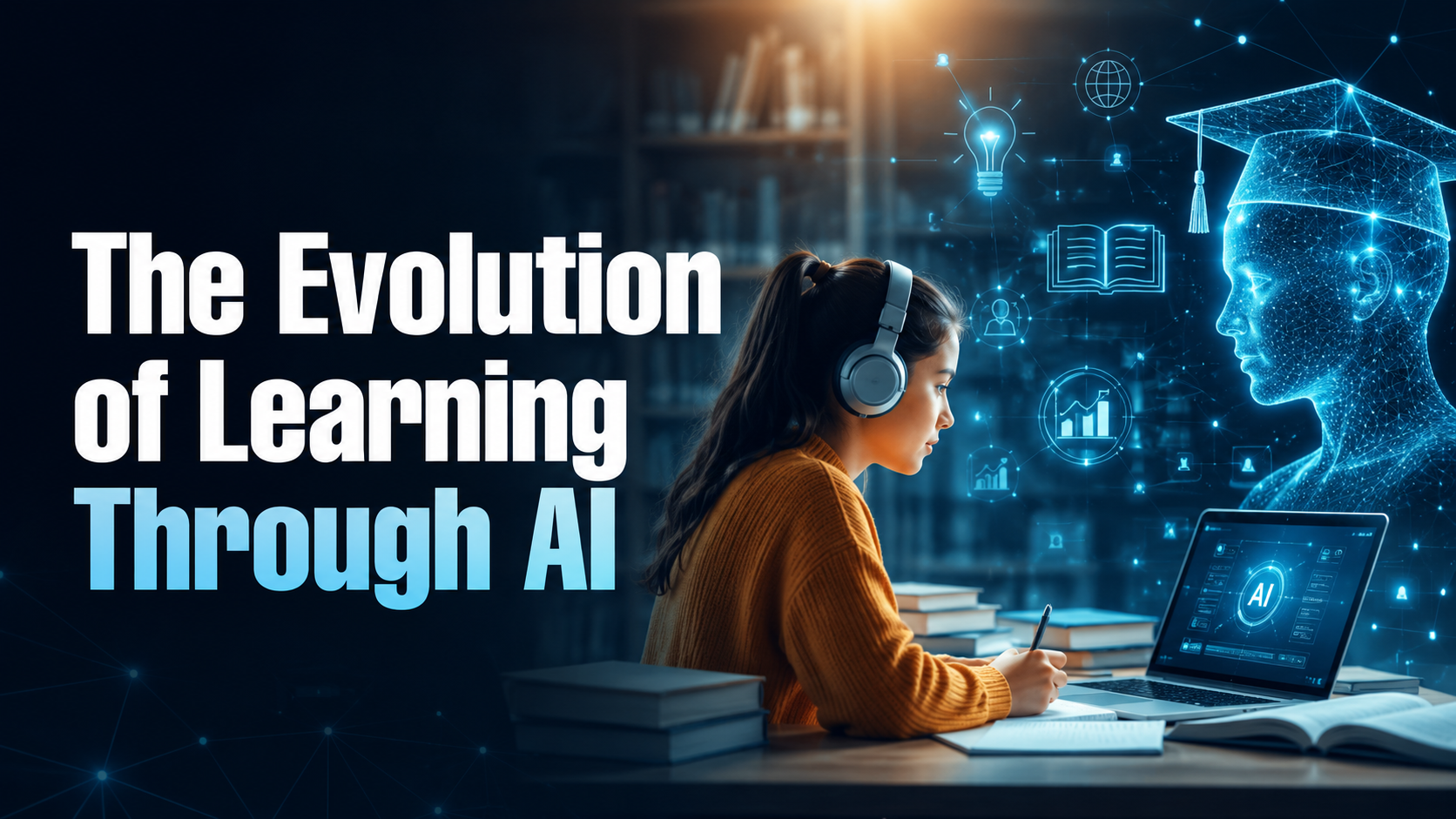
Human civilization has always evolved alongside advancements in knowledge-sharing technologies. From oral storytelling and handwritten manuscripts to printed books, computers, and the internet, every major innovation has changed how people learn. The Evolution of Learning Through AI.
Today, humanity stands at the beginning of another transformative era.
Artificial Intelligence (AI) is reshaping education and learning at a pace rarely seen in history. Students can access intelligent tutors 24 hours a day. Professionals can learn new skills through personalized digital platforms. Educators can leverage AI-powered tools to create customized learning experiences for diverse audiences.
The traditional model of education—where knowledge flows primarily from teacher to student—is evolving into something far more dynamic, interactive, and personalized.
This transformation represents more than technological progress.
It represents a fundamental shift in how knowledge is created, distributed, accessed, and applied.
The evolution of learning through AI is not simply changing classrooms. It is redefining the relationship between humans and knowledge itself.
As AI continues to advance, understanding this evolution becomes essential for students, educators, businesses, policymakers, and lifelong learners seeking to thrive in an increasingly intelligent world.
Table of Contents
Understanding AI in Education
Artificial intelligence refers to computer systems capable of performing tasks that typically require human intelligence.
These tasks include:
- Language understanding
- Pattern recognition
- Problem-solving
- Decision support
- Content generation
- Adaptive learning
In educational environments, AI technologies are used to enhance learning experiences, improve accessibility, personalize instruction, and support educators.
Rather than replacing teachers, AI increasingly acts as a powerful educational partner.
The Historical Evolution of Learning
Learning has always adapted to available technologies.
| Era | Learning Method | Transformational Technology |
|---|---|---|
| Ancient Civilizations | Oral Learning | Language |
| Classical Era | Manuscripts | Writing Systems |
| Renaissance | Mass Literacy | Printing Press |
| Industrial Age | Standardized Education | Public School Systems |
| Digital Age | Online Learning | Internet |
| AI Age | Personalized Learning | Artificial Intelligence |
Each stage expanded access to knowledge.
AI represents the next major evolution.
From One-Size-Fits-All to Personalized Learning
Traditional education often follows a standardized approach.
Every student receives:
- Similar lessons
- Similar pacing
- Similar assessments
However, students learn differently.
Some grasp concepts quickly.
Others require additional support.
AI enables personalized learning experiences by adapting instruction to individual needs.
AI systems can:
- Analyze learning patterns
- Identify strengths
- Detect weaknesses
- Recommend resources
- Adjust difficulty levels
Personalization increases engagement and learning effectiveness.
AI Tutors: Democratizing Educational Support
For centuries, personalized tutoring has been one of the most effective educational methods.
Unfortunately, private tutoring has often been expensive and inaccessible.
AI-powered tutors are changing this reality.
Modern AI learning assistants can:
- Explain concepts
- Answer questions
- Generate practice exercises
- Provide feedback
- Offer continuous support
This creates opportunities for learners regardless of location or socioeconomic background.
AI is helping democratize access to educational assistance.
Learning Becomes Available Anytime, Anywhere
One of the most significant benefits of AI-enhanced learning is accessibility.
Traditional education often depends on:
- Physical classrooms
- Fixed schedules
- Geographic proximity
AI removes many of these barriers.
Students can learn:
- At home
- During travel
- After work
- Across time zones
- Through mobile devices
Knowledge becomes available whenever learners need it.
This flexibility supports lifelong learning and workforce development.
The Rise of Intelligent Learning Platforms
Modern educational platforms increasingly integrate AI capabilities.
These systems can:
- Recommend lessons
- Monitor progress
- Predict learning outcomes
- Personalize content
- Generate assessments
As a result, educational experiences become more responsive and data-driven.
Instead of following static curricula, learners receive customized pathways aligned with their goals and abilities.
The Shift From Information Access to Knowledge Application
Historically, education focused heavily on information acquisition.
Students memorized:
- Facts
- Dates
- Formulas
- Definitions
Today, information is widely accessible.
AI can retrieve knowledge instantly.
This changes educational priorities.
The modern focus increasingly shifts toward:
- Critical thinking
- Problem-solving
- Creativity
- Communication
- Knowledge application
Success depends less on memorization and more on meaningful use of information.
Why Critical Thinking Matters in AI-Powered Learning
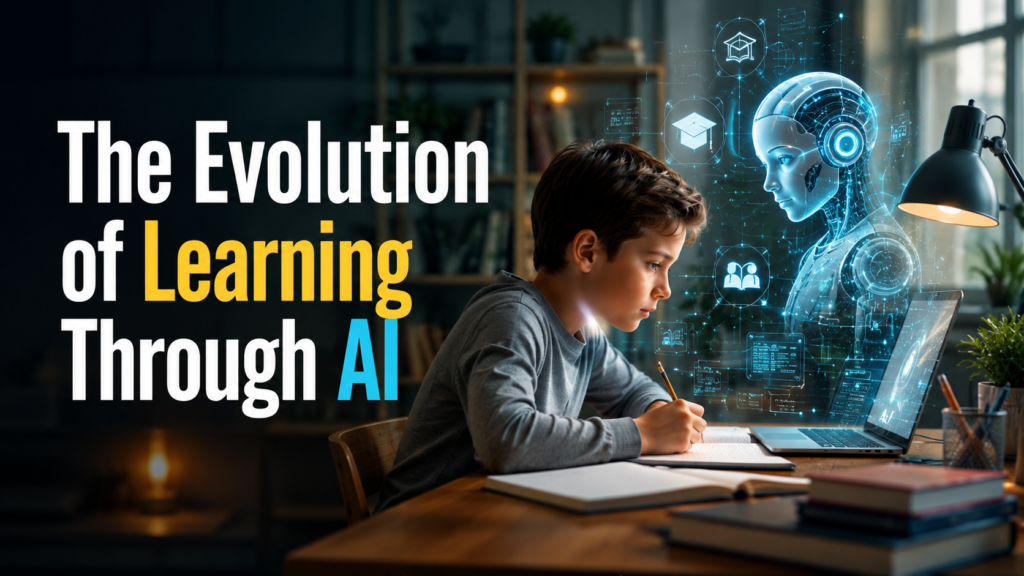
AI can provide answers.
It cannot replace human judgment.
Students must learn how to:
- Evaluate information
- Verify sources
- Identify biases
- Analyze evidence
- Form independent conclusions
Critical thinking remains one of the most valuable educational outcomes.
As AI-generated content becomes more common, these skills become increasingly important.
AI and the Development of Future Skills
The future workforce requires capabilities that extend beyond technical expertise.
Key future-ready skills include:
Adaptability
Technology evolves rapidly.
Creativity
Innovation drives economic growth.
Communication
Collaboration remains essential.
Emotional Intelligence
Human-centered skills remain difficult to automate.
Digital Literacy
Understanding digital systems becomes foundational.
AI-enhanced learning environments can support development across all these areas.
Enhancing Teacher Effectiveness Through AI
A common misconception is that AI will replace educators.
In reality, AI often enhances teacher effectiveness.
Teachers can use AI to:
- Automate administrative tasks
- Generate lesson plans
- Analyze student performance
- Identify learning gaps
- Personalize instruction
This allows educators to focus more on mentorship, creativity, and student engagement.
The teacher’s role evolves rather than disappears.
Data-Driven Learning Experiences
AI systems generate valuable educational insights.
These insights help educators understand:
- Student engagement levels
- Learning progress
- Skill development
- Performance trends
Data-driven learning supports more informed educational decisions.
When used responsibly, it improves learning outcomes while helping students receive targeted support.
Challenges in the Evolution of Learning Through AI
Despite its benefits, AI-powered education faces important challenges.
Digital Inequality
Not all learners have equal access to technology.
Privacy Concerns
Educational data must be protected responsibly.
Over-Reliance on Technology
Students should avoid depending entirely on AI systems.
Information Accuracy
AI-generated outputs may contain errors.
Ethical Considerations
Responsible use of AI remains essential.
Addressing these issues requires thoughtful implementation and governance.
AI and Lifelong Learning
The traditional model of education followed by decades of employment is becoming outdated.
Modern careers require continuous skill development.
AI supports lifelong learning through:
- Personalized recommendations
- On-demand education
- Adaptive training
- Professional development tools
Learning increasingly becomes a lifelong process rather than a one-time event.
Preparing Students for Jobs That Do Not Yet Exist
One of the greatest challenges facing educators is uncertainty.
Many future careers have not yet been created.
Potential emerging roles include:
- AI trainers
- Human-AI workflow designers
- Digital ethics specialists
- AI governance consultants
- Intelligent systems managers
Educational institutions must focus on transferable skills that remain valuable regardless of future technological changes.
Human Intelligence and Artificial Intelligence: A Partnership
The future of learning is not about replacing human intelligence.
It is about enhancing it.
AI contributes:
- Speed
- Automation
- Personalization
- Scalability
Humans contribute:
- Creativity
- Ethics
- Empathy
- Judgment
- Purpose
The most effective learning environments combine both strengths.
The Future Classroom Is Already Here
Many AI-powered educational innovations once considered futuristic are already being implemented.
Examples include:
- Intelligent tutoring systems
- Adaptive assessments
- Virtual learning assistants
- AI-generated educational content
- Personalized learning pathways
The classroom of the future is rapidly becoming the classroom of today.
Educational institutions that embrace innovation can better prepare students for tomorrow’s economy.
How Schools and Universities Can Adapt
Educational institutions should prioritize:
AI Literacy
Helping students understand AI technologies.
Digital Literacy
Teaching responsible technology use.
Critical Thinking
Developing analytical reasoning.
Project-Based Learning
Encouraging real-world problem-solving.
Lifelong Learning Habits
Preparing students for continuous growth.
These strategies support future-ready education.
The Economic Impact of AI-Driven Learning
Countries and organizations that invest in AI-enhanced education may benefit from:
- Higher workforce productivity
- Increased innovation
- Improved skill development
- Greater economic competitiveness
- Stronger talent pipelines
Education remains one of the most important investments societies can make.
AI has the potential to amplify its impact significantly.
What Learning Might Look Like in 2035
Imagine a student beginning a lesson in 2035.
An AI system assesses prior knowledge.
Lessons adapt automatically.
Interactive simulations provide hands-on experiences.
Virtual tutors offer support throughout the learning process.
Teachers guide discussions and foster creativity.
Assessments become continuous rather than periodic.
Learning becomes personalized, engaging, and deeply relevant.
Many of these developments are already emerging today.
Conclusion
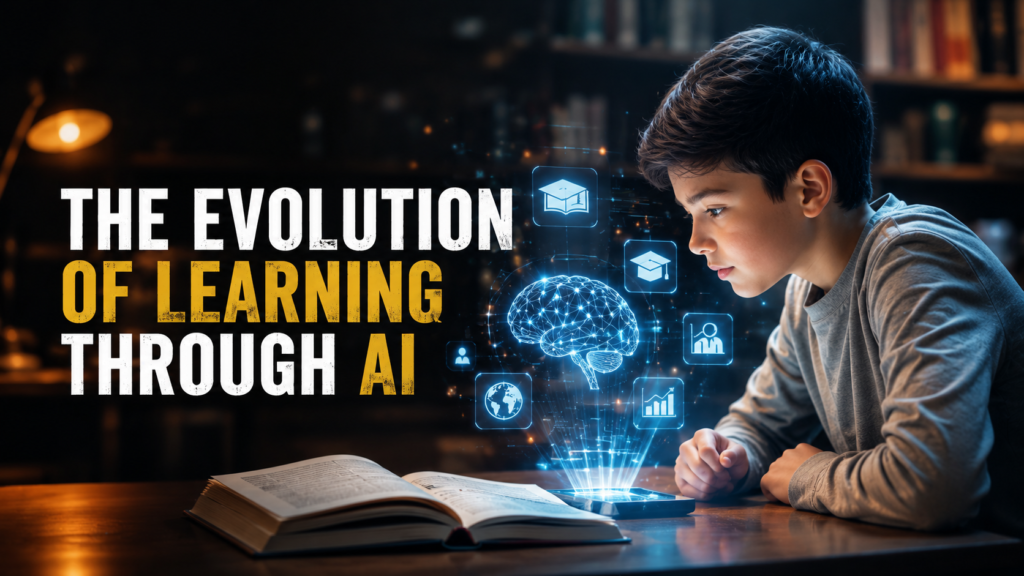
The evolution of learning through AI represents one of the most significant educational transformations in human history. Artificial intelligence is expanding access to knowledge, personalizing learning experiences, supporting educators, and helping learners develop skills needed for a rapidly changing world.
Yet despite remarkable technological progress, the core purpose of education remains unchanged.
Education exists to help individuals understand, think, create, solve problems, and contribute meaningfully to society.
AI enhances this mission by making learning more accessible, adaptive, and effective.
The future of education is not defined by technology alone.
It is defined by how humans use technology to unlock human potential.
As AI continues to evolve, the most successful learners will not be those who merely consume information.
They will be those who combine technological fluency with critical thinking, creativity, adaptability, and lifelong curiosity.
The future of learning has already begun.
And AI is helping shape its next chapter.
Also read: “The Future of Knowledge Acquisition“
Frequently Asked Questions (FAQs)
1. How is AI changing education?
AI is enabling personalized learning, intelligent tutoring, adaptive assessments, automated feedback, and improved access to educational resources.
2. Will AI replace teachers?
No. AI supports educators by automating routine tasks and providing insights, while teachers continue to play essential roles in mentorship, guidance, creativity, and student development.
3. What skills remain important in AI-powered education?
Critical thinking, creativity, communication, emotional intelligence, adaptability, digital literacy, and lifelong learning remain highly valuable.