




How Artificial Intelligence Is Transforming the Way People Find, Consume, and Trust Online Content
Introduction: The End of Traditional Content Discovery
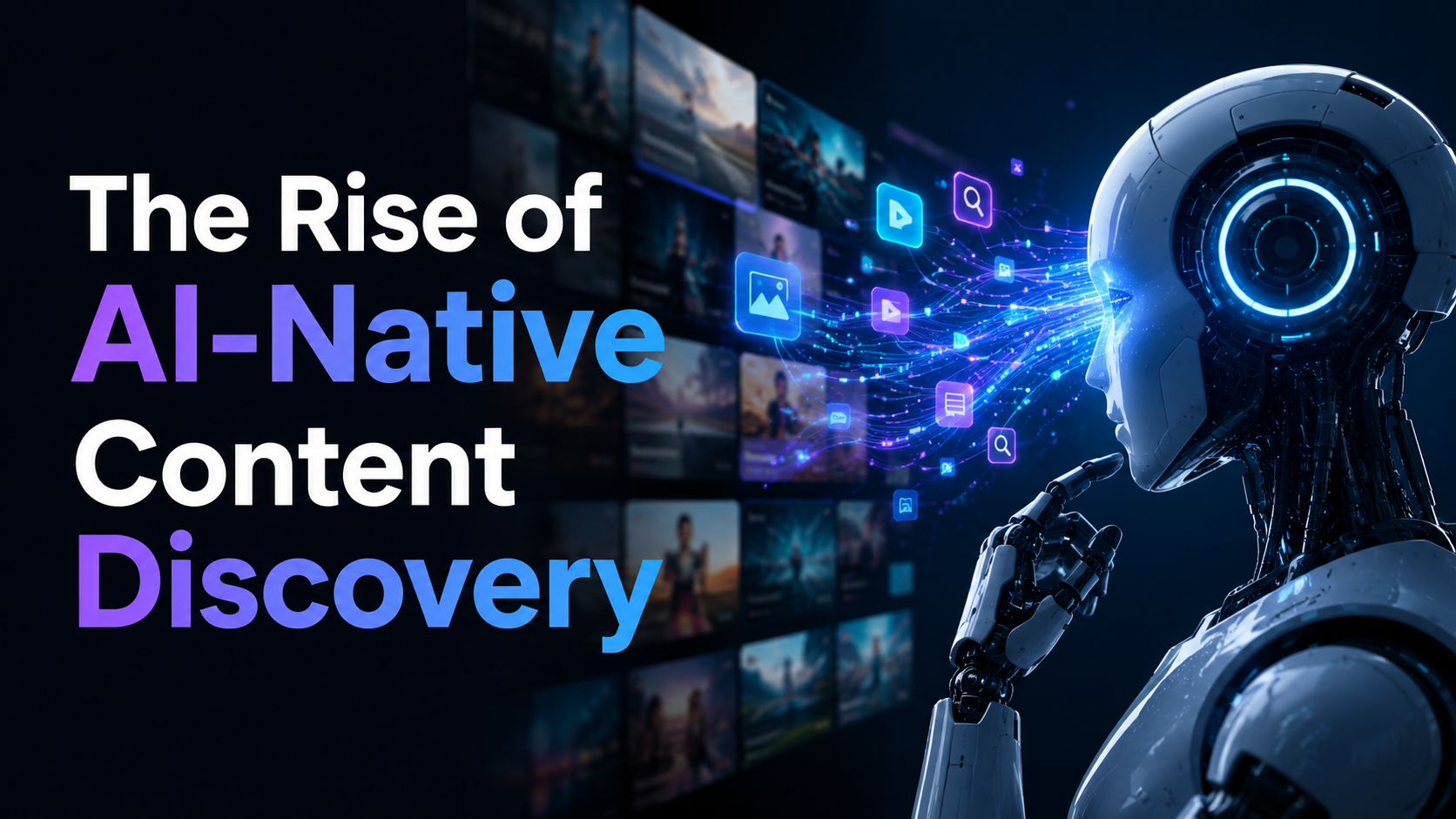
For decades, the internet has operated on a simple principle: people search for information, browse through results, click on links, and consume content. The Rise of AI-Native Content Discovery.
This model created the foundation of the modern digital economy.
Search engines became gateways to information. Social media platforms became discovery engines. Publishers, businesses, creators, and marketers optimized their content to gain visibility within these ecosystems.
But a profound transformation is underway.
Artificial Intelligence is changing not only how content is created but also how it is discovered.
Instead of navigating websites, browsing search results, or scrolling endlessly through feeds, users are increasingly relying on AI systems to find, summarize, recommend, and even personalize content on their behalf.
This new paradigm is known as AI-native content discovery.
It represents a future where discovery is no longer driven primarily by search engines, social feeds, or manual exploration. Instead, intelligent systems become the primary intermediaries between users and information.
The implications are enormous.
AI-native discovery is reshaping SEO, content marketing, digital publishing, advertising, brand visibility, and user behavior. It is changing the economics of the internet and redefining how businesses earn attention online.
The organizations that understand this shift early will gain a significant competitive advantage.
The ones that ignore it may become increasingly invisible.
Table of Contents
What Is AI-Native Content Discovery?
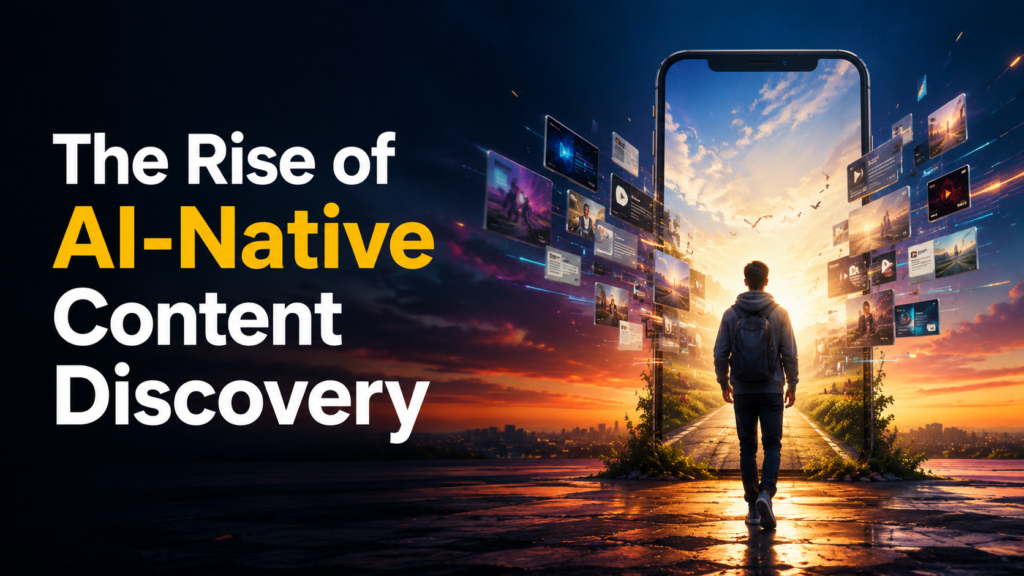
AI-native content discovery refers to the process of finding and consuming information through artificial intelligence systems rather than traditional search engines or social media feeds.
Traditional discovery models involve:
- Searching for information
- Clicking links
- Visiting websites
- Comparing sources
- Evaluating content manually
AI-native discovery works differently.
Users ask questions, express needs, or describe goals.
The AI system then:
- Finds relevant information
- Evaluates sources
- Synthesizes content
- Provides recommendations
- Personalizes responses
Instead of searching for content, users increasingly receive content curated by AI.
This represents a major shift in how attention flows across the internet.
The Evolution of Content Discovery
Content discovery has evolved through several distinct eras.
| Era | Primary Discovery Method |
|---|---|
| Early Web | Directories and Portals |
| Search Era | Search Engines |
| Social Era | Social Media Algorithms |
| Mobile Era | Apps and Notifications |
| AI Era | Intelligent Assistants and Generative Search |
Each stage reduced friction.
AI-native discovery removes even more friction by eliminating many of the steps users previously performed themselves.
The result is a faster and more personalized information experience.
Why AI-Native Discovery Is Growing So Quickly
The rapid growth of AI-native discovery is driven by user demand.
Modern internet users want:
Faster Answers
People increasingly prefer immediate responses over lengthy searches.
Less Information Overload
The internet contains an overwhelming amount of content.
AI helps filter and prioritize information.
Personalized Experiences
Users expect content tailored to their specific needs.
Conversational Interactions
Natural language is becoming the preferred interface.
Greater Convenience
AI reduces the effort required to find useful information.
These benefits explain why AI-powered discovery systems are gaining popularity across industries.
How Generative AI Changes Content Discovery
Generative AI introduces a fundamentally different relationship between users and information.
Traditional search systems provide:
- Lists of results
- Ranked webpages
- Multiple sources
Generative systems provide:
- Direct answers
- Summaries
- Recommendations
- Personalized guidance
This changes the discovery process.
Instead of evaluating ten different sources, users often interact with a single AI-generated response.
The focus shifts from navigation to assistance.
The Shift From Search Engines to Answer Engines
One of the most important developments in AI-native discovery is the rise of answer engines.
Traditional search engines help users locate information.
Answer engines help users understand information.
| Search Engines | Answer Engines |
|---|---|
| Return links | Return answers |
| Require clicks | Reduce clicks |
| Focus on retrieval | Focus on synthesis |
| User-driven exploration | AI-guided discovery |
| Ranking-based visibility | Authority-based visibility |
This transition is rewriting the rules of digital discoverability.
The New Visibility Challenge
Historically, visibility depended on ranking highly in search results.
Businesses focused on:
- Keywords
- Backlinks
- Technical SEO
- Content optimization
In an AI-native environment, visibility increasingly depends on whether AI systems choose to reference, recommend, or summarize your content.
This creates a new challenge.
Success is no longer determined solely by rankings.
It is determined by inclusion.
Being part of the answer becomes more important than simply appearing in search results.
Why Authority Matters More Than Ever
AI systems rely heavily on trusted information sources.
As a result, authority becomes a critical visibility factor.
Organizations that demonstrate:
- Expertise
- Credibility
- Consistency
- Accuracy
- Trustworthiness
are more likely to be referenced by AI systems.
This aligns closely with Google’s EEAT framework.
The future belongs to brands and publishers that build genuine authority rather than merely optimizing for algorithms.
The Growing Importance of EEAT
Google’s EEAT principles have become central to AI-era visibility.
Experience
First-hand knowledge and practical expertise.
Expertise
Deep subject matter understanding.
Authoritativeness
Industry recognition and credibility.
Trustworthiness
Reliable and transparent information.
AI systems increasingly prioritize sources exhibiting these qualities.
In an AI-native world, EEAT becomes a visibility requirement rather than simply an SEO recommendation.
The Impact on Publishers
AI-native discovery creates opportunities and challenges for publishers.
Opportunities
- Greater value for expert content
- Increased demand for original reporting
- Stronger emphasis on authority
Challenges
- Reduced click-through rates
- Lower organic traffic
- Increased competition for citations
Publishers must adapt by focusing on differentiation and trust.
Content that provides unique value remains highly valuable.
How AI Is Reshaping Content Marketing
Content marketing is evolving rapidly.
Traditional content strategies focused on attracting search traffic.
Future strategies must focus on:
Becoming a Trusted Source
Authority influences AI recommendations.
Creating Original Insights
Unique information is more likely to be cited.
Building Brand Recognition
Brands increasingly serve as trust signals.
Answering Real Questions
User intent becomes paramount.
Structuring Information Clearly
AI systems prefer organized content.
The objective shifts from ranking content to becoming reference-worthy.
The Economics of AI-Native Discovery
The rise of AI-native discovery introduces new economic dynamics.
Historically:
- Publishers created content.
- Search engines sent traffic.
- Publishers monetized visitors.
AI changes this relationship.
Users may receive information without visiting the original source.
This creates concerns regarding:
- Publisher sustainability
- Advertising revenue
- Content incentives
The industry is actively exploring solutions including:
- Content licensing
- Revenue-sharing agreements
- Attribution systems
- Subscription models
The future internet will likely require new economic frameworks.
Why Brand Recognition Is Becoming a Ranking Signal
In traditional SEO, rankings often determined visibility.
In AI-native discovery, brands increasingly influence trust.
Recognizable brands benefit because:
- Users trust them.
- AI systems recognize them.
- They possess authority signals.
- They often create high-quality content.
Brand-building is becoming a critical component of discoverability.
The strongest brands may enjoy significant advantages in AI-powered ecosystems.
The Role of Personalization
AI-native discovery is inherently personalized.
Future systems may consider:
- User preferences
- Search history
- Context
- Goals
- Location
- Behavior patterns
As personalization increases, two users may receive entirely different recommendations for the same query.
This represents a significant departure from traditional search.
Visibility becomes dynamic rather than universal.
The Future of SEO in an AI-Native World
SEO is not disappearing.
It is evolving.
Future SEO strategies will increasingly emphasize:
| Traditional SEO | AI-Era SEO |
|---|---|
| Keywords | Topics |
| Rankings | Authority |
| Backlinks | Trust Signals |
| Search Intent | User Context |
| Traffic | Influence |
The organizations that understand this shift will gain long-term advantages.
SEO becomes broader, more strategic, and more closely tied to brand reputation.
Emerging Opportunities for Businesses
AI-native discovery creates new opportunities.
Organizations can benefit by:
Building Topical Authority
Become the leading voice in your niche.
Publishing Original Research
Unique insights attract attention.
Investing in Expertise
Subject matter expertise remains valuable.
Strengthening Trust Signals
Trust improves visibility.
Developing Direct Relationships
Newsletters, communities, and memberships reduce dependency on platforms.
Businesses that adapt early may thrive in the AI era.
The Future of Content Discovery
Over the next decade, AI-native discovery is likely to become increasingly sophisticated.
Future trends may include:
Fully Conversational Discovery
Users interact naturally with AI assistants.
Multimodal Discovery
Text, voice, image, and video merge into unified experiences.
Hyper-Personalized Recommendations
Discovery becomes uniquely tailored.
Predictive Content Delivery
Information appears before users actively search for it.
Autonomous Information Agents
AI systems proactively gather and organize information.
These developments will fundamentally reshape how humans interact with digital content.
Conclusion
The rise of AI-native content discovery marks one of the most significant transformations in the history of the internet. For decades, content discovery revolved around search engines, websites, and social platforms. Today, intelligent systems are increasingly becoming the primary gateway to information.
This shift changes everything.
Visibility is no longer determined solely by rankings and clicks. Authority, trust, expertise, and inclusion within AI-generated responses are becoming the new foundations of discoverability.
For publishers, marketers, businesses, and creators, adaptation is essential. The future belongs to organizations that create genuine value, build strong brands, demonstrate expertise, and earn trust.
AI-native discovery does not eliminate the need for quality content.
It makes quality content more important than ever.
As artificial intelligence becomes the world’s preferred information intermediary, the winners will be those who become trusted sources within the systems that increasingly shape how knowledge is discovered.
The future of content discovery has arrived.
And it is being powered by AI.
Also Read: “The Next Digital Revolution Is Already Underway“
Frequently Asked Questions (FAQs)
1. What is AI-native content discovery?
AI-native content discovery is the process of finding and consuming information through AI-powered systems that recommend, summarize, and personalize content rather than relying solely on traditional search engines.
2. How is AI-native discovery different from traditional search?
Traditional search provides lists of links, while AI-native discovery delivers direct answers, recommendations, summaries, and personalized content experiences.
3. Will AI-native discovery replace SEO?
No. SEO will continue to exist, but it will evolve toward authority building, trust, expertise, structured content, and answer optimization.
Why is EEAT important in AI-powered discovery?
EEAT (Experience, Expertise, Authoritativeness, and Trustworthiness) helps AI systems identify reliable sources, making it a critical factor for visibility in AI-driven content ecosystems.