








As we step into 2026, our digital lives are undergoing a transformation that blends convenience, intelligence, and immersion like never before. From how we work and socialise, to how we shop and learn, technology is weaving itself ever more deeply into our daily routines. In this article, we explore how your digital life is evolving this year, the key trends driving that transformation, and what you can expect for better and worse. Your Digital Life Is Evolving in 2026.
Table of Contents
The Big Picture: Why 2026 Is a Turning Point
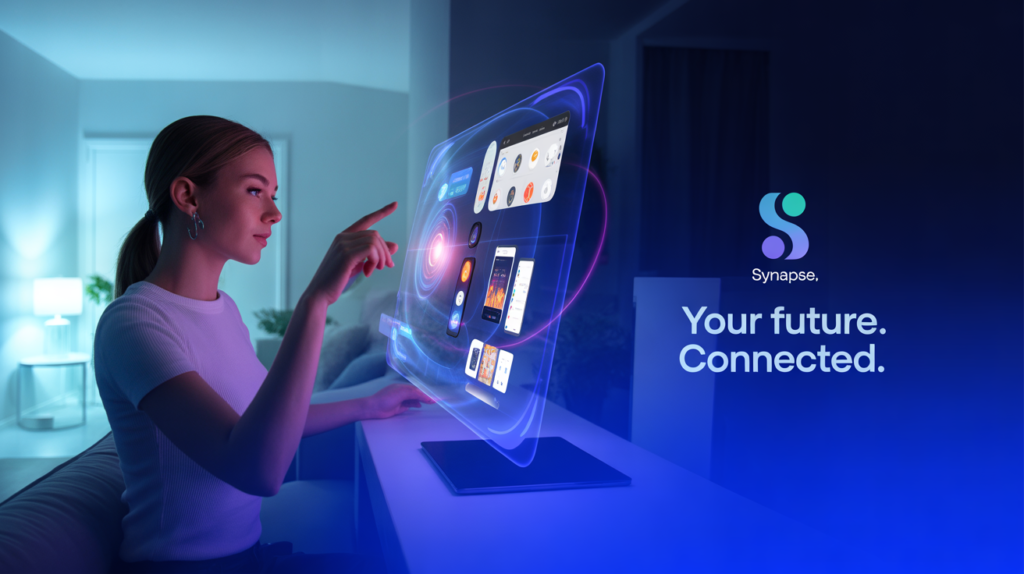
There are a few reasons 2026 feels different:
- The technologies that were once experimental AI, extended reality (XR), Internet of Things (IoT), and edge computing are now reaching maturity.
- Growing global internet penetration means more people are online than ever. According to recent data, in 2025, about 6 billion people globally are now internet users.
- Devices and infrastructure from wearables to smart city sensors to powerful chips are ready to deliver “always-on,” “always-connected,” and “context-aware” digital experiences.
Put together, these mean: 2026 isn’t just another year of incremental digital upgrades. It’s a pivot: your digital life becoming far more integrated, intelligent, and immersive.
7 Key Trends Shaping Your Digital Life in 2026
Below are the major technology-driven shifts reshaping daily living in 2026.
| S.NO | Trend | What it Means for You |
|---|---|---|
| 1 | AI-powered everyday tools & automation | Digital interaction is no longer limited to screens: Augmented Reality (AR), Virtual Reality (VR), and Mixed Reality (MR) will blur lines between physical and virtual worlds. This affects work (virtual offices), education (VR classrooms), shopping (virtual try-ons), entertainment, and socializing. |
| 2 | Extended Reality (XR) AR/VR/MR becomes mainstream | Digital interaction is no longer limited to screens: Augmented Reality (AR), Virtual Reality (VR), Mixed Reality (MR) will blur lines between physical and virtual worlds. This affects work (virtual offices), education (VR classrooms), shopping (virtual try-ons), entertainment, and socializing. |
| 3 | Smart Infrastructure & IoT 2.0: the world gets connected | Cities, homes, workplaces everything becomes “smart”: IoT sensors, connected devices, and edge computing enable real-time tracking, automation, and contextual services. Your commute, energy use, health monitoring, even shopping could happen seamlessly. |
| 4 | Privacy-first & on-device AI | With increasing AI power in devices (phones, wearables, edge devices), many AI tasks will run locally preserving privacy and decreasing data-transmission latency. That means smarter phones, wearables, and apps that work even offline. |
| 5 | Quantum computing begins real-world impact | While not yet part of everyday consumer apps, 2026 marks the point where quantum computing will start influencing industries optimizing logistics, speeding drug discovery, improving complex modelling which indirectly shapes many services you rely on (finance, healthcare, supply chain). |
| 6 | Zero-UI & seamless interaction no screens needed | Voice, gesture, context-aware behaviour will replace screen-heavy UI letting you interact with devices and services in a natural, intuitive way. Devices will anticipate needs; you won’t always need to “open an app.” |
| 7 | Hyper-personalization & adaptive digital experiences | Services will tailor themselves from content, learning, offers, to workflows based on your habits, preferences and context. The ‘one-size-fits-all’ digital experience becomes a relic. |
What This Means for You: Everyday Life in 2026
Work and Productivity
Thanks to AI agents, low-code/no-code tools, and automation platforms, many tasks data entry, scheduling, and routine analyses, will get automated. Workflows move faster; human effort is spent on creative or strategic tasks rather than repetitive chores.
Also, with XR-based offices and collaboration spaces, remote work becomes even more immersive almost like being in a physical office, without commuting.
Health, Wellness, and Smart Living
Smart wearables & IoT devices possibly integrated with AI will track not just steps, but vital data: sleep, stress, perhaps even early signs of health issues. Smart home devices will manage your environment (lighting, air quality, energy), anticipating needs before you do.
Education & Learning
XR and AI-enabled learning tools will transform education: virtual classrooms, immersive training environments, interactive learning modules tailored to your pace and style. Hands-on skill learning from surgery to mechanical training could happen in virtual spaces.
Socialising, Entertainment & Identity
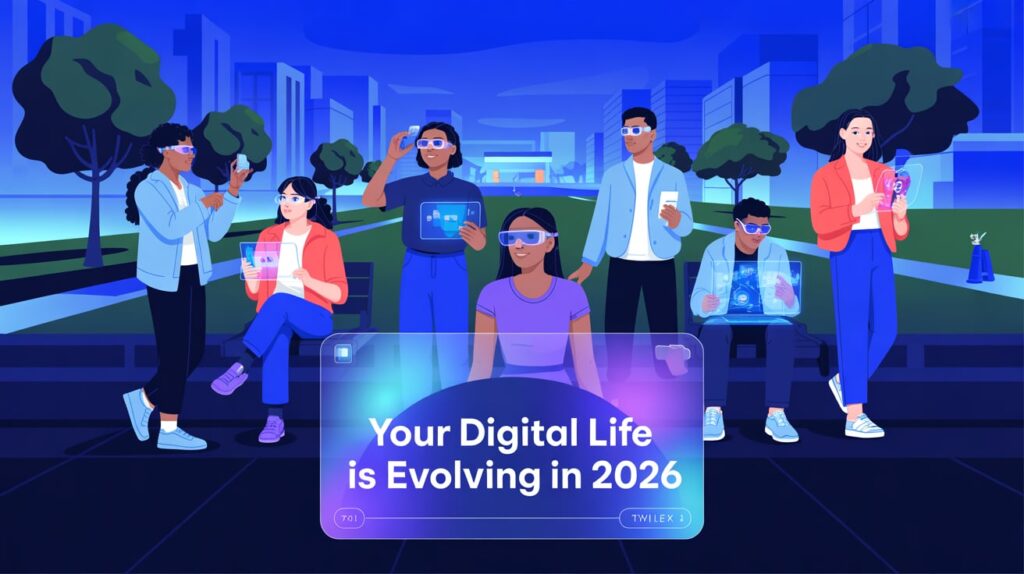
Digital social spaces in XR virtual meetups, events, concerts, and exhibitions will blur physical vs virtual presence. Digital identity, possibly decentralised via blockchain or Web4 frameworks, could become more meaningful: your digital self becomes an extension of you, with ownership and portable identity across platforms.
Convenience & Everyday Services
Shopping, services, and consumption will shift to predictive, highly personalised models. Want a new pair of shoes? Try them virtually in 3D. Grocery orders to your doorstep via autonomous delivery or smart logistics. Smart infrastructure and IoT will optimise transport, energy usage, and public services, quietly making your city more efficient and responsive.
Challenges & Questions: What to Watch Out For
- Privacy & Data Security: With so many devices, wearables, IoT sensors, environmental monitors collecting data, ensuring data privacy and secure handling becomes critical. As more AI and smart devices enter homes, vulnerabilities increase.
- Digital Divide & Equity: Even as 6 billion people are now online, inequality in access and connectivity persists. High-speed connectivity, smart devices, and digital literacy remain uneven globally.
- Over-reliance on Automation: As more tasks get automated, there’s a risk of overdependence on machines. Critical thinking, human skills, and creativity may become even more important, but some skills may degrade.
- Loss of Human Touch & Over-digitisation: Virtual interactions and XR-based socialising, while convenient, might replace authentic human connection. There’s also a risk of constant surveillance and “always-on” mental load.
- Ethical, Legal & Regulatory Challenges: With AI, decentralisation, digital identity, XR issues around privacy, consent, ownership, and regulation are complicated. Societies and governments need frameworks to handle these responsibly.
What’s Coming in the Next 5 Years (Beyond 2026)
If 2026 is a turning point, the years ahead promise even more dramatic shifts:
- Quantum-resistant security & next-gen cybersecurity: As quantum computing becomes more mainstream, cryptography and digital security will evolve to stay ahead of emerging threats.
- Growth of Web4 / Spatial Internet: The internet will evolve beyond Web3, enabling spatial, immersive, interoperable digital worlds where identity, assets and interactions travel across platforms.
- AI + Biotechnology + Human Augmentation: Digital life and biological life may converge: wearables, health monitoring, perhaps even early bio-augmentation or personalised medicine could become mainstream.
- Fully integrated Smart Homes & Cities: Smart infrastructure, IoT, edge AI all combining to make living spaces, transport, services deeply context-aware, efficient, and personalised.
Conclusion
2026 isn’t just another year. It’s a milestone, a year where multiple streams of technology converge to redefine everyday life: work, health, relationships, learning, consumption, identity.
Your smartphone might now be just one of many “digital windows.” Smart wearables, AR glasses, IoT devices, AI agents might together shape a digital life that’s context-aware, adaptive, immersive, and deeply integrated.
But with great power comes great responsibility. As we embrace convenience and innovation, we must remain vigilant about privacy, equity, human connection, and ethics.
Whether this new digital world becomes a liberating tool or a source of overload will depend not just on technology but on how responsibly we adopt and regulate it.
Also Read:– “The 2026 Deepfake Threat“
FAQ’s
Q: Will everyone benefit equally from this digital transformation in 2026?
A: Not necessarily. While technology is advancing fast, access to high-speed internet, modern devices, digital literacy, these remain uneven across regions and demographics. The benefits will likely be skewed toward those with resources and access.
Q: Are there privacy risks with so much data collection (wearables, IoT, XR)?
A: Yes. With more devices collecting personal data, the risk of misuse or breach increases. That’s why “privacy-first,” on-device AI and stronger cybersecurity (including future quantum-resistant cryptography) are becoming essential.
Q: Will automation and AI eliminate jobs?
A: Some repetitive and routine jobs may be automated, but at the same time, new roles will emerge: managing AI systems, developing XR experiences, designing personalised content, managing smart infrastructure, and more. Adaptability and continuous learning will matter more than ever.
Q: How soon will XR, virtual/augmented reality, feel “normal”?
A: 2026 may already feel like the early stage of mainstream use: for work, education, shopping, and entertainment. As hardware becomes lighter, cheaper, and software more seamless, XR adoption will accelerate. By 2028–2030, it might become a standard alternative to screen-based computing.
Q: Is there a risk of “digital overload”?
A: Yes, with so many connected devices, services, and data streams, there is a danger of constant connectivity, information overload, and reduced mental rest. Users will need to be conscious about balance, digital well-being, and data hygiene.