








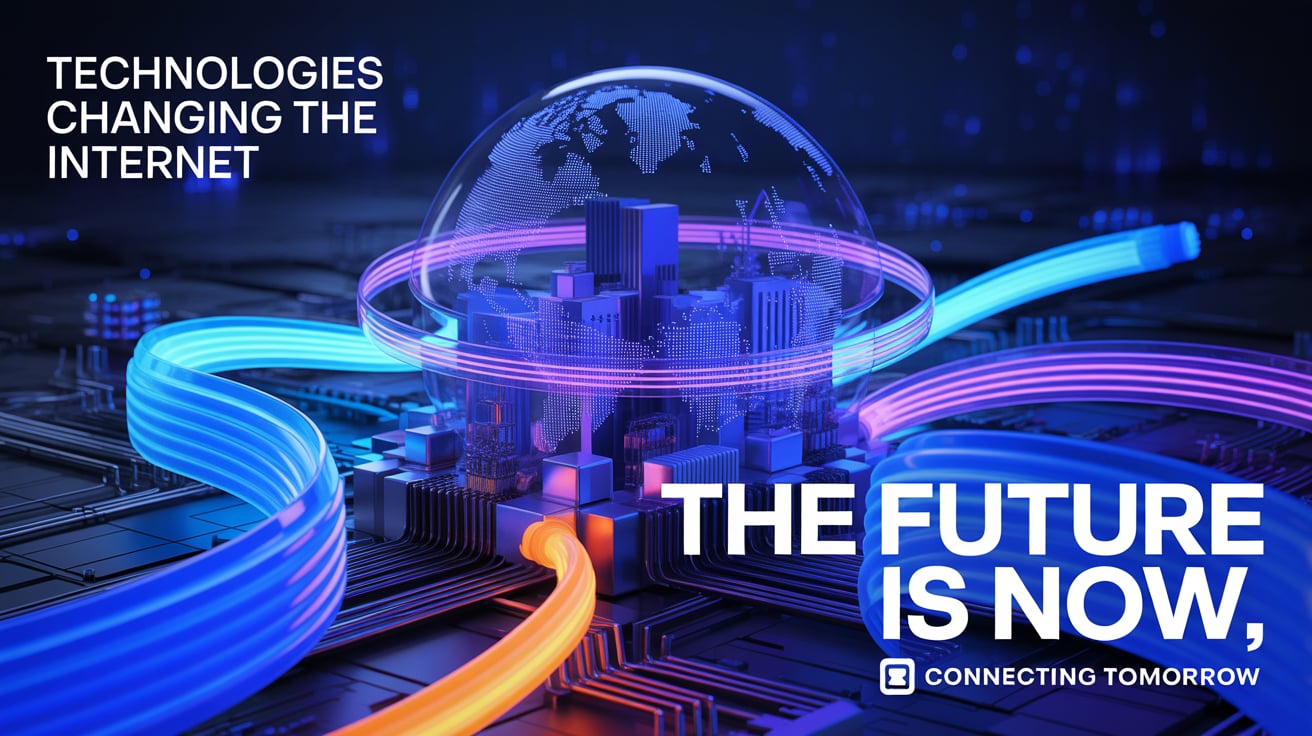
The internet has never been static. What began as a simple network for sharing academic information has transformed into the backbone of global communication, commerce, entertainment, and governance. Every major shift in technology has reshaped how the internet works and how people experience it. Today, the internet is undergoing one of its most significant transformations yet. Technologies Changing the Internet.
This change is not driven by a single invention. Instead, multiple technologies are converging and redefining how content is created, distributed, discovered, secured, and monetized. Artificial intelligence is rewriting how information flows. Decentralization is challenging centralized platforms. New connectivity standards are changing speed and access. Privacy, identity, and trust are being reimagined.
This article explores the key technologies that are actively changing the internet, not in theory, but in practice. These shifts are already influencing how users browse, how businesses grow, and how power is distributed online.
Table of Contents
The Internet Is Shifting From Pages to Systems
For decades, the internet was built around pages and links. Websites published content. Search engines indexed it. Users clicked through results. That model is breaking.
Today’s internet is increasingly system-driven rather than page-driven. Users interact with platforms, feeds, assistants, APIs, and intelligent layers rather than static webpages. Information is summarized, recommended, generated, or delivered contextually instead of being manually searched.
This shift sets the stage for the technologies now reshaping the internet’s core.
Artificial Intelligence as the New Internet Layer
Artificial intelligence is no longer just a feature on the internet. It is becoming an invisible layer that sits between users and information.
Search engines now interpret intent rather than keywords. Social platforms rank content algorithmically. Recommendation systems decide what people see, hear, and buy. AI-generated content is increasingly common, sometimes indistinguishable from human-created material.
Companies like Google have moved beyond traditional search links toward AI-generated summaries and intent-based discovery. Meanwhile, OpenAI has accelerated the shift toward AI-driven interaction, influencing how people expect information to be delivered.
The result is an internet where discovery is mediated by intelligence rather than navigation.
This raises fundamental questions. Who controls the AI layer. How transparent are its decisions. And how does this affect publishers, creators, and independent voices.
Generative AI and the Explosion of Content
The internet was once defined by user-generated content. Now it is entering an era of AI-generated content.
Generative AI can produce articles, images, videos, code, audio, and even entire websites at scale. This has lowered the barrier to creation dramatically. Anyone can publish more, faster, and cheaper than ever before.
On one hand, this democratizes creativity. On the other, it floods the internet with content, making quality, originality, and trust harder to measure.
Search engines and platforms are now forced to rethink ranking, authenticity, and value. Simply existing online is no longer enough. Content must demonstrate expertise, usefulness, and credibility to stand out.
Generative AI is changing not just how content is made, but how the internet defines value.
The Algorithmic Internet and the End of Neutral Feeds
The modern internet is increasingly algorithmic.
Feeds are no longer chronological. Search results are personalized. Ads are dynamically targeted. Content visibility depends on engagement signals rather than publication time.
Platforms like Meta and TikTok operate algorithm-first ecosystems where distribution is controlled by machine learning systems.
This has changed behavior. Creators optimize for algorithms. News spreads unevenly. Emotional and polarizing content often performs better than nuanced discussion.
The algorithmic internet is efficient and addictive, but it also concentrates power in platform owners and obscures how information flows.
Decentralization and the Push Back Against Central Control
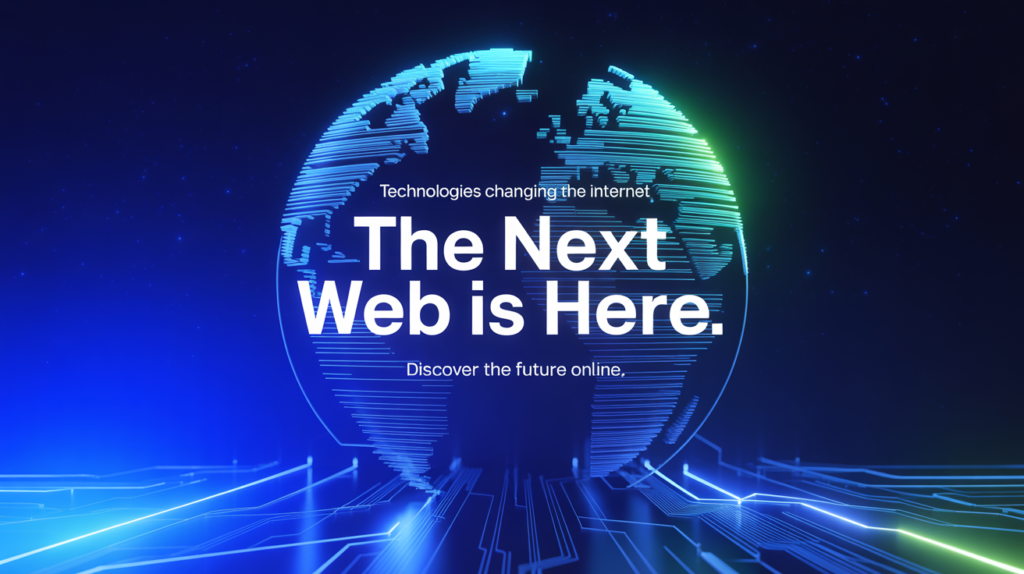
For years, the internet has trended toward centralization. A handful of platforms control social interaction, discovery, and monetization. Decentralized technologies are emerging as a response.
Blockchain-based systems aim to distribute control over data, identity, and value. Decentralized social networks, storage systems, and protocols seek to reduce reliance on single entities.
Web3, despite hype and setbacks, represents a real attempt to rethink ownership and governance online. Instead of platforms owning user data, users hold cryptographic control over assets and identities.
While decentralization faces usability and scalability challenges, it reflects growing dissatisfaction with centralized internet models.
The struggle between centralized efficiency and decentralized autonomy will shape the internet’s future.
The Rise of Private and Encrypted Internet Spaces
As surveillance, data misuse, and algorithmic manipulation grow, users are moving toward more private internet experiences.
Encrypted messaging, private communities, invite-only platforms, and closed ecosystems are gaining traction. Not everything is meant for public feeds anymore.
This fragmentation changes how the internet functions. Discovery becomes harder. Virality slows. Trust becomes localized rather than global.
Privacy-focused technologies challenge the ad-driven business models that dominated the open internet for decades.
The internet is becoming less public, more contextual, and more segmented.
Edge Computing and the Shift Away From Central Servers
The traditional internet relies heavily on centralized data centers. That architecture is changing.
Edge computing moves processing closer to users, reducing latency and improving performance. This is critical for real-time applications like gaming, streaming, autonomous systems, and immersive experiences.
By distributing intelligence across devices and local nodes, edge computing reduces dependence on massive centralized infrastructure.
This shift also has implications for privacy, resilience, and cost. Data does not always need to travel far to be useful.
The internet becomes faster, more responsive, and more localized.
5G, 6G, and the Internet Without Waiting
Connectivity has always shaped the internet’s capabilities. New generations of mobile networks are accelerating change.
5G enables low-latency, high-bandwidth applications. 6G research points toward AI-native networks, sensing capabilities, and near-instant communication.
As connectivity improves, the internet moves beyond text and video into real-time interaction, immersive media, and machine-to-machine communication.
Waiting disappears. Experiences become continuous.
This changes user expectations permanently.
Extended Reality and the Spatial Internet
The internet is no longer confined to screens.
Extended reality technologies are laying the groundwork for a spatial internet, where digital content exists alongside physical space. Information is overlaid on the real world. Interaction becomes embodied.
This has implications for education, collaboration, commerce, and entertainment. Virtual spaces become destinations. Physical locations gain digital layers.
While adoption is gradual, the trajectory is clear. The internet is expanding into three dimensions.
Digital Identity and the Reinvention of Trust
Identity is one of the internet’s oldest problems.
Passwords, usernames, and centralized accounts are increasingly inadequate. Data breaches and impersonation erode trust.
New identity technologies aim to give users more control. Decentralized identifiers, biometric systems, and cryptographic proofs offer alternatives to platform-owned identities.
Trust shifts from institutions to systems.
This transformation affects payments, social networks, governance, and access control across the internet.
The Creator Economy and New Monetization Models
The internet’s economic model is changing.
For years, advertising dominated. Platforms monetized attention. Creators competed for reach.
Now, subscriptions, memberships, direct payments, digital goods, and tokenized ownership are growing. Creators build audiences across platforms rather than relying on a single algorithm.
Technology enables this shift. Payment infrastructure, analytics, and AI-powered tools help individuals operate like small businesses.
The internet becomes less about mass audiences and more about sustainable niches.
AI Search, Zero-Click Answers, and the Visibility Crisis
One of the most disruptive changes is happening in search.
AI-driven answers reduce the need to click through to websites. Users get summaries instead of sources. This improves convenience but threatens the economic foundation of the open web.
Publishers, bloggers, and independent creators face declining traffic even as demand for information grows.
This creates tension between platforms and content producers.
The future of search will determine whether the internet remains a diverse ecosystem or becomes a closed knowledge loop.
Cybersecurity, Misinformation, and the Battle for Reality
As the internet grows more powerful, it also becomes more dangerous.
Cyber attacks are more sophisticated. AI-generated misinformation blurs truth and fiction. Deepfakes challenge visual trust.
In response, cybersecurity technologies are becoming more autonomous. AI-driven detection systems monitor threats in real time. Verification tools attempt to authenticate content.
The internet’s future depends not just on innovation, but on trust and resilience.
The Internet Is Becoming Invisible
Perhaps the most profound change is this. The internet is disappearing into everything.
It is no longer something you visit. It is something you use constantly without noticing. It powers cars, homes, health devices, factories, and cities.
As the internet fades into the background, its influence grows.
The challenge is ensuring that this invisible infrastructure remains open, fair, and accountable.
Key Technologies Changing the Internet at a Glance
| Technology | How It Changes the Internet |
|---|---|
| Artificial Intelligence | Mediates discovery and decision-making |
| Generative AI | Floods and reshapes content creation |
| Algorithms | Control visibility and attention |
| Blockchain and Web3 | Challenge centralized ownership |
| Edge Computing | Reduces latency and central dependence |
| 5G and 6G | Enable real-time experiences |
| Extended Reality | Expands the internet into space |
| Digital Identity | Redefines trust and access |
| Creator Tools | Change monetization models |
| Cybersecurity AI | Protects and verifies digital reality |
What This Really Means
The internet is not dying. It is mutating.
Each technological shift solves one problem and creates another. AI improves efficiency but concentrates power. Decentralization promises freedom but struggles with scale. Privacy protects users but fragments discovery.
The most important question is not which technology wins, but who benefits.
Will the internet remain a place for open expression and innovation, or become a tightly controlled system optimized for efficiency and profit.
That outcome depends on choices made now by technologists, policymakers, businesses, and users.
Final Thoughts
Technologies changing the internet are not arriving in the future. They are already here, shaping how information flows, how value is created, and how society connects.
Understanding these technologies is no longer optional. It is essential for anyone who creates content, builds products, runs a business, or simply wants to stay informed.
The internet has always reflected human priorities. As technology rewrites its foundations, the real question is whether the next version of the internet will serve people better than the last.
The answer is still being written.
Also Read: “How AI Is Being Used Behind the Scenes by Big Tech Companies 2026“
FAQs
Q1: What is the most influential technology changing the internet?
A: While multiple technologies are transformative, Artificial Intelligence stands out for its pervasive impact on personalization, automation, and security across internet systems.
Q2: How does Web3 differ from the current internet?
A: Web3 focuses on decentralization and user control using blockchain technologies, whereas the current Web 2.0 relies more on centralized platforms.
Q3: Why is edge computing important for the future?
A: It reduces latency and bandwidth use by processing data near its source, enabling real-time applications like autonomous systems and live analytics.
Q4: Will 6G replace 5G soon?
A: 6G is still under research and development and may take several years before widespread adoption, but it promises ultra-fast speeds and support for immersive internet experiences.
Q5: Is IoT just about smart homes?
A: IoT goes far beyond homes it empowers industries, cities, healthcare, logistics, and more through connected sensors and real-time data exchange.