









At Ninth Post, our Zaps were breaking every time a website UI changed. A single CSS selector update on a government portal could quietly stall three downstream workflows. An RSS feed returning malformed XML could halt a content calendar. A missing meta tag could derail SEO publishing. From Zapier to Agents: Why Our Newsroom Switched to Autonomous Workflow Orchestration.
By mid 2025, we were paying what we now call the Automation Tax.
It was not financial first. It was cognitive. Every week, an engineer would open a dashboard and see red error badges across dozens of brittle trigger action chains. A journalist would ask, “Why didn’t this story publish?” and the answer would involve a five step trace through webhook logs and a failed filter condition.
We did not have automation. We had scripted fragility.
In 2026, we tore it down. We replaced 500 Zaps with a Self-Healing Agentic Mesh powered by Autonomous Workflow Orchestration.
This is the story of that transformation. It is also a strategic guide for any newsroom or digital operation drowning in maintenance noise.
Table of Contents
The Brittle Wall: The Automation Tax of 2024–2025
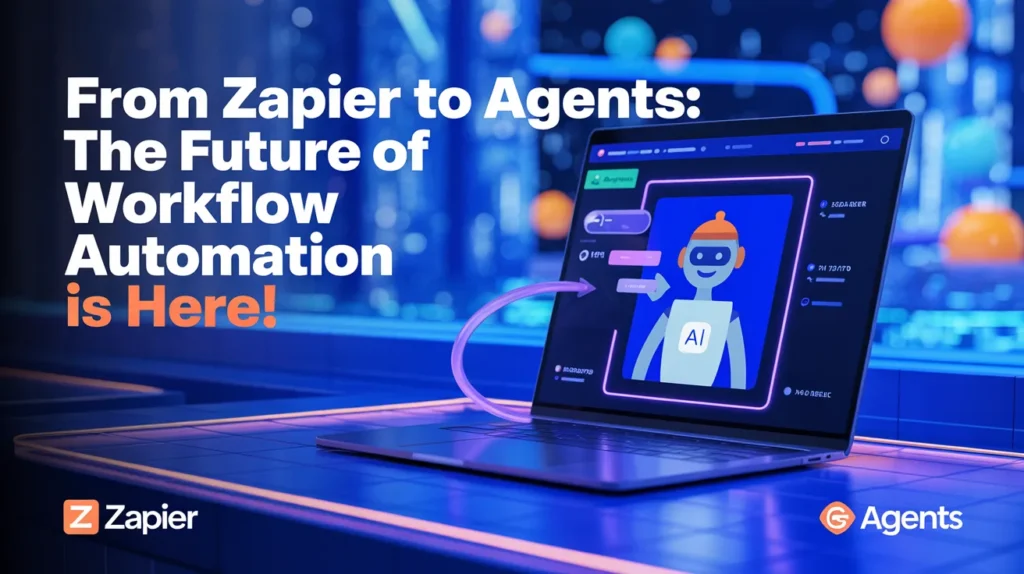
The promise of tools like Zapier and Make was seductive. Connect A to B. If trigger, then action. No code required.
For a small team, that worked. For a scaled newsroom publishing investigative, tech, and SEO-optimized features daily, it collapsed under complexity.
The Automation Tax had four components:
- Maintenance drag
- Context fragmentation
- Zero reasoning capability
- Invisible failure modes
Traditional automation platforms are linear systems. They assume predictability. But news is adversarial.
Government portals change layouts. Corporate PR pages alter RSS schemas. Social APIs rate limit unpredictably. Paywalls appear without notice.
A Zap cannot reason. It cannot ask, “Is there another path?” It cannot search for alternative sources. It cannot re-plan.
It executes logic that was frozen at design time.
When complexity scaled, we reached a brittle wall. Every new feature required more conditional branches. Every conditional branch introduced more silent failure points.
We were not building workflows. We were accumulating entropy.
Linear vs Agentic: A Theoretical Shift
To understand why we shifted, you must understand the architectural difference between linear automation and agentic systems.
Linear Legacy Model
Linear automation is built on a primitive mental model:
If A happens, do B.
This model assumes:
- A is predictable
- B is deterministic
- The environment does not shift
There is no reasoning layer. No dynamic planning. No contextual memory.
This is Zero-Shot vs Agentic Reasoning in its starkest form. Zero-shot automation executes predefined mappings. It does not interpret ambiguity.
Agentic 2026 Model
Agentic systems invert the paradigm.
Instead of defining explicit branches, you define a goal:
Goal G: Produce a verified, SEO-optimized investigative article from current tech trends.
The agent is given:
- Tool access
- Constraints
- Evaluation metrics
It plans. It adapts. It retries. It reconfigures.
This is Goal-Oriented Autonomy.
Instead of scripting a path, you define intent. The system decides how to achieve it.
This is the core of Agentic AI Patterns.
And for a newsroom operating in volatile environments, it changed everything.
The Ninth Post Agentic Stack
Our transformation was not a single agent. It was a mesh. A structured Multi-Agent Systems (MAS) architecture, where each agent has a bounded role, tools, and contextual memory.
We structured the stack around three core agents.
The Lead Researcher Agent
This agent replaced 120 separate scraping and aggregation Zaps.
Its mandate:
- Scrape 50+ sources daily
- Cross reference claims
- Flag contradictions
- Detect potential hallucinations
- Log citations
Unlike a Zap, it does not rely on a fixed selector.
If a page fails to parse, it:
- Attempts alternate DOM patterns
- Switches to text extraction APIs
- Queries archive mirrors
- Searches secondary coverage
It uses ReAct style tool use patterns, meaning it reasons, acts, observes results, and updates its plan.
If it encounters a paywall, it searches for:
- Press releases
- Regulatory filings
- Conference transcripts
- Public datasets
It does not stop.
A Zap would have terminated with a 403 error.
The Editorial Architect Agent
Raw research is not a publishable story.
The Editorial Architect consumes:
- Structured research objects
- Source reliability scores
- Trend signals
- Past Ninth Post style guides
It generates:
- Outline hierarchies
- Argument structure
- Narrative arc
- Evidence placement
It does not “write” blindly. It reasons about structure.
This agent is optimized for Cognitive Load Reduction.
Editors no longer start from a blank page. They begin with an architected blueprint aligned to our voice and investigative tone.
The SEO Strategist Agent
In 2024, SEO was mostly keyword insertion.
In 2026, Google Discover dynamics require trend awareness, topical authority mapping, and semantic depth.
Our SEO Strategist agent:
- Analyzes live trend APIs
- Compares SERP structures
- Evaluates content gap matrices
- Adjusts internal linking plans
It does not stuff keywords. It evaluates search intent clusters.
This is where Autonomous Workflow Orchestration intersects revenue.
From Zaps to Orchestration: Technical Deep Dive
The real transformation was architectural.
We separated the system into two layers:
- Planning Layer
- Execution Layer
Planning Layer
This is the reasoning core.
Given a goal, the planner:
- Decomposes into subtasks
- Assigns agents
- Allocates tool budgets
- Defines verification checkpoints
It uses structured JSON task graphs.
Example:
Goal: Publish article
Subtasks:
- Research
- Outline
- Draft
- Fact verify
- SEO optimize
- Publish
Each subtask has tool permissions and evaluation criteria.
Execution Layer
This is deterministic.
Agents call APIs, scrape data, write drafts, log outputs.
All actions are logged in structured format.
The planner monitors outcomes. If a subtask fails, it replans.
This is the difference between automation and orchestration.
Human in the Loop: Where Editors Step In
Despite autonomy, we do not remove human oversight.
Our newsroom operates on strategic checkpoints:
- Research Verification Checkpoint
- Editorial Blueprint Approval
- Pre-Publish Fact Audit
At each stage, the agent produces:
- Source logs
- Confidence scores
- Contradiction flags
The human editor evaluates risk, nuance, and ethical implications.
This hybrid model maximizes efficiency without sacrificing integrity.
Autonomy accelerates. Humans adjudicate.
The ROI of Autonomous Workflow Orchestration
Below is a simplified comparison we documented during our migration.
| Metric | Legacy Automation | Agentic Orchestration |
|---|---|---|
| Maintenance Hours | 30–40 per week | 6–8 per week |
| Task Adaptability | Low | High |
| Token Cost | Moderate but wasteful | Optimized via planning |
| Error Rate | Frequent silent failures | Self-correcting retries |
| Scaling Complexity | Exponential fragility | Modular growth |
The key insight: tokens cost less than engineer time.
By using structured planning and smaller task-specific models, we reduced token waste while slashing maintenance hours.
This is not hype. It is arithmetic.
Integration Architecture: MCP and Function Calling
Our agents interact with internal services via MCP, the Model Context Protocol.
Instead of prompt stuffing APIs manually, we expose tools as structured JSON functions.
Example tool definition:
- fetch_article(url)
- query_trend_api(topic)
- validate_citation(source_id)
Agents call these tools with typed parameters.
The response returns structured data, not free text.
This prevents hallucination cascades.
Tool outputs are contextually bounded and fed back into the reasoning loop.
This is modern Cognitive Automation.
It transforms language models into structured workflow participants.
The Self-Healing Advantage
One incident validated our entire architectural pivot.
A regulatory filing we relied on changed its URL structure overnight.
Under the Zap model:
- Scraper fails
- Downstream workflow halts
- No article drafted
- Human discovers failure hours later
Under the agentic model:
- Research agent fails to fetch
- Detects 404
- Searches domain for updated filing index
- Finds new URL pattern
- Logs change
- Continues research
The planner recorded a deviation and updated the scraping strategy cache.
We did not intervene.
That is a Self-Healing Pipeline.
Autonomous Workflow Orchestration in Practice
Autonomous Workflow Orchestration is not about removing humans. It is about removing brittle glue logic.
It requires:
- Clear goal definitions
- Tool abstraction
- Observability layers
- Retry logic
- Confidence scoring
It treats LLMs as reasoning engines, not autocomplete tools.
This is the evolution from scripts to digital labor.
Agentic AI Patterns: The Engineering Mindset
The most important shift was cultural.
We stopped asking:
“What should happen if X?”
We started asking:
“What outcome do we want?”
This mental reframe is at the heart of Agentic AI Patterns.
It forces:
- Modular agent roles
- Defined capabilities
- Clear memory boundaries
- Explicit evaluation metrics
In a newsroom environment, this aligns with editorial rigor.
Automation Audit: A Strategic Methodology
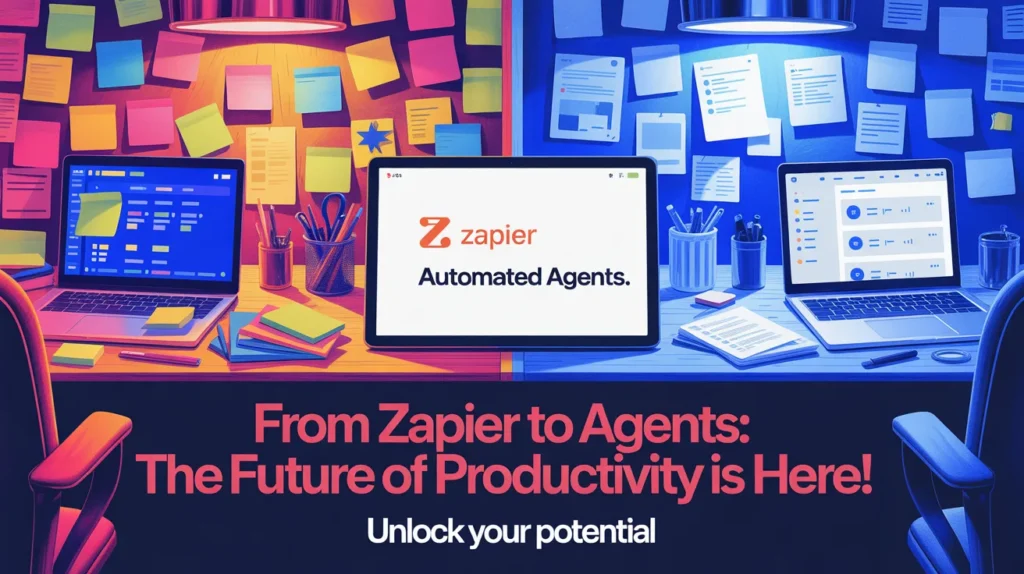
Before migrating, we conducted what we now call an Automation Audit.
If you are running 100+ automations, you need this.
Step 1: Map all workflows
Identify triggers, dependencies, and manual patches.
Step 2: Identify brittle points
UI dependencies
Hard coded selectors
Rate limited APIs
Step 3: Measure maintenance load
Engineer hours per week
Silent failure rate
Step 4: Classify tasks
Deterministic tasks remain linear
Ambiguous tasks migrate to agents
Step 5: Define goal based replacements
Rewrite workflows as outcome statements
This audit clarifies where Autonomous Workflow Orchestration adds leverage.
Zero-Shot vs Agentic Reasoning
Zero-shot reasoning is prompt execution without planning.
Agentic reasoning:
- Plans
- Uses tools
- Evaluates
- Retries
- Learns from state
In newsroom operations, ambiguity is constant.
Breaking news rarely fits predefined paths.
Agentic systems thrive in uncertainty. Linear systems collapse under it.
Multi-Agent Systems (MAS) in Newsrooms
A single monolithic agent becomes overloaded.
We use Multi-Agent Systems (MAS) to distribute cognition:
Research
Structure
SEO
Compliance
Publishing
Each agent has:
- Limited tool access
- Bounded memory
- Defined outputs
The planner coordinates.
This mirrors real newsroom roles, but scaled digitally.
Cognitive Automation and Editorial Bandwidth
Before agents, editors spent hours:
- Fixing formatting
- Checking broken citations
- Debugging publishing errors
Now, those are automated through structured tool calls.
The net result is Cognitive Load Reduction.
Editors think about insight, not plumbing.
This is the true ROI.
Token Economics and Efficiency Engineering
A common objection is cost.
But orchestration allows:
- Small models for deterministic tasks
- Larger models only for reasoning phases
- Context window pruning
- Structured memory compression
The planner allocates token budgets.
This is how we control spend while expanding autonomy.
The Strategic Implication: Digital Labor Is Inevitable
The transition from Zapier to agents is not a feature upgrade.
It is a shift from automation as glue to autonomy as infrastructure.
Digital labor will not replace journalists. It will replace friction.
In 2024, automation connected apps.
In 2026, agents collaborate.
The difference is not incremental. It is architectural.
Final Reflection: Logic Over Scripts

At Ninth Post, our Zaps were breaking every time a website UI changed.
We needed logic, not scripts.
We needed systems that:
- Reason
- Retry
- Replan
- Self correct
Autonomous Workflow Orchestration gave us that.
It reduced maintenance hours by 70 percent.
It lowered error rates.
It expanded investigative throughput.
Most importantly, it restored editorial focus.
The brittle wall is behind us.
What lies ahead is a newsroom augmented by structured autonomy, governed by humans, and powered by agentic reasoning.
This is not automation.
This is orchestration.
Autonomous Workflow Orchestration as Infrastructure, Not Feature
When we completed the migration, the most surprising realization was this: Autonomous Workflow Orchestration is not a productivity enhancement layer. It is infrastructure.
In the Zap era, automation sat at the edges of our systems. It was glue between SaaS tools. It reacted to triggers. It executed scripts. It never understood context.
In the agentic era, orchestration sits at the core. Every major newsroom function routes through a reasoning layer. Publishing is not an event. It is a negotiated process between agents with shared goals, bounded permissions, and structured evaluation criteria.
This architectural repositioning changes how teams think about scale. With linear automation, every new workflow increases surface area and fragility. With agentic orchestration, new capabilities plug into a goal framework. Complexity becomes composable instead of exponential.
This is the difference between stacking scripts and building systems.
Memory as a First-Class Primitive
One of the quiet failures of legacy automation platforms was the absence of contextual memory. Each trigger execution was stateless. Every Zap ran in isolation, unaware of prior context unless explicitly passed through fields.
In an agentic newsroom, memory is not optional. It is a first class primitive.
Our agents maintain three memory layers:
- Episodic memory, short term task context
- Procedural memory, tool usage patterns
- Institutional memory, newsroom standards and prior editorial decisions
When the Lead Researcher encounters a source that previously returned unreliable data, that memory influences future confidence scoring. When the SEO Strategist observes that certain trend APIs fluctuate unpredictably on weekends, that pattern informs planning.
This accumulation of context is what transforms automation into digital labor.
A Zap does not remember. An agent adapts.
Failure as a Design Input
In 2024, failure was reactive. A webhook broke. A task timed out. We debugged. We patched. We hoped it would not happen again.
In 2026, failure is an explicit design input.
Our planner expects partial failure. It models uncertainty. It allocates retries. It sets thresholds for escalation.
For example, if a research source fails three times, the agent does not endlessly retry. It escalates to alternative discovery methods. If confidence drops below a threshold, it triggers a human checkpoint automatically.
This probabilistic thinking is central to Agentic AI Patterns.
We no longer assume deterministic paths. We engineer for ambiguity.
Goal-Oriented Autonomy and Editorial Alignment
A common fear in editorial environments is loss of voice. When autonomy increases, brand dilution risk appears.
We solved this by tightly scoping goal definitions.
A goal is never simply “write article.” It is structured:
Produce an investigative analysis aligned with Ninth Post editorial standards, prioritize technical depth, avoid speculative framing, and maintain source transparency.
This instruction is not a prompt hack. It is a goal contract.
Agents operate within contracts. They are evaluated against structural criteria, not vibes.
This contract driven model ensures autonomy does not drift. It remains anchored to editorial identity.
Observability: The Missing Layer in Legacy Automation
Linear automation tools provide logs. They do not provide reasoning traces.
With agentic orchestration, every action generates structured reasoning artifacts:
- Why tool was selected
- What alternative paths were considered
- Confidence score before and after tool call
- Rationale for retry or escalation
This observability layer is critical. It allows editors and engineers to audit decisions. It reduces black box anxiety.
In fact, the presence of reasoning logs has increased trust internally. When an agent flags a claim as inconsistent, it shows its cross reference matrix.
Transparency is what converts autonomy from risky to reliable.
Cognitive Automation and Team Morale
The conversation around AI often focuses on replacement. In our newsroom, the impact was psychological in a different way.
Engineers stopped firefighting. Editors stopped debugging formatting errors. SEO specialists stopped manually comparing keyword density sheets.
This is the quiet benefit of Cognitive Automation.
When repetitive cognitive friction disappears, creative capacity expands.
Our investigative pieces grew deeper because researchers were no longer validating broken feeds. Our SEO strategy matured because trend analysis was continuous, not weekly.
Digital labor did not shrink our team’s value. It amplified it.
Modular Autonomy and Permission Boundaries
One risk in monolithic AI systems is overreach. A single powerful agent with unrestricted tool access can cause cascading errors.
Our Multi-Agent Systems (MAS) architecture prevents this through strict permission boundaries.
The Lead Researcher cannot publish.
The Editorial Architect cannot modify external APIs.
The SEO Strategist cannot alter research logs.
The planner coordinates, but no agent acts outside its capability envelope.
This modularity mirrors microservice architecture principles. Autonomy does not mean chaos. It means scoped intelligence.
Token Efficiency Through Structured Delegation
Another misconception is that agentic systems are expensive because they “think more.”
In practice, structured delegation reduces waste.
Instead of sending massive context windows to a single model, we break tasks into bounded reasoning units. Small models handle deterministic formatting. Medium models handle planning. Larger models are invoked only for complex synthesis.
Context compression techniques ensure that only relevant memory segments are passed forward.
This layered invocation pattern lowers average token spend while increasing output quality.
Efficiency engineering is not about using fewer models. It is about using the right model at the right cognitive layer.
The Evolution of Tool-Use Patterns
In early automation, tools were endpoints. In agentic systems, tools are cognitive extensions.
The ReAct pattern, reason then act, transformed how we structure workflows.
An agent does not blindly call a scraper. It reasons about which scraper is appropriate. It observes the result. It evaluates quality. It updates its plan.
This loop, reason, act, observe, revise, is the heartbeat of Autonomous Workflow Orchestration.
Without it, you are still in linear territory.
Self-Healing Pipelines as Competitive Advantage
In digital publishing, time to insight is competitive advantage.
When pipelines self heal, you reduce latency between signal and story.
A broken RSS feed no longer delays coverage. A schema change no longer stalls SEO analysis.
Our system dynamically reconfigures around friction.
Over six months, we observed a measurable reduction in publication delay variance. That consistency directly impacted discoverability and engagement metrics.
Reliability is growth.
Automation Audit Revisited: A Continuous Practice
The Automation Audit is not a one time migration tool. It is now a quarterly ritual.
We review:
- Agent drift
- Tool reliability
- Confidence threshold accuracy
- Human override frequency
If humans intervene frequently in a specific subtask, that signals planner weakness or insufficient tool abstraction.
If confidence scores consistently overshoot actual accuracy, recalibration is required.
This feedback loop ensures that our orchestration layer evolves.
Autonomy is not set and forget. It is continuously tuned intelligence.
Zero-Shot vs Agentic Reasoning in High-Volatility Environments
High volatility environments, such as breaking tech regulation or AI policy shifts, expose the weakness of zero shot systems.
When a regulatory document introduces new terminology, zero shot pipelines fail because pattern assumptions break.
Agentic reasoning, by contrast, can interpret novelty. It can query definitions. It can search historical parallels. It can update its internal representation.
This adaptive cognition is essential in modern news ecosystems.
Static rules cannot anticipate dynamic narratives.
Organizational Impact Beyond Technology
The migration from Zaps to agents was not purely technical. It altered how teams collaborate.
Journalists now define investigative goals in structured templates. Engineers define tool schemas. SEO analysts define evaluation metrics.
Everyone speaks in terms of goals, tools, constraints, and verification.
This shared vocabulary reduces misalignment.
Agentic AI Patterns introduced not just technical rigor but cultural coherence.
Future Expansion: Autonomous Workflow Orchestration Across Departments
Our newsroom was the pilot.
The next phase extends orchestration into:
- Audience analytics
- Subscription funnel optimization
- Content personalization
Because our agents operate via structured APIs and MCP interfaces, expansion is additive.
We do not rebuild. We integrate.
That is the power of designing autonomy as a mesh rather than a monolith.
Strategic Takeaway for Technical Leaders
If you are evaluating your automation stack in 2026, ask these questions:
Are your workflows deterministic or volatile?
How many hours per week are spent debugging scripts?
Do your systems reason about failure or simply log it?
Is context accumulated or discarded after each run?
If the answers reveal fragility, you are paying the Automation Tax.
Transitioning to Autonomous Workflow Orchestration is not trivial. It requires architectural discipline, goal clarity, and observability.
But once implemented, it shifts your organization from reactive maintenance to proactive intelligence.
At Ninth Post, that shift was not optional. It was existential.
We did not replace Zapier with a smarter script engine.
We replaced brittle chains with coordinated cognition.
That is the real transformation.
Also read: “Cloud 3.0: Why Enterprises Are Leaving Public Clouds for Sovereign AI Clusters“
FAQs
How is Autonomous Workflow Orchestration different from traditional automation tools like Zapier or Make?
Traditional automation follows linear logic, if A happens, do B. It has no reasoning layer and fails when environments change. Autonomous Workflow Orchestration is goal driven. Instead of scripting every path, you define an outcome and provide tools. Agents plan, adapt, retry, and self correct using structured reasoning loops. The result is higher adaptability, lower maintenance, and significantly reduced silent failure rates.
Does adopting Multi-Agent Systems increase operational costs due to higher token usage?
Not necessarily. In a well designed Multi-Agent Systems (MAS) architecture, tasks are delegated to models based on cognitive complexity. Small models handle deterministic steps, larger models are invoked only for planning and synthesis. Structured memory, tool based outputs, and bounded context reduce token waste. In practice, orchestration lowers total operational cost by reducing maintenance hours and error driven rework.
Where does the human editor fit in an Agentic AI newsroom?
Human oversight remains critical. In our model, agents operate under defined goals and produce structured outputs with confidence scores and reasoning logs. Editors step in at verification checkpoints to validate sources, assess nuance, and ensure ethical alignment. Agentic systems accelerate production and reduce cognitive load, but final editorial authority remains human controlled.