









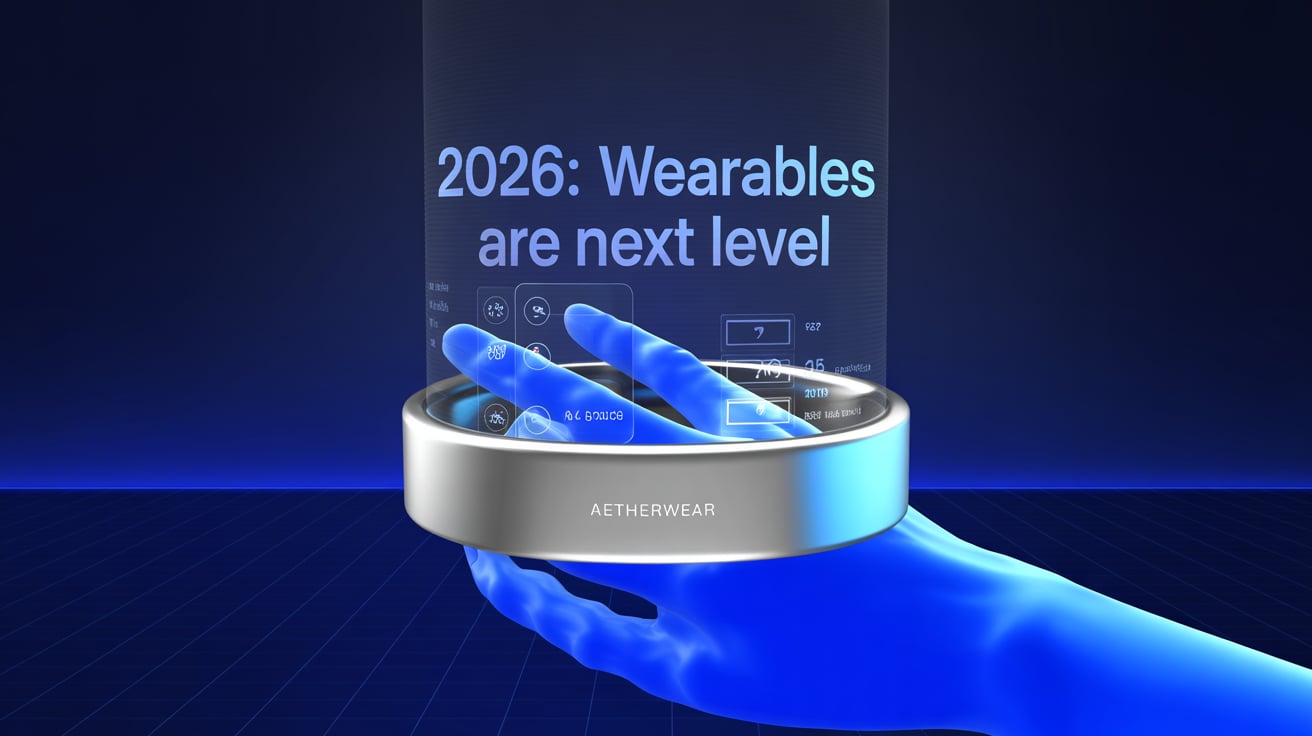
The world of wearable technology is accelerating fast. What began as simple step-counters and heart-rate monitors is evolving into a sophisticated ecosystem of devices from discreet rings and smart patches to AI-powered glasses and next-gen health sensors. As we move into 2026, wearables are no longer just “nice to have.” They’re becoming essential tools for health, productivity, and everyday convenience. 2026 Wearables Are Next Level.
In this article, we explore how 2026 is shaping up to be the year when wearables take a quantum leap what’s changing, what’s new, and what it means for you.
Table of Contents
What’s Fueling the Wearable Revolution

From Gadgets to Smart Life Assistants
- AI-powered personalization: Modern wearables are evolving beyond simple data collection. With AI baked into their cores, they’re becoming predictive, adaptive, and deeply personal. The wearable acting as your “health coach, lifestyle assistant, and digital companion” is no longer sci-fi.
- Miniaturization & new form factors: It’s not just about wristwatches anymore. Smart rings, earwear, patches, and even smart textiles are gaining traction. These new formats offer subtler, more comfortable ways to wear tech, and sometimes, better sensor stability.
- Deep health & biometric tracking: We’re increasingly seeing wearables that aim for clinical-grade metrics: blood pressure, blood oxygen (SpO₂), hydration, stress markers, even continuous glucose monitoring (CGM), all without needles, just sensors and AI.
- Seamless integration into daily life: Wearables are no longer isolated devices; they’re hubs. Smart home controls, smart-home integration, notifications, navigation, and even augmented reality wearables are becoming central nodes in our digital ecosystems.
In short: wearables are shedding their gimmicky past, and increasingly embedding themselves into health care, lifestyle, fashion, and everyday convenience.
What 2026 Wearables Will Actually Do
Here’s a breakdown of the major features and capabilities you can expect in this new generation of wearables.
| Feature / Capability | What It Means / Why It Matters |
|---|---|
| Continuous biometrics (BP, SpO₂, hydration, glucose, more) | Thanks to advanced sensors and non-invasive methods (e.g. sweat/glucose detection, optical sensors), wearables start offering health monitoring that rivals medical devices. |
| AI-driven insights & predictive health coaching | Instead of just showing raw data (like heart rate), wearables interpret patterns, alert you to anomalies, and offer actionable advice for sleep, stress, hydration, activity, and overall wellness. |
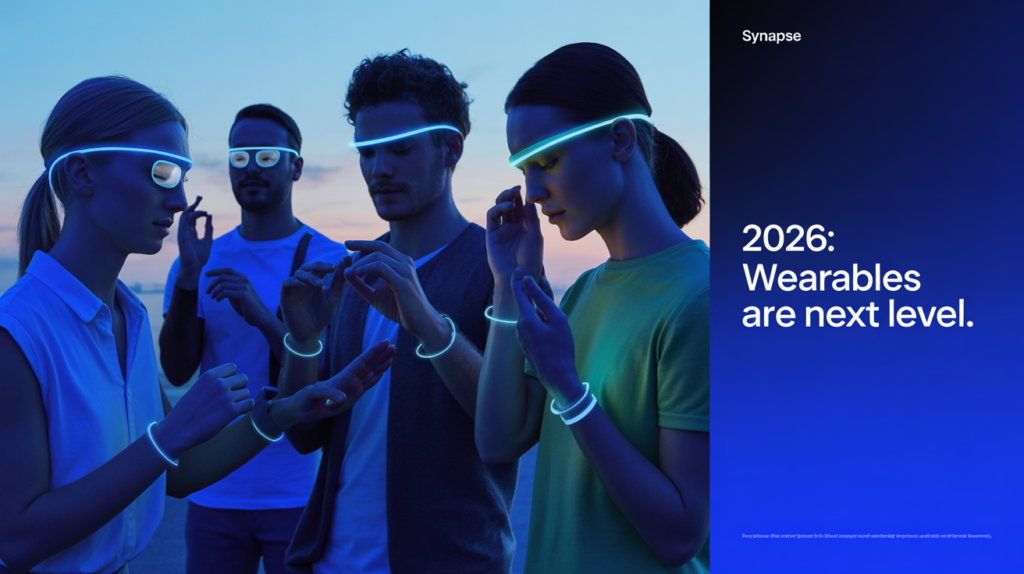
| New form-factors: rings, earwear, patches, smart clothing | More discreet, comfortable wearables less wrist bulk, more subtlety; smart clothing and textiles with sensors open up whole-body tracking for posture, muscle activity and even rehabilitation. |
| Smart glasses / eyewear with AR & AI | Glasses with displays, real-time translation, navigation overlays, camera capabilities so information becomes part of your vision. The era of “heads-up” computing is arriving. |
| Longer battery life & energy-optimised hardware | Thanks to power-efficient chips, energy-harvesting, and better battery tech wearables lasting days or even weeks on a charge will become more common. |
| Integration with smart ecosystems (home, phone, cloud) | Your wearable won’t be standalone; it will connect with your phone, smart home, cloud health services and maybe even local healthcare providers. |
Real-World Use Cases: What It Means for You
1. Holistic Health & Wellness Monitoring
You could wear a discreet ring or patch that in the background tracks your blood oxygen, hydration, stress levels, sleep cycles, and even risks like irregular heart rhythms or blood pressure spikes. Coupled with AI, it could warn you before something becomes serious. Preventive health becomes much easier and more data-driven.
2. Fitness & Recovery Coaching, With Data-driven Insights
Training, recovery, sleep, and nutrition wearables will no longer just count steps or calories. They’ll monitor hydration, sleep quality, metabolic markers, muscle activity (especially with smart clothing or patches), and offer intelligent suggestions to optimize performance.
3. Smart Lifestyle & Convenience
Smart glasses or wearable devices might overlay navigation, notifications, or even real-time translation onto your vision reducing dependence on phones. Smartwatches or rings could double up as secure authentication tools (for payments, devices), or act as seamless digital wallets.
4. Medical & Remote-Monitoring Applications
Wearables are increasingly capable of providing clinically relevant biometric data. This enables remote patient monitoring, chronic disease management, even early detection of health issues which could transform how healthcare is delivered, especially in remote or resource-constrained settings.
5. Fashion + Tech: Wearables as Lifestyle Statement
With form-factors like rings, smart-textile shirts, or sleek smart glasses, wearables lose their “tech gadget” stigma and become more like fashion accessories. This makes adoption more natural, especially among users who value aesthetics as much as utility.
The Bigger Picture: Why 2026 Matters
- According to recent industry projections, the global wearables market is evolving beyond fitness trackers to become a multi-billion-dollar ecosystem encompassing health, smart textiles, AR eyewear, and connected devices.
- The shift toward non-wrist wearables (rings, patches, smart clothing) and AI-driven devices marks a maturity in wearable tech: It’s no longer novelty it’s serious, everyday tech built around human needs.
- As wearables get more capable, they’re starting to bridge personal lifestyle needs and medical/healthcare functions; this dual role could redefine preventative care, insurance, and personal well-being.
In short: 2026 isn’t just a year of incremental upgrades, it’s the moment when wearables shift from convenience gadgets to core technology companions.
Challenges & What’s Holding Them Back
That said, the road ahead isn’t without obstacles:
- Privacy & data security: As wearables collect sensitive biometrics hydration, glucose, heart rhythms privacy becomes critical. Users will demand strong data protection, transparent sharing policies, and secure storage.
- Accuracy & reliability: Non-invasive sensors are improving but achieving clinical-grade accuracy remains hard. For use in real healthcare, wearables must meet rigorous validation standards.
- Battery life & comfort trade-offs: More sensors, more features that can mean power hunger or bulky devices. Balancing power, comfort and design remains a challenge.
- Affordability & accessibility: Advanced wearables with next-gen sensors or smart clothing could be expensive. Ensuring they reach beyond affluent early-adopters remains important for broader impact.
- Regulatory & data-governance hurdles: As wearables edge closer to medical devices, regulatory compliance, medical approvals, and ethical design become critical.
Looking Ahead: What to Expect Beyond 2026
If 2026 is the tipping point, what comes next?
- More smart textiles and e-clothes: shirts, pants, and accessories with embedded sensors that monitor posture, stress, muscle activity, even airflow or environmental exposure.
- Wearable neurotech and brain-computer interfaces (BCIs) for meditation, focus, stress-management, especially useful for wellness, productivity, mental health.
- Interlinked health ecosystems: wearables connected to telemedicine platforms, health-care providers, AI health-twins that model personal health over time.
- Augmented-reality living: smart glasses, AR lenses, and implants that blur the line between digital and physical: live translations, navigation, communication, hands-free computing, immersive experiences.
- Sustainable & ethical wearables: using eco-friendly materials, low-power chips, better data privacy, and inclusive design for diverse populations.
Conclusion
2026 stands out as a pivotal year for wearables. What started as fitness bands and basic trackers has blossomed into a rich, diverse ecosystem of devices rings, patches, smart clothing, AR glasses all imbued with AI, powerful sensors, and a deep focus on real-world needs.
Wearables are no longer side-tools they’re becoming personal assistants, health guardians, lifestyle enhancers, and fashion statements. For users, that means better health awareness, more convenient lives, and tech that adapts to them. For the tech industry and healthcare, it signals a fundamental shift toward ambient, continuous, and personalized health and lifestyle technology.
If you haven’t yet dipped your toes into the new wave of wearables 2026 might be the year you finally do.
Also Read: “AI Tools You Must Try in 2026“
FAQ’s
Q: Are these new wearables safe for health tracking, can I rely on them medically?
A: Many 2026 wearables aim for clinical-grade metrics (e.g. continuous glucose monitoring, blood pressure, hydration, etc.), but accuracy varies across devices. While improvements are rapid, it’s always wise to cross-verify critical health data with medical professionals, especially for medical conditions.
Q: Will smart rings or patches entirely replace smartwatches?
Not entirely, each form factor has its strengths. Smart rings and patches are discreet and comfortable for continuous wear, while smartwatches may still offer better screens, controls, and a broader feature set. They may complement rather than replace each other.
Q: What about data privacy and security?
That’s a major concern. As wearables collect sensitive physiological data, companies must adopt strong encryption, transparent data practices, and ethical design. Users should check privacy policies, permissions, and ensure devices store data securely.
Q: Are these advanced wearables expensive?
At first, yes, cutting-edge sensors, AI, and novel materials come at a price. However, as technology matures and scales, costs are likely to drop, making advanced wearables more accessible over time.
Q: Will wearables replace smartphones or other gadgets?
Wearables are unlikely to fully replace smartphones, but they may significantly reduce dependence on them for many tasks. With smart glasses, voice assistants, and contextual AI, wearables could take over many functions (notifications, navigation, quick interactions), while phones remain for heavy-duty tasks.