








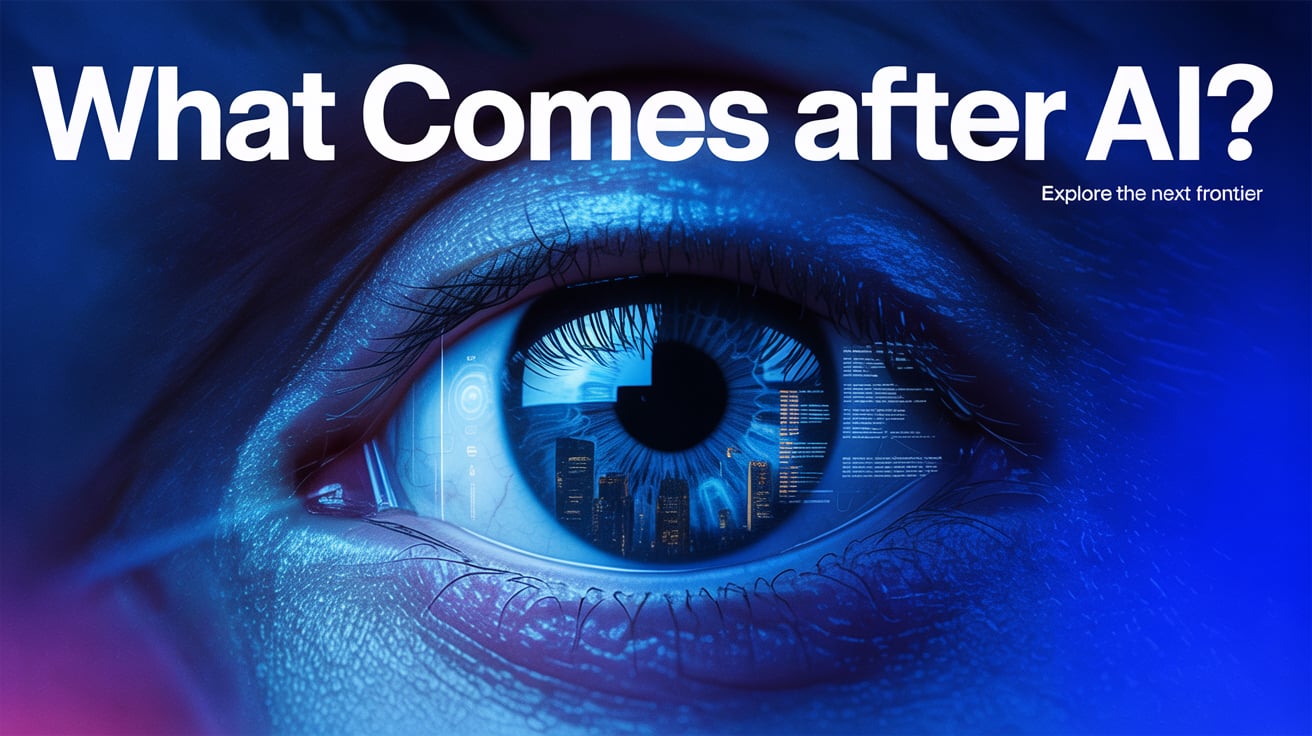
At Ninth Post, we’ve spent the last six months tracking the plateau of Large Language Models (LLMs). While the 2024-2025 era was defined by “Chat,” the post-AI era of 2026 is defined by Agency and Wetware. We are moving beyond the “Software-Only” phase of intelligence and into a period where the digital mind finally meets a physical and biological body. What Comes After AI?
The question is no longer “How can AI talk?” but “How can intelligence manifest in the physical world and biological substrates?”
Ninth Post Future Verdict: Generative AI was the “Brain in a Vat” phase. The post-AI era is about Embodiment. We are transitioning from Information Retrieval to Physical Execution, and from Silicon-only to Synthetic Biology.
The End of the “Digital Sandbox”
In our internal audits of the 2026 tech landscape, we’ve identified three pillars that define the “What Comes After” phase.
1. Agentic Physicality (Robotics 2.0)
At Ninth Post, we’ve observed that the most significant post-AI breakthrough isn’t a bigger model, but the “End-to-End Visual-Motor Transformation.” We are seeing AI models that don’t just “describe” how to fix a plumbing leak; they inhabit a robotic frame and physically execute the repair. The “Post-AI” world is one where the digital and physical are no longer separate.
2. Biocomputing and “Wetware” Integration
Silicon has a thermal limit. At Ninth Post, we are tracking the first commercially viable Synthetic Neuron Arrays. In 2026, the shift is toward “Bioprinted Processing Units” that use DNA for high-density, low-power data storage. This is the Molecular Computing phase, using the same 4-letter code (ACGT) that built the human race to build the next generation of infrastructure.
3. The “Objective Intelligence” Layer
The post-AI era is moving away from “Probabilistic Guessing” (LLMs) toward Symbolic Reasoning. We are seeing a return to “Hard Logic” combined with neural networks. This creates an AI that doesn’t “hallucinate” because it is grounded in the laws of physics and formal mathematics.
The Ninth Post Evolution Matrix: From AI to AGI to Bio-Systems
| Metric | The AI Era (2023-2025) | The Embodiment Era (2026-2028) | The Biocomputing Era (2029+) |
| Medium | Cloud Servers (Silicon) | Edge Robotics (Silicon/GAA) | Synthetic Biological Nodes |
| Output | Text / Image / Video | Physical Task Execution | Multigenerational Bio-Storage |
| Power Needs | Megawatts | Kilowatts | Milliwatts (Nutrient-based) |
| Human Role | Prompter | Orchestrator | Symbiont |
The Verdict: Why the “Post-AI” Era is More Human
At Ninth Post, our research suggests that as computing becomes biological and physical, it actually becomes less “alien.” When intelligence is forced to interact with the physical world, with gravity, friction, and biology, it adopts the same constraints we have. The future isn’t a digital takeover; it’s a Biological Integration.
Artificial intelligence is often described as the final frontier of technology, the moment when machines begin to think, learn, and create alongside humans. But history tells us something important. No technology is ever the last one. Every breakthrough eventually becomes infrastructure, and once it fades into the background, the next transformation begins. What Comes After AI.
AI is not the end of technological evolution. It is the beginning of a deeper shift, one that changes how progress itself happens. The real question is not whether AI will peak, but what kind of world emerges once AI becomes normal, invisible, and expected.
This article explores what comes after AI, not as a single invention, but as a new phase of human and technological development. It looks at the signals already visible today, the limits of AI as we know it, and the forces that will define the next era of innovation.
Table of Contents
Why “After AI” Is the Wrong Question, and Still the Right One
Asking what comes after AI can sound premature. AI adoption is still accelerating. Models are improving. Use cases are expanding. Entire industries are being reshaped.
Yet every major technology follows the same pattern:
• Breakthrough
• Rapid adoption
• Saturation
• Normalization
• Replacement or transformation
Electricity did not end innovation. The internet did not end innovation. Smartphones did not end innovation.
AI will not end innovation either.
The phrase “after AI” does not mean AI disappears. It means AI becomes foundational, like electricity or the internet, and innovation shifts to a new layer built on top of it.
AI Will Become Invisible Infrastructure
The most important thing to understand about the future is this. AI will stop feeling special.
Right now, AI feels revolutionary because it is visible. People talk to chatbots. Headlines celebrate new models. Companies announce AI features loudly.
Over time, AI will disappear into infrastructure. It will manage systems quietly. It will optimize processes automatically. It will make decisions in the background.
When that happens, attention will move elsewhere.
Just as nobody marvels at electricity powering a phone today, nobody will marvel at AI powering software tomorrow.
What comes after AI begins when AI is no longer the headline.
The Limits of Artificial Intelligence as We Know It
To understand what comes next, it helps to understand what AI cannot fully solve.
AI excels at pattern recognition, prediction, and optimization. It struggles with:
• True understanding and meaning
• Conscious experience
• Moral judgment without human values
• Purpose beyond defined objectives
AI does not ask why unless programmed to. It does not experience reality. It does not care.
These limitations do not make AI weak. They define where the next breakthroughs will emerge.
Future technology will focus less on intelligence alone and more on context, values, biology, and human integration.
From Artificial Intelligence to System Intelligence
The next phase after AI is not smarter models. It is system intelligence.
System intelligence refers to entire environments that sense, learn, decide, and adapt as a whole. Not a single model. Not a single tool. Entire systems acting intelligently.
Examples already exist in early form:
• Self-managing cloud infrastructure
• Autonomous supply chains
• Smart energy grids
• Self-optimizing factories
Companies like Google and Microsoft are already building platforms where AI governs systems rather than individual tasks.
After AI, intelligence shifts from tools to ecosystems.
The Rise of Human-Centered Intelligence
Another major shift after AI will be the re-centering of humans.
As machines become better at execution, humans will focus more on:
• Values
• Ethics
• Creativity
• Meaning
• Direction
This does not mean humans become less important. It means their role changes.
Technology after AI will amplify human judgment rather than replace it. Systems will execute, but humans will decide what should be executed.
The future is not artificial intelligence replacing humans. It is intelligence distributed between humans and machines.
Biology and Technology Begin to Merge
One of the strongest signals of what comes after AI is the convergence of biology and technology.
AI accelerates biological research. It helps decode proteins, simulate cells, and design drugs. But the next leap comes when biology itself becomes programmable.
Biotechnology, brain-computer interfaces, and neural engineering move innovation from silicon to living systems.
This changes the definition of technology itself.
Health becomes proactive. Aging becomes manageable. Physical and cognitive limitations blur.
After AI, progress moves inside the human body, not just around it.
Intelligence Beyond Computation
AI is computational intelligence. It processes data.
What comes next explores other forms of intelligence:
• Biological intelligence
• Collective intelligence
• Environmental intelligence
Smart cities, adaptive ecosystems, and collective decision platforms emerge when intelligence is spread across people, machines, and environments.
The breakthrough is not smarter thinking, but smarter coordination.
From Digital Products to Living Systems
Technology today is mostly static. Apps update. Software changes version.
After AI, systems behave more like living organisms. They grow, adapt, heal, and evolve.
Software systems will:
• Detect their own failures
• Repair themselves
• Reconfigure based on context
• Learn continuously without retraining
This is already visible in early autonomous systems.
The future of technology is less mechanical and more organic.
Quantum Computing as a Catalyst, Not the Destination
Quantum computing is often described as the next big thing after AI. That is partially true.
Quantum computing does not replace AI. It expands what AI can do.
Companies like IBM are working on quantum systems that solve problems classical computers cannot.
When quantum capabilities combine with AI, certain barriers disappear suddenly rather than gradually.
The real impact of quantum computing will be how it accelerates other breakthroughs, not how it replaces existing systems.
The Shift From Automation to Purpose
AI automates tasks. What comes next questions purpose.
When productivity becomes nearly unlimited, societies must ask:
• What work matters
• What skills are valuable
• How value is distributed
• How meaning is created
Technology after AI forces social, economic, and philosophical shifts.
This may be the most disruptive change of all.
Post-AI Economies and New Value Systems
After AI, economic value moves away from execution.
Creativity, trust, taste, and ethics become differentiators.
Small teams outperform large organizations. Individuals build global impact. Traditional job definitions dissolve.
The economy becomes more fluid, but also more unequal if governance fails.
Technology does not decide outcomes. Systems do.
Why “After AI” Is a Long Transition, Not a Moment
There will be no single day when AI ends and something else begins.
What comes after AI overlaps with AI for decades.
AI becomes background. New layers emerge slowly. Society adapts unevenly.
This transition will be messy, uneven, and controversial.
But it is inevitable.
Key Phases Beyond AI
| Phase | What Changes |
|---|---|
| AI as infrastructure | Intelligence becomes invisible |
| System intelligence | Entire ecosystems adapt |
| Bio-tech convergence | Technology enters biology |
| Human-centered systems | Values regain importance |
| Living software | Systems self-evolve |
Editorial Perspective: Why This Moment Is Different
What makes this era unique is that technology is no longer just external.
For the first time, innovation changes how humans think, decide, and define meaning.
After AI, technology does not just solve problems. It reshapes what problems matter.
That makes this transition deeper than any before it.
The Risk of Asking the Wrong Question
If society focuses only on building smarter AI, it misses the larger shift.
The question is not how powerful machines become.
The question is how humans choose to use power when intelligence is abundant.
After AI, restraint, wisdom, and governance matter more than capability.
How Individuals Can Prepare for What Comes After AI
No one needs to predict the future perfectly.
The most resilient skills remain timeless:
• Critical thinking
• Ethical reasoning
• Creativity
• Adaptability
• Learning how to learn
Understanding systems matters more than mastering tools.
How Organizations Should Think Beyond AI
Organizations should plan beyond automation.
Focus on:
• Trust
• Transparency
• Human oversight
• Long-term impact
Technology strategy becomes social strategy.
Final Thoughts
AI is not the end of the story. It is the beginning of a quieter, deeper transformation.
What comes after AI is not a machine. It is a shift in how intelligence, humanity, and technology coexist.
AI will fade into infrastructure. New forms of intelligence will emerge. Humans will redefine their role.
History shows that the most powerful technologies are not those that impress us, but those that disappear into everyday life and change everything quietly.
The world after AI will not feel futuristic. It will feel normal.
And that is how every true technological revolution begins.
Also Read: “AI That Works Without Humans“
Frequently Asked Questions
What is “after AI” in simple terms?
“After AI” refers to technologies and paradigms that go beyond current artificial intelligence including artificial general intelligence (AGI), hybrid quantum computing, immersive interfaces, and integrated biological systems.
Will AI ever be replaced?
Not replaced rather transformed. AI will continue to evolve into more capable and integrated forms, serving as the backbone of future systems.
What is AGI and why is it important?
AGI is a theoretical intelligence capable of performing any task that a human can, with general reasoning and learning abilities. It represents a major leap beyond today’s narrow AI systems
How soon will technologies beyond AI become mainstream?
Timelines vary, but many innovations quantum hybrid systems, immersive interfaces, and biological integrations are advancing rapidly, with early applications emerging within the next decade.
What industries will be most affected by post-AI technologies?
Healthcare, computing, education, entertainment, and manufacturing are among the sectors likely to be reshaped. The convergence of intelligent systems with everyday life will touch every major industry.