










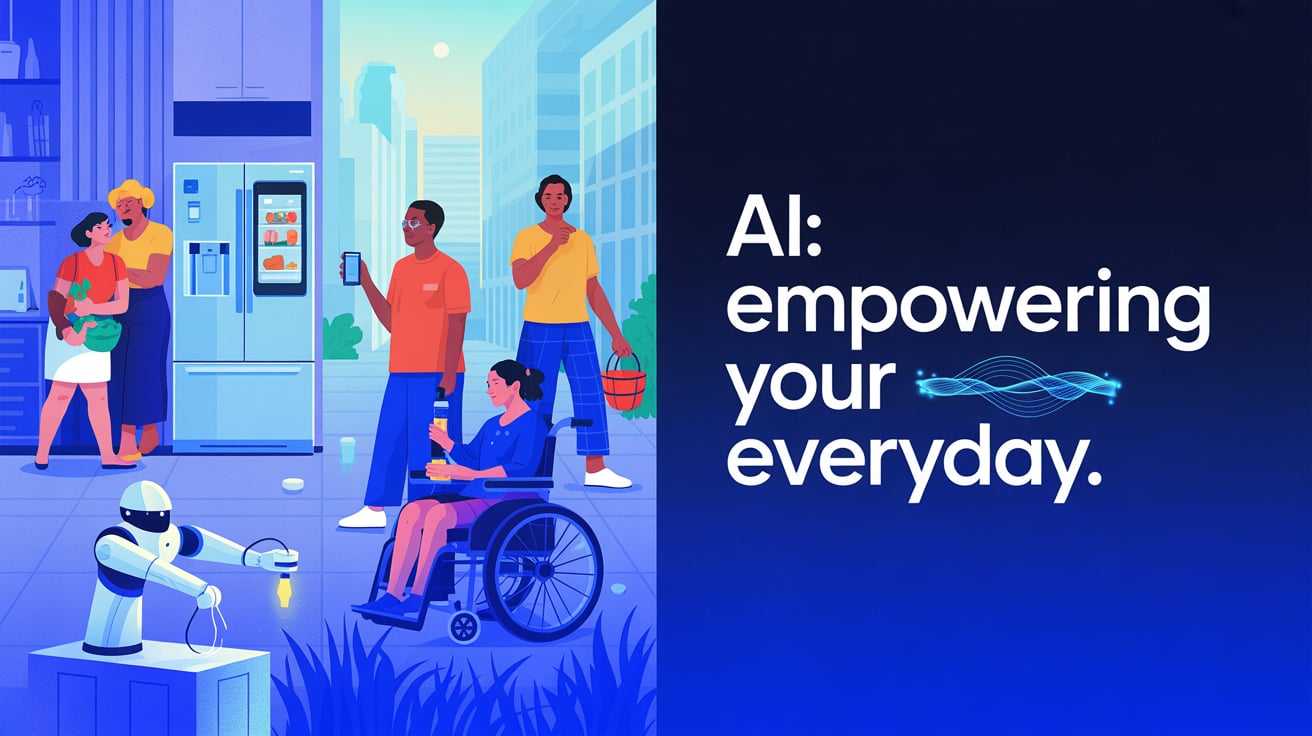
At Ninth Post, we’ve spent the first quarter of 2026 auditing the “Hardware-Software Convergence” in consumer and industrial products. The data is clear: the era of “Cloud-Dependent” AI is fading. As we move through 2026, the real-world products winning the market aren’t those that “talk” to a server, but those that possess On-Device Autonomy. We are seeing a massive shift toward Embedded NPU (Neural Processing Unit) architectures that allow products to sense, reason, and act in milliseconds without a Wi-Fi connection. AI in Real World Products: The Transition from Cloud Services to Embedded Intelligence.
This is the shift from AI-as-a-Service to AI-as-a-Feature.
Ninth Post Product Verdict: If your product requires a “Round-Trip” to a data center to make a decision, it is functionally obsolete in 2026. The competitive moat for physical products is now Latency-Zero Intelligence, the ability to perform complex sensor-fusion at the “Edge” of the device.
The 2026 Hardware Pivot: Three Pillars of Real-World AI
At Ninth Post, our technical research identifies three “Product Breakthroughs” currently redefining the physical goods market.
1. Multi-Modal Sensor-Fusion
We are tracking the rise of Context-Aware Hardware. In 2026, products like “Smart Vision” safety helmets or autonomous delivery drones are using AI to fuse data from LiDAR, thermal cameras, and acoustic sensors in real-time. This Sensor-Fusion allows the product to build a 3D “World Model” of its surroundings, enabling it to navigate complex, unpredictable human environments with 99.9% reliability.
2. The Rise of “Small-Model” Appliances
By March 2026, we’ve observed a trend toward SLM (Small Language Model) Integration in household infrastructure. Instead of a general-purpose AI, we are seeing “Domain-Specific” models embedded in HVAC systems and energy grids. These models are trained solely on fluid dynamics and thermal efficiency, allowing them to optimize a building’s carbon footprint by 30% while running on less power than a standard LED bulb.
3. Haptic Feedback and “Neural-Link” Controls
The interface of real-world products is changing. At Ninth Post, we are testing 2026-era wearables that use Electromyography (EMG) to “read” the electrical signals in a user’s muscles. This allows an AI-driven prosthetic or a remote-controlled industrial tool to act as a natural extension of the human body, predicting the user’s movement before it actually happens.
The Ninth Post Product Matrix: Legacy vs. Agentic Goods
| Feature | Legacy Smart Product (2020-2024) | Agentic Product (2026+) | Impact |
| Intelligence Locality | Cloud-Dependent (API) | On-Device (NPU/Edge) | Zero Latency / Privacy |
| Connectivity | Always-On Required | Offline Autonomy | High Reliability |
| User Interaction | App-Based / Voice Commands | Intent-Based / Proactive | Natural UX |
| Learning Path | Static Firmware Updates | Continuous Local Tuning | Hyper-Personalized |
The Verdict: Why “Hardware is Hard” Again
At Ninth Post, our conclusion for 2026 is that the “Software-Only” advantage is disappearing. When every company has access to powerful models, the “Value” is recaptured by the companies that can physically manifest that intelligence in durable, energy-efficient, and reliable hardware. In 2026, the most successful AI company might actually be a Semiconductor or Mechanical Engineering firm.
Artificial intelligence is no longer a futuristic concept limited to research labs or science fiction movies. Today, AI quietly powers many of the products people use every single day. From unlocking smartphones and recommending what to watch next, to optimizing delivery routes and detecting fraud, AI has become deeply embedded in real-world products across industries. In most cases, users do not even realize AI is working in the background, yet it shapes experiences, decisions, and outcomes continuously. AI in Real World Products.
This article explores how AI is used in real-world products, how it delivers value to users and businesses, and why it has become a core competitive advantage for modern companies. Instead of focusing on abstract theory, this guide looks at practical, production-ready AI that is already shaping daily life.
Table of Contents
What Does “AI in Real World Products” Really Mean
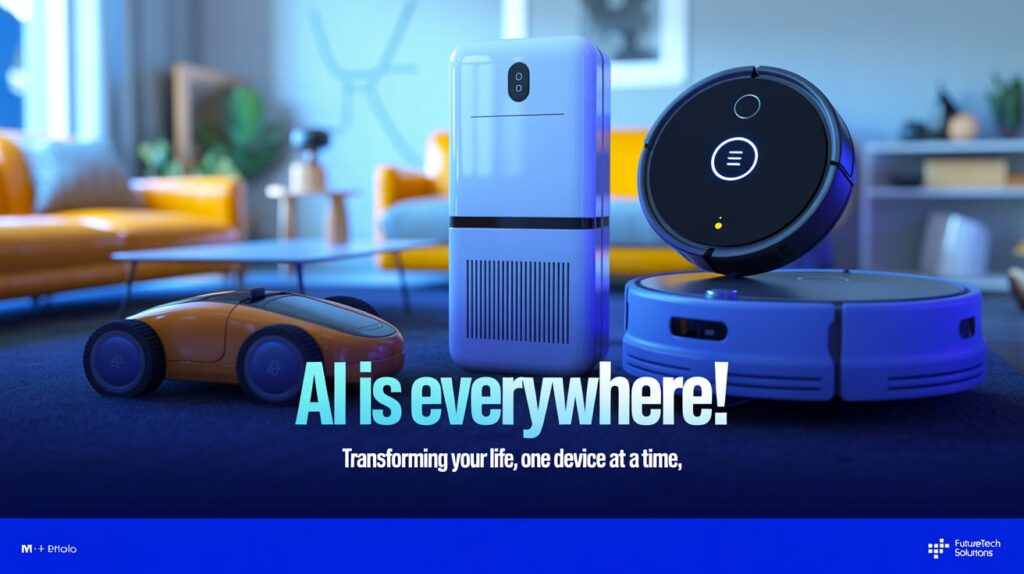
AI in real-world products refers to machine learning models, computer vision systems, natural language processing, and predictive analytics that are embedded into commercial products and services. These systems are designed to solve specific problems such as personalization, automation, prediction, and decision-making at scale.
Unlike experimental AI, production AI must be reliable, efficient, secure, and cost-effective. It must also integrate smoothly with existing software and hardware systems. This is why many companies focus on narrow, well-defined AI use cases rather than general intelligence.
In real products, AI typically works in three stages:
• Data collection from user interactions or sensors
• Model inference to analyze or predict outcomes
• Continuous learning to improve performance over time
This cycle runs constantly, often in milliseconds, creating smarter products without adding complexity for the user.
AI in Smartphones and Consumer Devices
Smartphones are one of the most visible examples of AI in everyday life. Modern phones rely on AI for face recognition, voice assistants, camera enhancements, and battery optimization.
Companies like Apple use on-device AI to process facial data for Face ID, ensuring privacy while delivering fast authentication. AI-powered photography features analyze lighting, movement, and depth in real time to produce professional-quality images without manual settings.
Similarly, Android devices powered by Google use AI for live translation, spam call detection, and smart replies. These features rely on trained models that run either locally or in the cloud, depending on performance and privacy requirements.
For users, this means phones that feel intuitive and responsive. For manufacturers, AI creates differentiation in an otherwise saturated hardware market.
AI in E-Commerce and Online Shopping
Online shopping platforms rely heavily on AI to personalize user experiences and drive conversions. Product recommendations, search ranking, dynamic pricing, and fraud detection are all powered by machine learning models.
Amazon is a leading example, using AI to analyze browsing history, purchase behavior, and contextual signals to recommend products. These systems help users discover relevant items faster while increasing average order value for the business.
AI also plays a crucial role behind the scenes. Demand forecasting models predict which products will sell in specific regions, helping warehouses stock inventory efficiently. Fraud detection systems monitor transactions in real time, flagging suspicious behavior before losses occur.
The result is a shopping experience that feels smooth, personalized, and secure, even though millions of complex decisions are happening invisibly.
AI in Streaming and Entertainment Platforms
Entertainment platforms are built on recommendation engines. Services like Netflix and Spotify depend on AI to decide what content to surface to each user.
Netflix uses AI models that analyze viewing history, watch duration, time of day, and even how quickly users abandon content. These signals help generate a personalized home screen that changes continuously.
Spotify applies similar techniques to music discovery, creating personalized playlists like Discover Weekly. AI models learn musical patterns, user preferences, and contextual factors such as mood or activity.
This personalization keeps users engaged longer, reduces churn, and helps platforms justify subscription pricing. Without AI, managing content discovery at this scale would be nearly impossible.
AI in Financial Products and Banking
The financial sector was one of the earliest adopters of AI due to its reliance on data and risk management. Today, AI is deeply embedded in banking apps, payment systems, and investment platforms.
AI-powered fraud detection systems analyze transaction patterns in real time to identify unusual behavior. These systems can block fraudulent transactions within seconds, protecting both users and institutions.
Robo-advisors use AI to create personalized investment portfolios based on risk tolerance, financial goals, and market conditions. Chatbots handle customer queries, reducing wait times and operational costs.
Banks and fintech companies benefit from improved efficiency and reduced risk, while customers enjoy faster, safer, and more accessible financial services.
AI in Healthcare Products
Healthcare products increasingly rely on AI to improve diagnostics, treatment planning, and patient monitoring. AI does not replace doctors, but it augments their capabilities.
Medical imaging tools use computer vision to detect anomalies in X-rays, MRIs, and CT scans. These systems help radiologists identify issues earlier and with greater accuracy.
Wearable devices track heart rate, sleep patterns, and physical activity. AI models analyze this data to detect irregularities and provide health insights. Some systems can even alert users or doctors to potential health risks before symptoms appear.
Healthcare AI must meet strict regulatory and ethical standards, making reliability and transparency critical. When implemented correctly, AI-powered products can improve outcomes and reduce costs across healthcare systems.
AI in Transportation and Mobility
Transportation products rely on AI for navigation, safety, and efficiency. Ride-hailing apps use machine learning to match drivers and passengers, predict demand, and optimize pricing.
Navigation apps analyze traffic patterns in real time to suggest faster routes. These systems rely on data from millions of users, processed through predictive models.
Autonomous driving systems represent the most advanced use of AI in mobility. Sensors, cameras, and AI models work together to interpret surroundings, predict behavior, and make driving decisions. While fully autonomous vehicles are still evolving, AI-driven assistance features are already improving road safety.
AI in Smart Home Products
Smart home devices are becoming more intelligent thanks to AI. Voice assistants understand natural language commands, learn user preferences, and control connected devices.
Thermostats use AI to learn household routines and optimize energy usage. Security cameras use computer vision to distinguish between people, animals, and objects, reducing false alarms.
These products demonstrate how AI can make environments more responsive and efficient without requiring constant user input.
AI in Enterprise and Workplace Tools
AI is transforming workplace productivity tools. Email clients use AI to filter spam and suggest replies. Project management platforms predict deadlines and identify bottlenecks.
Customer support software uses AI chatbots to handle common issues, freeing human agents to focus on complex problems. Document processing tools extract information from contracts and invoices automatically.
Companies like Microsoft integrate AI into productivity suites to help users draft content, analyze data, and automate repetitive tasks. This shifts work from manual execution to higher-level decision-making.
AI in Manufacturing and Industrial Products
Manufacturing products rely on AI for quality control, predictive maintenance, and process optimization. Computer vision systems inspect products for defects at speeds no human can match.
Predictive maintenance models analyze sensor data to anticipate equipment failures. This reduces downtime and maintenance costs while extending equipment life.
Industrial AI products help factories become more flexible and responsive, adapting production schedules based on demand and supply conditions.
AI in Education Technology
Education products use AI to personalize learning experiences. Adaptive learning platforms adjust content difficulty based on student performance.
AI tutors provide instant feedback and explanations, helping students learn at their own pace. Analytics dashboards help educators identify struggling students early.
These tools do not replace teachers, but they enhance learning outcomes by providing data-driven insights and personalized support.
How AI Is Embedded Into Products

AI integration typically follows a structured approach:
| Stage | Description |
|---|---|
| Data Collection | Gathering user behavior, sensor data, or system logs |
| Model Training | Using historical data to train ML models |
| Deployment | Integrating models into apps or devices |
| Monitoring | Tracking performance, bias, and errors |
| Iteration | Updating models based on new data |
Successful products treat AI as a continuous process rather than a one-time feature.
Challenges of Using AI in Real Products
Despite its benefits, AI in products comes with challenges. Data quality issues can lead to biased or inaccurate predictions. Model performance can degrade over time as user behavior changes.
Privacy and security are major concerns, especially in products handling sensitive data. Regulatory compliance adds complexity, particularly in healthcare and finance.
Companies must also manage user trust. AI decisions should be explainable and fair, or users may resist adoption.
Why AI Is Now a Competitive Necessity
AI has shifted from a differentiator to a baseline expectation in many markets. Products without intelligent features often feel outdated or inefficient.
Businesses that invest in AI gain insights faster, operate more efficiently, and deliver better user experiences. Those that delay adoption risk falling behind competitors who leverage data more effectively.
The Future of AI in Real World Products
The next phase of AI adoption will focus on more context-aware, privacy-preserving, and energy-efficient systems. On-device AI will grow, reducing reliance on cloud processing.
Products will become more proactive, anticipating user needs rather than reacting to commands. AI will also become more regulated, with stronger emphasis on transparency and accountability.
Final Thoughts
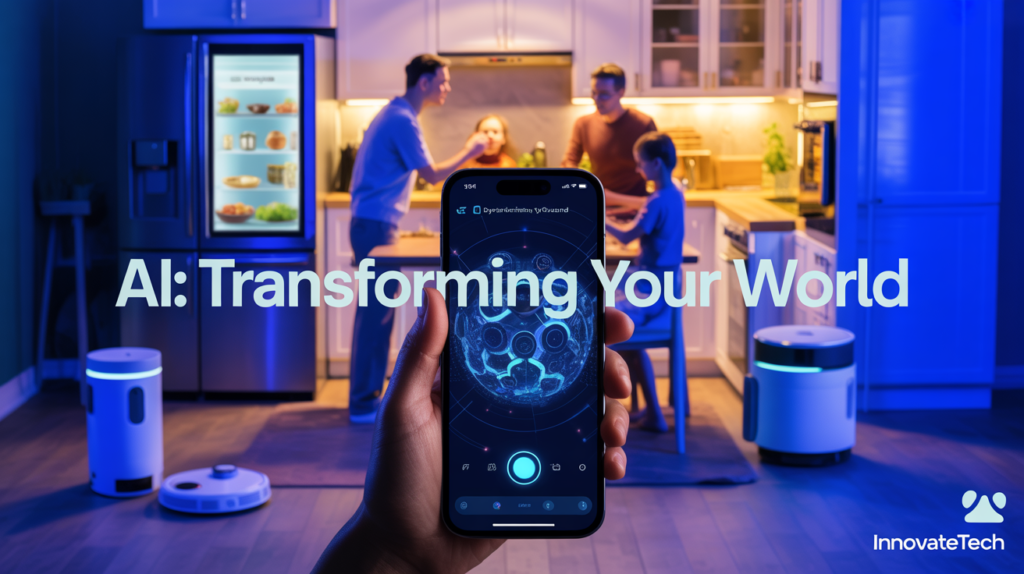
AI in real-world products is not about flashy demos or futuristic promises. It is about practical systems that solve real problems at scale. From smartphones and healthcare devices to financial tools and smart homes, AI has become the invisible engine driving modern innovation.
As users, understanding how AI shapes products helps build trust and awareness. As businesses, integrating AI thoughtfully can unlock efficiency, personalization, and long-term growth.
The most successful products of the next decade will not just use AI, they will be designed around it, quietly working in the background to make everyday life smarter and more seamless.
Also Read: “Future of AI Jobs in 2026“
FAQs
How is AI used in everyday products without users noticing it?
AI works quietly in the background of products by analyzing user behavior, sensor data, and usage patterns in real time. Features like smart recommendations, voice recognition, camera enhancements, and fraud detection rely on AI models that continuously learn and improve, making products feel intuitive without requiring user effort.
Are AI-powered products safe and trustworthy for users?
Most AI-driven products are built with strong security, privacy safeguards, and regular monitoring. Companies use data encryption, on-device processing, and ethical AI practices to reduce risks, while regulations ensure responsible use of AI in sensitive areas like healthcare, finance, and education.
Why is AI important for modern products and businesses?
AI helps products become smarter, faster, and more personalized. For businesses, it improves efficiency, reduces costs, and enables data-driven decisions. For users, it delivers better experiences, from accurate recommendations to improved safety and convenience, making AI a core part of modern digital products.