










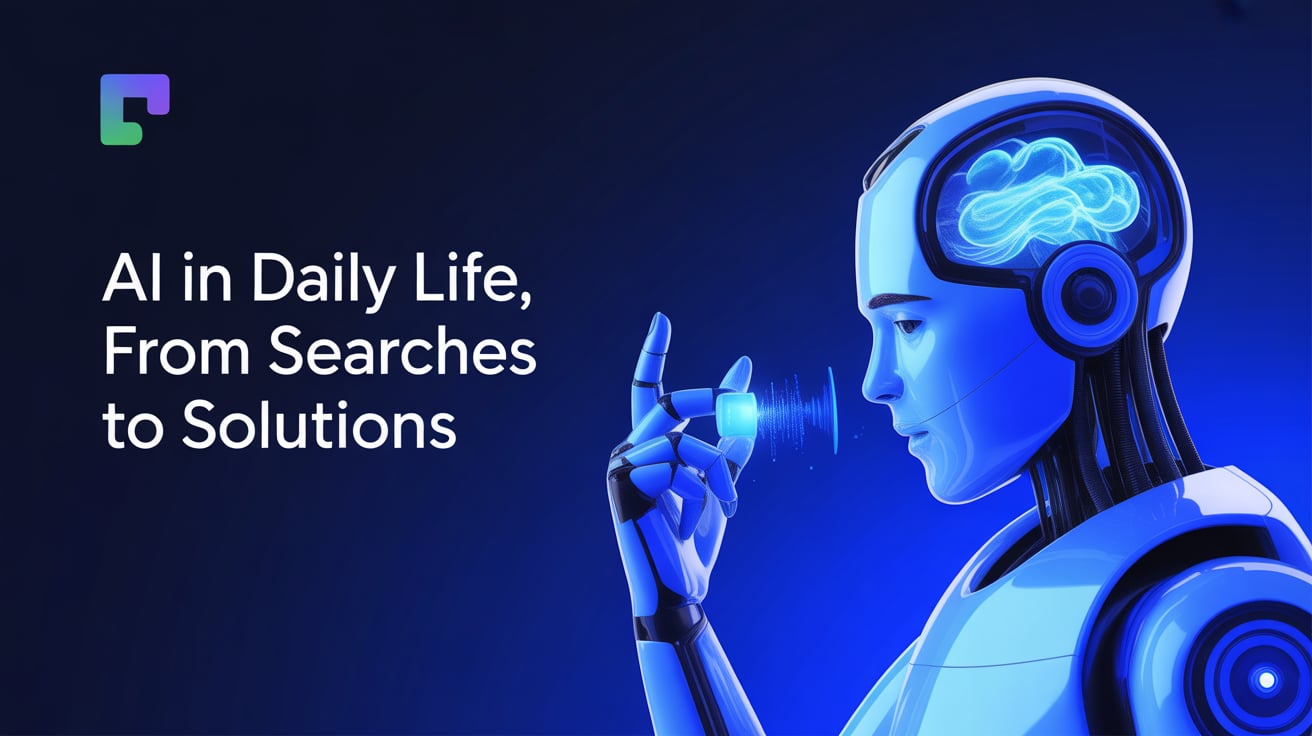
How Artificial Intelligence is Shaping Our Everyday World in 2025
Artificial Intelligence (AI) is no longer a distant concept confined to sci-fi movies or high-tech labs. Today, it’s a practical, powerful force that influences virtually every aspect of our lives from how we search for information online to how we get medical care, manage our homes, and solve real-world problems. In this article, we’ll explore how AI integrates seamlessly into daily life, turning the ordinary into something smarter, more efficient, and more personalized. AI in Daily Life, From Searches to Solutions.
Table of Contents
Understanding AI: What It Really Means

At its core, Artificial Intelligence refers to machines and software designed to mimic human cognitive functions learning, reasoning, adapting, and even anticipating needs. Rather than simply performing repetitive tasks, modern AI systems can analyze vast amounts of data, identify patterns, and make decisions that help improve outcomes in real time.
Today, AI isn’t just about futuristic robots or complex algorithms hidden in data centers it’s about practical applications that make everyday life easier for billions of people around the world.
How AI Powers Daily Activities: Real-World Examples
1. Smarter Searches and Personalized Recommendations
When you type a query into Google or Bing, AI algorithms work behind the scenes to understanding your intent, prioritize relevant pages, and personalize results based on context and search history. This ensures you get accurate, useful information quickly transforming search from simple keyword matching to intuitive assistance.
From Netflix show suggestions to Spotify music playlists, AI analyzes your behaviour to recommend content you’re likely to enjoy, making your digital experience more engaging and tailored to your interests.
2. Voice Assistants and Conversational AI
Whether it’s Siri, Alexa, or Google Assistant, voice-activated helpers are powered by natural language processing (NLP) a branch of AI that understands and responds to human speech. These assistants can set reminders, answer queries, control smart devices, and much more, all through simple voice commands.
With continual learning from user interactions, these systems improve over time offering suggestions based on habit, schedule, and preference.
3. Smart Homes: Comfort and Efficiency at Your Command
AI is transforming homes into intelligent spaces. Thermostats learn your heating and cooling preferences, lighting systems adjust automatically, and security cameras detect unusual activity all without manual input.
These smart devices not only enhance convenience but also improve energy efficiency and safety adapting automatically to your lifestyle.
4. Navigation and Transportation Solutions
Every time you use Google Maps or Waze, AI is at work analyzing traffic data, predicting congestion, and suggesting the best routes. This real-time optimization helps reduce travel times, fuel usage, and stress on the road.
AI also powers ride-sharing services, matching riders to drivers efficiently and dynamically adjusting pricing based on demand all in mere seconds.
Looking ahead, autonomous vehicles (self-driving cars) push the boundaries further: AI systems perceive real-world environments and make split-second decisions to improve safety and efficiency.
5. Healthcare: Precision, Accessibility, and Early Detection
AI is transforming healthcare from hospitals to your wrist. Wearable devices monitor heart rate, sleep patterns, and activity levels analyzing health data and providing personalized feedback.
In clinics and hospitals, AI algorithms assist in diagnosing medical conditions by analyzing imaging scans and spotting anomalies that might escape human eyes. This increases diagnostic accuracy and supports earlier intervention.
Virtual health assistants offer initial consultations and guidance, making care more accessible and timely for users everywhere.
6. Banking, Security, and Fraud Prevention
Modern financial systems leverage AI to monitor transactions in real time, detecting unusual patterns that may indicate fraud protecting users and institutions from losses and security breaches.
Chatbots in banking apps help customers with basic tasks like balance checks or transfers without waiting for human assistance, saving time and improving user experience.
7. Everyday Utilities: Spam Filters and Smart Keyboards
Even routine tools like email filters and smart keyboards use AI. Spam filters examine millions of messages to keep inboxes clean, while predictive keyboards understand context and improve typing accuracy even in multiple languages.
These small but powerful applications make digital interaction smoother and more intuitive.

The Big Impact: Benefits of AI in Daily Life
Here’s how AI is reshaping personal and professional routines:
| Benefit | Real-World Impact |
|---|---|
| Enhanced Efficiency | AI automates repetitive tasks, saving time and resources. |
| Better Decision Making | Data-driven insights help individuals and businesses make smarter choices. |
| Personalized Experience | Tailored content, recommendations, and services for every user. |
| Improved Safety & Security | Advanced monitoring and fraud detection protect users daily. |
| Increased Accessibility | AI bridges gaps in healthcare, education, and customer service. |
Challenges and Considerations
While AI offers immense benefits, it also brings challenges:
- Privacy concerns: As AI systems collect more data, protecting user privacy becomes critical.
- Bias and fairness: AI models trained on biased data can produce unfair outcomes.
- Job transformation: As automation increases, some job roles may evolve or change.
Addressing these challenges responsibly is essential to ensuring AI remains ethical, inclusive, and beneficial for all.
Conclusion

From searching answers online to empowering life-saving healthcare technologies, AI in daily life has grown from novelty to necessity. Its ability to learn, adapt, and improve experiences has made it one of the most transformative forces of the 21st century.
As we continue into 2025 and beyond, we’ll see AI not just as tools but as trusted partners that help solve problems, enhance experiences, and unlock new opportunities in every corner of life.
Also Read: “AI and Data Privacy“
FAQs: AI in Daily Life
What are everyday examples of AI?
AI appears in search engines, voice assistants, navigation apps, streaming recommendations, smart homes, banking systems, and healthcare tools.
How does AI make searches better?
AI analyzes query context and user intent, delivering more accurate and personalized results faster than traditional search techniques.
Can AI help in healthcare at home?
Yes, AI-powered wearables and virtual assistants monitor health, provide insights, and offer support outside traditional clinical settings.
Is AI safe to use?
AI is designed to enhance safety and security, but users should stay informed about privacy settings and data practices. Responsible use and regulation help ensure its benefits outweigh risks.
What’s next for AI in daily life?
Future innovations may include even more proactive AI that predicts needs before they arise, deeply integrated AI companions, and smarter autonomous systems.