








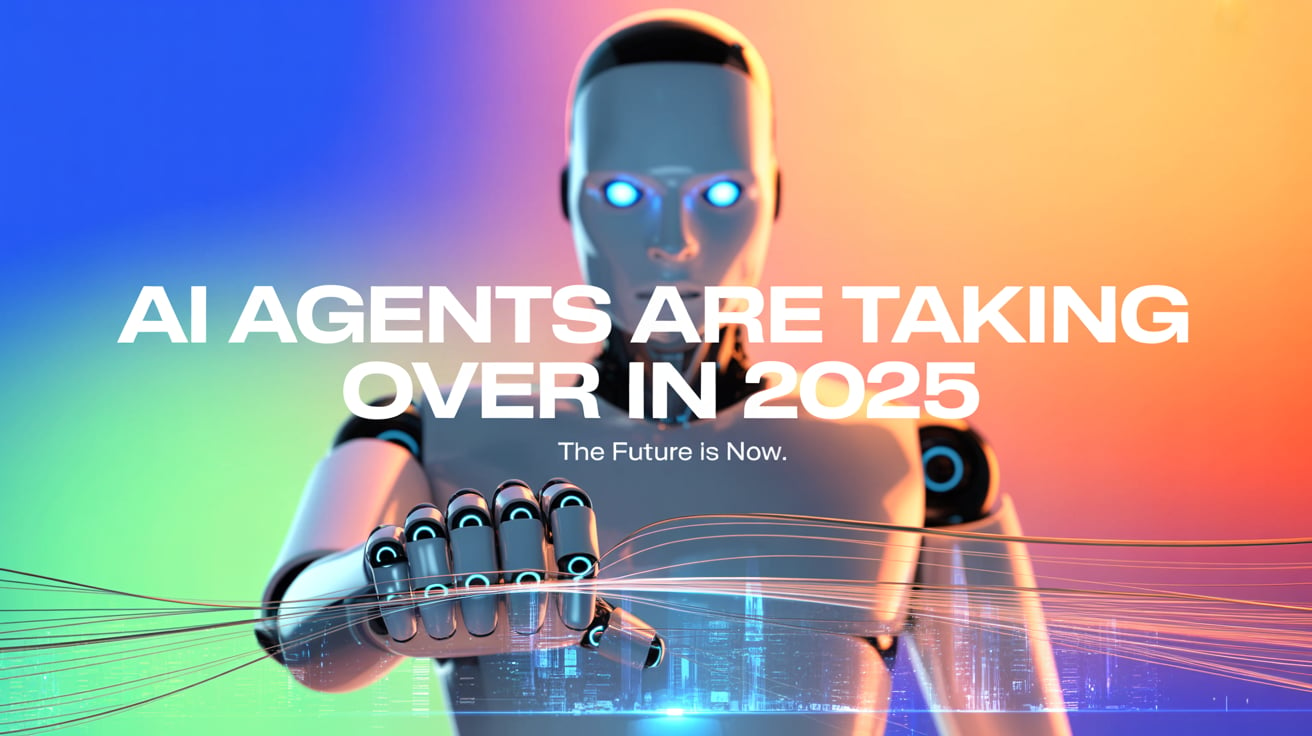
In 2025, a quiet revolution is reshaping how businesses operate, industries evolve, and humans interact with technology. At the heart of this transformation are AI agents, autonomous, intelligent systems that can not only understand and generate language, but also reason, plan, act, and execute complex tasks. From corporate workflows and retail operations to creative workflows and personal assistants, AI agents are rapidly becoming indispensable. AI Agents Are Taking Over in 2025.
Table of Contents
What Are AI Agents, And Why 2025 Is Their Breakout Year
AI agents, sometimes also called agentic AI or autonomous AI, go well beyond traditional chatbots or single-purpose automation tools. These systems combine powerful large-language models (LLMs), reasoning capabilities, and action-oriented tool use (e.g. interacting with software, APIs, internal databases, cloud systems) to operate with minimal human supervision.
In 2025, several forces have converged to make AI agents mainstream:
- Advances in LLMs, multimodal AI, and reinforcement-learning techniques that enable agents to reason more reliably and handle complex tasks.
- A proliferation of enterprise-ready platforms and frameworks for agent deployment from open-source tools to cloud-powered enterprise tools.
- Growing business demand for efficiency, cost reduction, and automation of routine workflows, especially in sectors with heavy administrative overhead, customer support, compliance, or data processing needs.
As a result, 2025 appears to mark the turning point where AI agents shift from early experimentation to broad adoption, inside enterprises, across industries, and even in everyday tools.
Real-World Adoption: Where AI Agents Are Already Making a Difference
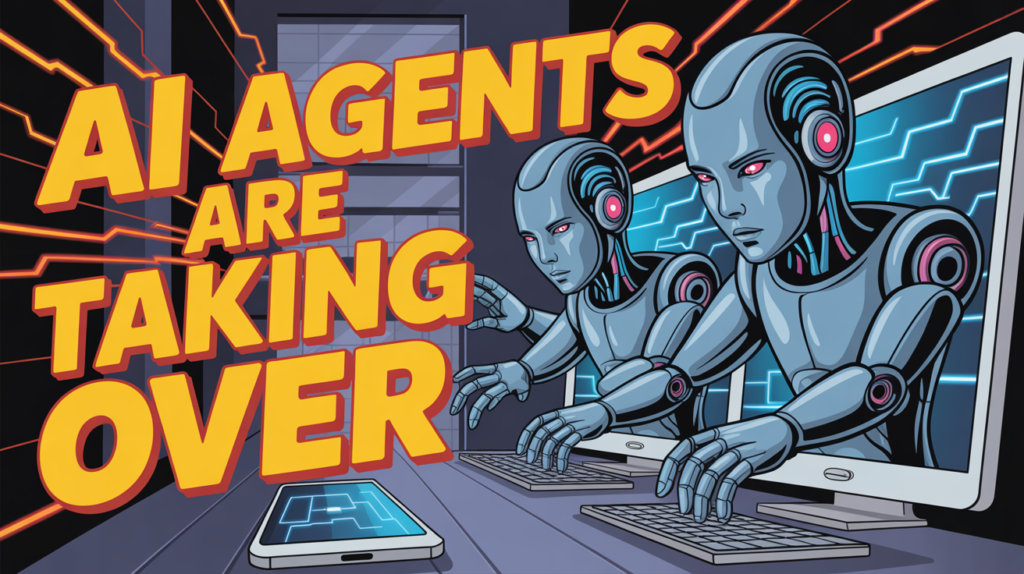
Here’s a snapshot of industries and domains where AI agents are aggressively changing the game in 2025:
| Industry / Use-Case | What AI Agents Are Doing | Impact / Benefit |
| Enterprise IT & Operations | Deploying performance bots, DevOps agents, security-monitoring agents, internal-IT assistants. | Faster issue resolution, reduced manual workload, streamlined development pipelines |
| Customer Service & Support | Chatbots handling customer queries, support tickets, basic troubleshooting without human agents. | Reduced wait-times, 24/7 availability, cost savings on staffing |
| E-commerce & Retail | Inventory management, demand forecasting, personalized recommendations, supply-chain automation | Improved efficiency, fewer stock-outs/overstocks, better customer experiences |
| Healthcare & Medical Administration | Appointment scheduling, patient data processing, diagnostic support (in imaging/data), admin automation. | Less admin overhead, faster data processing, support for clinicians / staff |
| Legal & Compliance | Document analysis, contract review, regulatory compliance checks, legal research. | Quicker turnaround, lower cost, consistent compliance checks |
| Software Development & Data Engineering | Automatic code generation, testing, data-pipeline automation, version control tasks. | Increased developer productivity, fewer repetitive tasks, scalable workflows |
In fact, a 2025 survey by Cloudera found that 96% of surveyed enterprises plan to expand the use of AI agents over the next 12 months, with many already deploying them in performance optimization, security monitoring, and development assistance roles.
Meanwhile, in India alone, the trend is accelerating: according to the 2025 Microsoft Work Trend Index, 59% of Indian business leaders have already deployed AI agents, and a further 93% expect to extend their use across teams in the next 12–18 months.
This shows that adoption isn’t limited to a few early-adopter tech giants, it’s spreading into everyday enterprises, small and large.
What’s New in 2025: Features, Architecture & Multi-Agent Ecosystems
2025 is not just about more use, it’s also about smarter, more capable, more autonomous AI agents. Some of the key developments include:
- Multi-Agent Ecosystems & Orchestration
Instead of standalone agents, many organizations are building multi-agent systems: several specialized agents coordinate to accomplish complex tasks. For example, one agent might gather market data, another analyze it, and a third generate reports, all working in concert
Such orchestration enables automation of multi-step workflows that previously required different teams or software tools.
- Agents with “Agency”, Reasoning, Planning, Acting
Modern AI agents aren’t just reactive (responding to prompts). They are proactive and autonomous: they can plan sequences of actions, decide among alternatives, use external tools/APIs, and adapt based on feedback. This is a far step from earlier chatbots or simple automation scripts.
- Wider Integration & Lower Barriers to Use
Thanks to robust frameworks, cloud platforms, and even no-code tools, deploying AI agents has become more accessible, not just for data scientists, but for regular enterprises too
Moreover, the shift toward multimodal AI (text, images, video, audio) means agents can now understand and work with different types of data, opening doors for creative tasks, content generation, document analysis, and more.
The Business Case: Why Companies Are Embracing Agentic AI
The appeal of AI agents for businesses is multifaceted. In 2025, many organizations view them not as a futuristic luxury, but as necessary tools for survival and growth. Key advantages include:
- Operational Efficiency & Cost Savings: Automating repetitive, rule-based, or time-consuming tasks reduces the need for manual manpower, freeing employees for higher-value work.
- Scalability & Speed: Agents can work 24/7, handle many tasks simultaneously, and scale more easily than human teams.
- Data Handling & Decision Support: By analyzing large volumes of data, agents help in faster decision-making, deeper insight generation, predictive analytics, and risk management.
- Flexibility & Adaptation: Because many modern agents are modular, multi-agent or configurable, businesses can tailor them for varied needs, from IT ops to customer service to marketing.
- Competitive Advantage: Early adopters gain edge in productivity, cost structure, customer service, and innovation speed, increasingly important in dynamic markets.
According to Cloudera’s 2025 survey, 83% of enterprises say investing in AI agents is crucial to staying competitive.

Challenges, Risks & What to Watch Out For
But it’s not all smooth sailing. The rise of AI agents also brings a set of challenges and concerns:
- Data Privacy & Security: Agents often handle sensitive data, integration with legacy systems, cloud storage, or APIs can expose companies to privacy and compliance risks.
- Infrastructure & Integration Overhead: Many organizations report needing major upgrades to data infrastructure before deploying agents reliably.
- Trust, Explainability & Ethical Concerns: As agents make more decisions, understanding why they make those decisions becomes critical, especially in regulated fields (finance, healthcare).
- Skills Gap & Organizational Change: To get the most out of agentic AI, companies often need to invest in training, rethink workflows, and change how teams operate.
- Over-reliance & Loss of Human Oversight: If unchecked, heavy automation might lead to loss of human control, particularly risky in high-stakes domains like healthcare, finance, or legal compliance.
What’s New Now: 2025 Highlights
The momentum for AI agents this year is striking, here are some recent developments highlighting how pervasive and serious this shift has become:
- Major enterprise cloud providers are doubling down on agentic AI: some platforms now integrate AI agents directly into their cloud and DevOps tooling, making deployment easier and more scalable. (For example, many of the “performance optimizers,” “security agents,” and “DevOps assistants” referenced in Cloudera’s 2025 report.)
- Multi-agent orchestration, sending multiple agents to collaborate to achieve a complex goal, is becoming mainstream, especially in organizations that deal with large-scale data, supply chain operations, or customer workflows.
- As agents become more capable and reliable, businesses are increasingly using them for high-value tasks, not just low-hanging automation. That includes compliance checks, data analysis, customer insights, strategic decision support, etc.
- The democratization of tools, with frameworks and agent-builders lowering the barrier to creating custom agents, means not only big tech companies but also SMEs and startups can now experiment with AI agents.
In short: 2025 isn’t just a year of hype. It’s the year when AI agents are becoming useful, practical, real.
What This Means for the Future: Humans + Agents Together
Rather than seeing AI agents as replacements for humans, the reality unfolding in 2025 suggests a collaborative future: where humans set the strategy, context, and values, and agents handle repetitive, data-intense, and workflow-heavy tasks.
Under this paradigm:
- Employees can focus more on creative, strategic, interpersonal, and high-value tasks.
- Organizations can scale faster, adapt to changing demands, and respond promptly to market shifts.
- Even small companies and startups can leverage AI-driven capabilities without building entire AI teams, democratizing access to powerful technology.
- New job roles will emerge: AI-ops managers, agent-orchestration engineers, data-governance officers, human-AI collaboration strategists.
But success depends on responsible, ethical, and well-managed adoption, with proper data governance, transparency, oversight, and upskilling.
Conclusion: 2025 Is the Year AI Agents Take Over, But In the Best Way
“Take over” might sound dramatic, but in 2025, AI agents are not overtaking humans, they’re teaming up with them. They are quietly, steadily becoming backbone components of enterprise operations, customer service, supply-chain logistics, healthcare, and more.
This shift isn’t just technological. It’s organizational and cultural. Companies embracing agentic AI are rethinking workflows, redefining roles, and redistributing effort, leaving humans to do what machines can’t: think creatively, show empathy, exercise judgment, and shape vision.
If you’re not already exploring AI-agent integration, whether in small workflows or larger enterprise systems, 2025 is the right time to start. The agents are here. And they’re ready to work.
Also Read: “The Rise of Autonomous AI in 2026“