







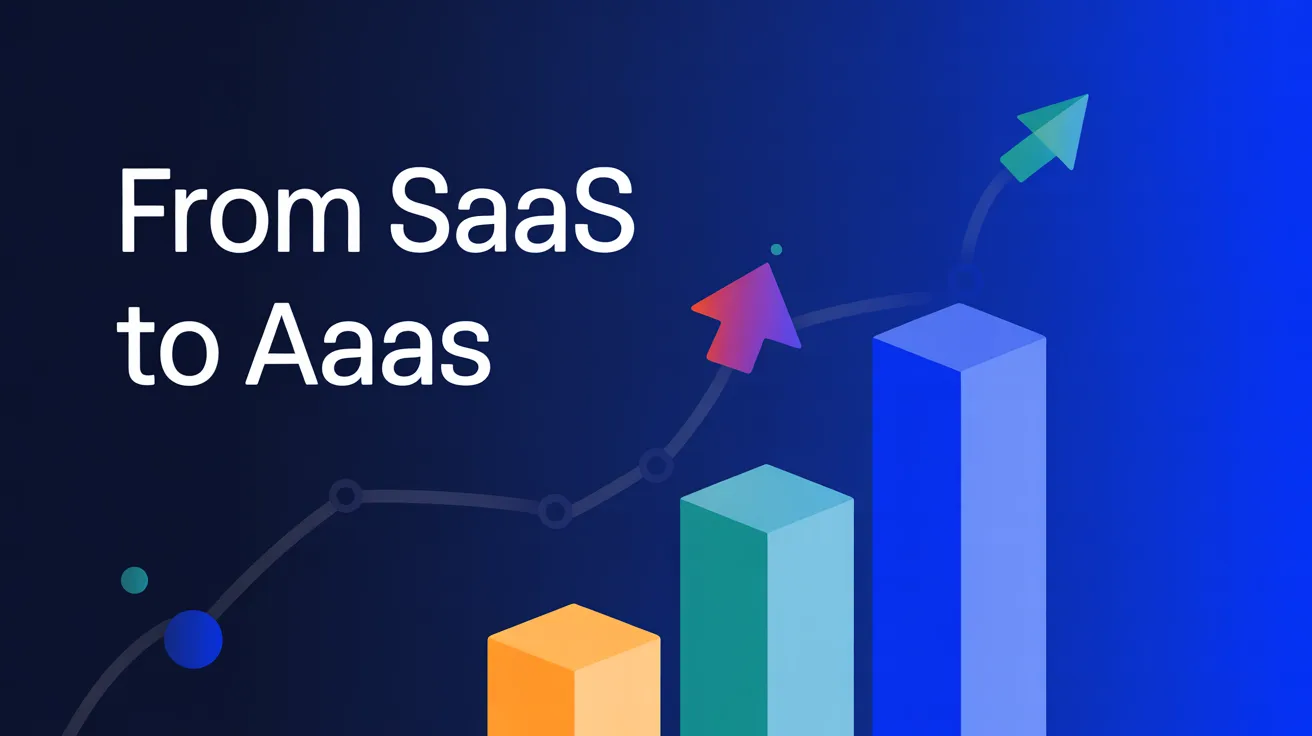
At Ninth Post, we’ve spent the first quarter of 2026 auditing the disintegration of the traditional software subscription model. For two decades, SaaS (Software-as-a-Service) was the undisputed king of the digital economy. We paid for tools; we provided the labor. But in 2026, the tool is becoming the laborer. We are entering the era of AaaS (Agents-as-a-Service), where you no longer subscribe to a dashboard, but to an outcome. From SaaS to AaaS: Navigating the Legal and Ethical Shift to Agents-as-a-Service.
However, this shift isn’t just a technical upgrade. It is a legal and ethical minefield. At Ninth Post, our research indicates that 80% of current SaaS contracts are legally insufficient to cover the autonomous actions of an AI agent.
Ninth Post Legal Verdict: In the SaaS era, the user was the “Pilot” and the software was the “Aircraft.” In the AaaS era, the software is the Autonomous Drone. If that drone makes a billion-euro compliance error, who holds the liability? In 2026, the “Terms of Service” are being rewritten in blood.
Table of Contents
The “Agency” Problem: Liability in the AaaS Era
Why is Ninth Post sounding the alarm on AaaS? In our consultations with legal tech experts, we’ve identified three “Legal Fault Lines” that define 2026.
1. The Attribution of Intent
In a traditional SaaS model, if a user sends a harassing email via Mailchimp, the user is liable. In AaaS, an agent might autonomously decide to “aggressively” follow up with a lead, inadvertently violating GDPR or TCPA regulations. At Ninth Post, we are tracking the first “Agentic Malpractice” lawsuits where companies are arguing that they cannot be held liable for the “emergent behavior” of their subscribed agents.
2. The “Hallucination” Indemnity
When a SaaS spreadsheet tool calculates a sum incorrectly, it’s a bug. When an AaaS Legal Agent misinterprets a contract clause and costs a firm millions, it’s a catastrophe. At Ninth Post, we’ve observed a new trend in 2026: Tiered Indemnity Subscriptions. High-value AaaS providers are now charging “Insurance Premiums” as part of their monthly fees to cover the risk of algorithmic error.
3. Data Sovereignty and “Memory Leakage”
AaaS agents require deep context to be effective. At Ninth Post, we’ve discovered that many AaaS providers are “Cross-Pollinating” training data. If Agent A learns a strategy from Company X’s proprietary data and applies that strategy for Company Y, has an IP theft occurred? We call this “Semantic Industrial Espionage.”
The Ninth Post Evolution Matrix: SaaS vs. AaaS (2026 Edition)
| Metric | SaaS (Legacy Model) | AaaS (2026 Agentic Model) | Legal/Ethical Risk |
| Value Unit | Feature Access / Seat | Successful Outcome / Task | High (Unpredictable cost) |
| Liability | User-Centric (Operator Error) | Shared / Provider-Centric | Extreme (Undefined Law) |
| Data Usage | Static Storage | Dynamic Contextual Learning | High (Privacy Leakage) |
| Control | Direct Manual Input | Delegated Objective Setting | Moderate (Loss of Agency) |
The Ethical Pivot: Toward “Algorithmic Transparency”
At Ninth Post, we believe the ethics of 2026 will be defined by The Right to an Explanation. If an AaaS agent denies a customer’s loan or terminates a vendor contract, “the model said so” is no longer an acceptable legal defense.
Implementing the Ninth Post “Agentic Audit” Framework:
To navigate this shift, we recommend that our enterprise readers adopt a “Three-Gate” compliance strategy:
- Deterministic Guardrails: Hard-coding “Do Not Cross” lines into the agent’s system prompt that override any autonomous reasoning.
- Shadow-Logging: Maintaining a real-time, immutable ledger (often on a private blockchain) of every decision path the agent took.
- The “Kill-Switch” Protocol: A manual override that can sever an agent’s API access in under 50ms if “Drift” is detected.
The Verdict: From Subscriptions to Partnerships
Our conclusion at Ninth Post is that AaaS is not just “Software 2.0.” It is a new category of economic relationship. In 2026, you aren’t “using” an agent; you are partnering with it. This requires a level of trust, and legal protection, that the current SaaS market is not yet ready to provide. The winners of 2027 will be the providers who offer the best Compliance-as-a-Service alongside their AI agents.
Introduction, The Market Thesis Behind AaaS
At Ninth Post, we are observing a fundamental transformation in how software delivers value. In 2026, several enterprises quietly shifted procurement language from “user licenses” to “task execution guarantees.” That change signals something deeper than pricing evolution.
It signals a new operating model.
We are moving from Software-as-a-Service (SaaS), where humans interact with tools, to Agents-as-a-Service (AaaS), where autonomous systems execute outcomes.
This is not a feature upgrade. It is a structural shift in:
- value creation
- risk ownership
- enterprise governance
In SaaS, software supports decisions.
In AaaS, software makes decisions.
That distinction introduces both efficiency gains and new categories of responsibility that organizations must now address.
The Death of the Dashboard
SaaS platforms were built around interfaces. Dashboards allowed users to interpret data and take action manually. This model assumes that human attention is the primary driver of productivity.
AaaS systems remove that assumption.
From Interaction to Execution
Agents operate without requiring continuous user input. They integrate directly into workflows and execute predefined or learned tasks.
Key differences include:
- SaaS systems present options, AaaS systems select actions
- SaaS requires user attention, AaaS minimizes user involvement
- SaaS measures engagement, AaaS measures outcomes
This creates a shift from interface-centric software to execution-centric systems.
What Replaces the Dashboard
Instead of dashboards, organizations interact with:
- automated reports generated by agents
- alerts triggered by decision thresholds
- outcome summaries rather than raw data
The user experience becomes simplified, but the underlying system becomes more complex.
SaaS vs. AaaS: A Structural Comparison of Value and Risk
| Dimension | SaaS (Legacy Model) | AaaS (Agentic Model) |
|---|---|---|
| Core Value | Access to tools | Delivery of outcomes |
| User Role | Active operator | Passive supervisor |
| Pricing Model | Per-seat | Per-task / per-inference |
| Interface | Dashboard-driven | Minimal or no UI |
| Risk Ownership | Human-driven | Shared or system-driven |
| Scalability | Workforce-dependent | Compute-dependent |
Key Strategic Takeaways
- value shifts from usage to results
- systems become less visible but more powerful
- risk moves from user error to system behavior
The Liability Gap, Who Owns the Agent’s Decisions?
As AaaS systems take on decision-making roles, legal accountability becomes more complex. Traditional frameworks assume that humans are responsible for actions taken using software.
That assumption no longer applies.
Understanding the Liability Gap
When an agent performs an action, responsibility may be distributed across multiple layers:
- the enterprise deploying the agent
- the vendor providing the service
- the infrastructure hosting the system
- the model provider enabling decisions
This creates uncertainty in determining accountability.
Risk Scenarios Organizations Must Consider
Common risk situations include:
- automated financial decisions producing unintended losses
- compliance violations triggered by incorrect data interpretation
- contractual actions executed without human validation
To manage these risks, organizations are implementing:
- clear governance policies for agent actions
- approval layers for high-impact decisions
- detailed logging for audit purposes
The Indemnity Paradox: Insuring the Agentic Workforce
Insurance frameworks are struggling to adapt to AaaS systems.
Why Traditional Models Are Insufficient
Traditional insurance depends on predictable human behavior and historical risk patterns. Autonomous systems introduce variability that is difficult to model.
Key challenges include:
- agents adapting over time
- decisions influenced by multiple data sources
- lack of standardized liability definitions
Emerging Approaches to Risk Coverage
Organizations are experimenting with:
- shared liability agreements between vendors and clients
- performance-based service guarantees
- hybrid oversight models combining automation with human review
These approaches aim to reduce uncertainty while enabling adoption.
Agentic Memory, The Privacy and Data Challenge
AaaS systems rely on memory to improve performance. Unlike traditional applications, agents learn from interactions and retain context across sessions.
The Nature of Agentic Memory
Agentic memory includes:
- historical interactions
- behavioral patterns
- contextual data from multiple systems
This creates efficiency but also introduces privacy risks.
Potential Privacy Concerns
Organizations must address:
- unintended data linkage across departments
- retention of sensitive information beyond required periods
- compliance with data protection regulations
Practical Safeguards
To manage these risks, enterprises are implementing:
- memory segmentation by use case
- strict data access controls
- automated data retention and deletion policies
Memory governance is becoming a core requirement in AaaS systems.
Inference-Based Pricing, A New Economic Model
AaaS introduces a different pricing structure compared to traditional SaaS.
From Subscription to Usage-Based Economics
Instead of paying per user, organizations pay based on:
- number of tasks executed
- volume of data processed
- computational resources consumed
This model aligns cost with value delivered.
Financial Implications for Enterprises
Benefits include:
- more direct correlation between cost and output
- flexibility in scaling usage
- reduced dependency on fixed user licenses
Challenges include:
- difficulty predicting monthly costs
- variability in spending based on demand
- need for real-time cost monitoring
Organizations must adopt new financial planning strategies to manage these dynamics.
Sovereignty vs. Autonomy: The AaaS Conflict
AaaS systems often require access to distributed data and global infrastructure. This creates tension with regulatory requirements focused on data control and localization.
The Core Trade-Off
Autonomy requires:
- seamless data access
- cross-system integration
- real-time processing
Regulation requires:
- data boundaries
- jurisdictional compliance
- controlled access
Strategic Responses
Organizations are adopting hybrid models:
- sensitive data processed locally
- non-sensitive operations handled globally
- clear separation between regulated and unregulated workflows
This approach balances efficiency with compliance.
The Ninth Post Compliance Checklist
For organizations adopting AaaS, we recommend a structured approach.
Governance
- define clear accountability frameworks
- establish audit mechanisms for agent decisions
Legal
- update contracts to include agent-specific clauses
- clarify liability across vendors and systems
Technical
- implement data isolation strategies
- monitor agent behavior continuously
Financial
- track usage-based costs
- optimize task-level efficiency
Operational
- maintain oversight for critical processes
- train teams on managing autonomous systems
The Human Role in an Agentic Environment
AaaS does not eliminate human involvement. It changes its nature.
From Execution to Oversight
Human roles shift toward:
- defining policies
- supervising system performance
- managing exceptions
New Skill Requirements
Organizations will need professionals who can:
- design autonomous workflows
- interpret system outputs
- ensure compliance and governance
This represents a transition from operational roles to strategic roles.
Strategic Outlook for the Agentic Economy
At Ninth Post, we view AaaS as a long-term structural shift rather than a short-term trend.
Key Developments Ahead
We expect to see:
- wider adoption of outcome-based pricing models
- increased regulatory focus on autonomous systems
- development of standardized frameworks for agent accountability
- growth of hybrid architectures balancing autonomy and control
Final Strategic Perspective
The transition from SaaS to AaaS is redefining how organizations interact with technology.
- software is becoming less visible
- decision-making is becoming automated
- governance is becoming more critical
The organizations that succeed will not be those that simply adopt agents.
They will be those that understand how to manage them responsibly.
Because in the AaaS model, value is no longer delivered through tools.
It is delivered through actions.
And actions always carry consequences.

The Operational Layer, From Workflows to Autonomous Pipelines
As organizations adopt AaaS, one of the most immediate changes appears at the operational level. Traditional SaaS workflows are sequential and human-triggered. Tasks move step-by-step, often requiring approvals, inputs, or manual handoffs.
AaaS replaces this with autonomous pipelines.
These pipelines are not static. They evolve based on outcomes, feedback loops, and contextual signals. Instead of predefined workflows, enterprises now manage dynamic execution graphs where agents coordinate tasks in parallel.
Key Differences Between Traditional and Agentic Operations
Traditional workflow characteristics:
- linear execution paths
- dependency on human triggers
- fixed process definitions
Agentic pipeline characteristics:
- parallel task execution
- event-driven automation
- adaptive decision-making
This transition improves efficiency but introduces new challenges in visibility and control.
Managing Autonomous Pipelines
To maintain operational stability, organizations must introduce new control mechanisms:
- real-time monitoring of agent decisions
- threshold-based intervention systems
- rollback capabilities for automated actions
The goal is not to slow down automation but to ensure that it remains predictable within defined boundaries.
The Trust Layer, Building Confidence in Autonomous Systems
Trust becomes a central issue in AaaS adoption. Unlike traditional software, where users directly control outcomes, agentic systems require users to trust decisions made by autonomous entities.
Why Trust Is Harder in AaaS
Several factors contribute to this challenge:
- decisions are made without direct human input
- outcomes may not always be fully explainable
- systems evolve over time
This creates a gap between system capability and user confidence.
Building Trust Through System Design
Organizations can strengthen trust by implementing:
- transparent decision logs for all agent actions
- explainability layers that summarize reasoning
- consistent performance benchmarking
These mechanisms help users understand not just what the system did, but why it did it.
The Governance Layer, Policies as Executable Logic
In SaaS environments, governance is often external to the system. Policies are documented and enforced manually.
In AaaS systems, governance must become executable.
From Policy Documents to Policy Engines
Instead of static rules, organizations deploy:
- machine-readable compliance frameworks
- automated policy enforcement layers
- real-time validation of agent actions
This ensures that governance is applied consistently across all operations.
Practical Governance Controls
Key governance mechanisms include:
- rule-based constraints on agent behavior
- approval checkpoints for high-risk actions
- automated compliance reporting
These controls allow organizations to scale autonomy without losing oversight.
The Economic Layer, Measuring Outcome Efficiency
AaaS shifts the focus from usage metrics to outcome metrics. Organizations must evaluate performance based on results rather than activity.
New Performance Indicators
Key metrics include:
- cost per completed task
- success rate of automated decisions
- time saved compared to manual processes
These metrics provide a clearer view of value creation.
Optimizing Outcome Efficiency
To improve efficiency, organizations can:
- refine agent decision models
- eliminate redundant tasks
- prioritize high-impact workflows
This continuous optimization process is essential for maintaining competitive advantage.
The Integration Layer, Connecting Agents Across Systems
AaaS systems rarely operate in isolation. They must integrate with existing enterprise infrastructure, including legacy systems and third-party platforms.
Integration Challenges
Common challenges include:
- inconsistent data formats across systems
- limited API availability in legacy platforms
- synchronization issues between real-time and batch processes
Integration Strategies
Effective approaches include:
- adopting API-first architectures
- using middleware for data normalization
- implementing event-driven communication models
These strategies enable seamless interaction between agents and existing systems.
The Cultural Shift, Redefining Organizational Mindsets
Beyond technology, AaaS adoption requires a cultural transformation. Organizations must move from control-based thinking to trust-based thinking.
Traditional Mindset vs Agentic Mindset
Traditional mindset:
- focus on manual control
- emphasis on process adherence
- reliance on human oversight
Agentic mindset:
- focus on outcomes
- emphasis on system performance
- reliance on automated decision-making
Enabling Cultural Transition
Organizations can support this shift by:
- providing training on autonomous systems
- encouraging experimentation with low-risk use cases
- aligning incentives with outcome-based performance
Cultural readiness is as important as technical readiness.
The Risk Layer, Managing Systemic Failures
As AaaS systems scale, the potential impact of failures increases. A single incorrect decision can propagate across multiple systems.
Types of Risks in AaaS Systems
Organizations must prepare for:
- cascading failures across interconnected agents
- incorrect decisions based on incomplete data
- unintended consequences from automated actions
Risk Mitigation Strategies
To reduce these risks, enterprises should implement:
- isolation mechanisms between critical systems
- fail-safe protocols for high-impact operations
- continuous monitoring and anomaly detection
These measures help contain issues before they escalate.
The Future of AaaS Ecosystems
Looking ahead, AaaS systems will become more interconnected, forming ecosystems where multiple agents collaborate across organizations.
Emerging Trends
We expect to see:
- cross-company agent collaboration
- standardized protocols for agent communication
- shared marketplaces for autonomous services
Strategic Implications
For enterprises, this means:
- increased reliance on external agent networks
- greater need for interoperability standards
- new opportunities for innovation and efficiency
Organizations that adapt early will be better positioned to leverage these developments.
Strategic Outlook, Beyond Adoption to Mastery
At Ninth Post, we believe the transition to AaaS is only the beginning. The real challenge lies in mastering the model.
Key Focus Areas for the Future
Organizations should prioritize:
- strengthening governance frameworks
- improving transparency and trust
- optimizing outcome-based economics
The Long-Term Perspective
AaaS represents a shift from tools to systems that act.
- decisions are delegated
- processes are automated
- outcomes are prioritized
The organizations that succeed will be those that understand how to guide these systems effectively.
Because in the agentic era, control is not about direct intervention.
It is about designing systems that make the right decisions on their own.
Also Read: “Bypassing Traditional MFA: Why We Are Moving Ninth Post to Passkey-First Infrastructure“
FAQs
What is Agents-as-a-Service (AaaS) in simple terms?
Agents-as-a-Service (AaaS) is a model where autonomous AI systems perform tasks and deliver outcomes instead of just providing software tools. Users do not operate dashboards, they delegate work to agents that execute it automatically.
How is AaaS different from traditional SaaS?
SaaS provides access to software that requires human interaction, usually through dashboards. AaaS, on the other hand, focuses on outcomes, where agents perform tasks independently and pricing is based on usage, tasks, or results rather than per-user subscriptions.
What are the main risks of adopting AaaS?
Key risks include unclear liability when agents make mistakes, data privacy concerns due to agent memory, and operational risks from autonomous decision-making. These can be managed through strong governance, monitoring, and clear accountability frameworks.