








As we move toward 2026, the digital marketing landscape is evolving faster than ever before. Revolutionary technologies like generative AI, advanced search experiences, and immersive media formats are set to reshape how brands connect with audiences, convert leads, and build long-term loyalty. In this comprehensive article, we’ll explore five powerful strategies that will not just influence but dominate, digital marketing next year, backed by the latest industry insights and trends. 5 Digital Marketing Strategies that Will Dominate in 2026.
Table of Contents
AI-Powered Marketing & Search Optimization
Artificial Intelligence isn’t just a buzzword anymore. By 2026, it will be the backbone of how brands create, optimize, and deliver content.
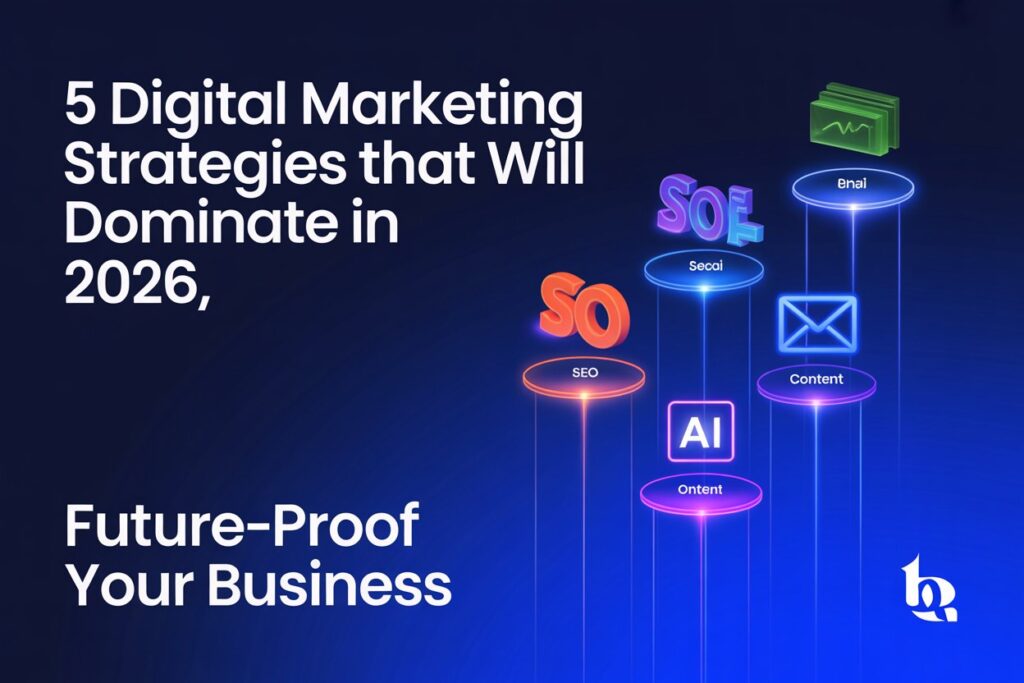
Generative & Predictive AI: Beyond Automation
AI tools will go beyond basic automation and start creating genuinely intelligent experiences:
- AI-driven content creation that generates tailored articles, social posts, and ad copy in minutes.
- Predictive analytics that anticipate customer behavior and adjust campaigns in real time.
- AI-led SEO focusing on semantic meaning and search intent, not just keywords.
For example, optimization for Answer Engine Optimization (AEO) and structured data will become standard practice to secure highly visible placements in AI-driven search results.
From SEO to GEO (Generative Engine Optimization)
Traditional SEO traditionally targeted search engines like Google. But in 2026, brands must optimize for AI search environments such as Google’s Search Generative Experience (SGE), ChatGPT, and Gemini. This means creating structured, authority-driven content that AI tools can reliably cite and recommend
Personalization at Scale with First-Party Data
With third-party cookies disappearing and privacy regulations tightening, marketers must pivot to privacy-first personalized experiences.
Personalization Powered by First-Party & Zero-Party Data
In 2026, brands that harness data ethically and transparently will win consumer trust and engagement. This includes:
- Collecting first-party data through email sign-ups, loyalty programs, quizzes, and surveys.
- Zero-party data where customers intentionally share preferences to unlock better experiences.
Hyper-Personalization Techniques
Instead of static campaigns, expect dynamic experiences that adapt in real time:
- Personalized website content based on browsing history
- Email marketing with individualized messaging
- Customized product recommendations powered by predictive AI
Key Takeaway: Personalization will no longer be optional customers will expect every interaction to be tailored to their needs and context.
Video-First & Immersive Content Strategies
Attention spans are shrinking, so the formats that win attention are becoming more visual and more engaging.
Short-Form Video Continues to Rise
Platforms like TikTok, Instagram Reels, and YouTube Shorts will continue dominating due to their high engagement and instant shareability. Short, authentic, storytelling-driven videos will be vital for brand visibility.
Beyond Short Video: Immersive Experiences
Emerging technologies like Augmented Reality (AR) and Virtual Reality (VR) aren’t just futuristic—they’re already enhancing digital campaigns:
- AR product try-ons
- Virtual showrooms
- Interactive video ads
- Immersive brand experiences
Key Takeaway: Brands that prioritize visual storytelling and immersive experiences will capture audience attention and build deeper engagement.

Omnichannel Customer Journeys & Integrated Experiences
Customer expectations are evolving rapidly. In 2026, users expect seamless interactions across channels whether it’s email, social media, web, or offline touchpoints.
Unified Customer Experience
Omnichannel marketing isn’t just about being present everywhere it’s about being connected everywhere. A customer should feel recognized and understood whether they switch from app to website to store.
How brands achieve this:
- AI-powered customer journey mapping
- Predictive segmentation across channels
- Automated messaging powered by CRM systems
- Data unification for consistent experience across touchpoints
Key Takeaway: The brands that make every interaction feel cohesive and personalized across all touchpoints will dominate customer loyalty metrics.
Ethical & Purpose-Driven Digital Branding
Consumers in 2026 are highly conscious of the values behind the brands they support. Purpose matters and it influences buying choices.
Sustainability and Authenticity
Consumers are more likely to support brands that reflect their values such as sustainability, ethical practices, and social responsibility. This means:
- Genuine sustainability messaging
- Transparent supply chains
- Inclusive campaigns that reflect community values
- Ethical partnerships and endorsements
Human-Centered Storytelling
Even with advanced technology, humans crave emotional and relatable stories. Brands must balance automation with authentic communication that resonates at a personal level.
Key Takeaway: Purpose-driven campaigns aren’t just good for society, they’re good for business.
Digital Marketing Strategies Summary
| Strategy | Core Focus | Why It Matters |
|---|---|---|
| AI-Powered Marketing & SEO | Intelligent content & optimization | Captures attention in modern search ecosystems |
| Personalization at Scale | First-party & zero-party data | Builds trust, relevance, conversions |
| Video & Immersive Content | Visual storytelling & AR/VR | Engages audiences faster and deeper |
| Omnichannel Experience | Unified cross-platform journeys | Enhances loyalty & seamless purchase experiences |
| Ethical & Purpose-Driven Branding | Values-based messaging | Connects emotionally with modern consumers |
Final Thoughts | 5 Digital Marketing Strategies that Will Dominate in 2026
2026 will be a milestone year in digital marketing where creativity, data science, and human experience collide. Marketers who adopt adaptive technology, build trust through privacy-centric personalization, and craft meaningful experiences will not just survive, but thrive in this new digital era.
Also Read: “AI Trends to Watch in 2026“
FAQs – Your 2026 Digital Marketing Questions, Answered
What is the most important digital marketing strategy for 2026?
AI-powered content and search optimization will be crucial, as search engines evolve to prioritize structured, trustworthy, and AI-friendly content.
How does privacy affect digital marketing in 2026?
With third-party cookies becoming obsolete, brands must shift to first-party data and transparent consent practices to build trust and personalized experiences.
Will video marketing still matter?
Yes, short-form and immersive video formats will continue to dominate engagement and visibility across platforms
How can small businesses compete in this landscape?
Small businesses can leverage AI tools, focus on niche audience personalization, prioritize omnichannel consistency, and build ethical, human-centered brands.
What role does consumer purpose play in 2026 marketing?
Consumers increasingly reward brands that demonstrate ethical values, sustainability, and authenticity, not just competitive pricing or flashy ads.